

Editor’s note: This article was first published in May 2012, when Tim Burton’s 2010 film was the latest version of the story it uses as an example.
You’ve just started a new job. After a few days you have an overall picture of the tasks and procedures in your new role. You’ve built up enough trust with your manager to suggest ideas for improving the work and making it more efficient. You’ve gone ahead and proposed new ways of doing everyday tasks. You’ve shown that you’re capable of creativity and innovation.
To explain this with pictures, we’ll use Tim Burton‘s film Alice in Wonderland as our reference, to give examples and help you discover your capacity for creativity and innovation in the job market for your professional profile.
Defining the skill: creativity and innovation
It is the ability workers should have to come up with new resources, ideas and methods and turn them into action.
Every worker should be able to innovate in the design of each piece of work they produce.
Practical examples
Alice in Wonderland
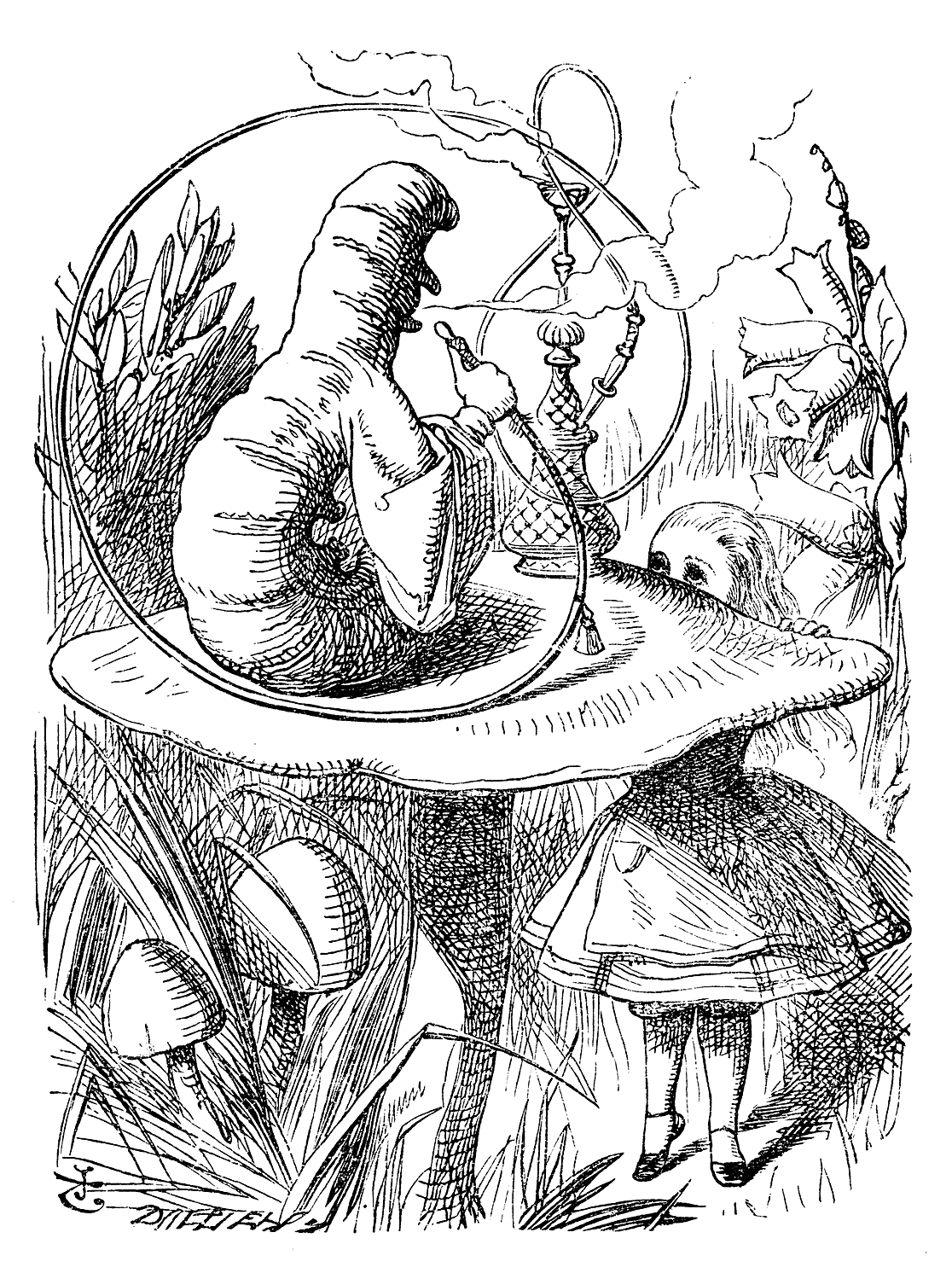
It began as a literary work written by the British mathematician and writer Charles Lutwidge Dodgson in 1865. Its plot is a tale full of satirical allusions to friendship, education and English politics, featuring characters such as the White Rabbit, the Hatter, the blue Caterpillar, the Queen of Hearts and the Cheshire Cat.
The innovation in this popular work lies in the concept of its star characters. The author uses satire to tell everyday stories about English education and politics. To set his book apart from similar works, he brings completely different, innovative characters into the dialogue and situations: a rabbit, a caterpillar, a cat and so on.
Innovation means replacing monotony with processes that make the company more productive. It’s finding a way to do the same things from a different angle. The author could have chosen real people to deliver the same satire on the same subjects. Instead, he felt that by being innovative with his characters he could reach more readers. He wanted his story to be bought by thousands of young people. Telling the same things as other stories, his productivity would have been lower. He chose to innovate with his characters.
“Every worker should be able to innovate in the design of each piece of work.”
The first film version of this popular English tale was made in 1903. Then came the animated version in 1951, later the TV version of 1988, another in 1990, and finally Tim Burton’s version in 2010.
If we compare them all, we’ll see notable differences between one version and another. Perhaps the most striking thing about the version we’re looking at is the mix of live action and animated characters. It made the characters more lifelike, more recognisable and better crafted than in earlier versions. It innovated in quality to win a bigger audience for the film.
In my job, I’ve built databases to make warehouse stock control faster, I’ve put together a visual phone directory so all my colleagues can be located, I’ve created forms to make it easier to draw up quotes and invoices, and so on.
I’ve left a stretcher on every floor of the hospital for occasional needs, I’ve set phone hours for taking calls so I can spend the rest of the day being productive, I’ve organised the office supplies so everyone has access to them on each floor, and so on.
In my daily work, I’ve set rules, ways and methods to speed up production processes. That’s innovating: doing the same thing in a way that’s more productive for the company.
“The ability workers should have to come up with new resources, ideas and methods.”
Tim Burton’s film brings new methods to this version of Alice in Wonderland: on the one hand, the mix of live action and animation, but above all the art direction of the sets, the characters’ costumes, the colour of the cinematography and the visual quality of the images. Compare it with other films.
A basic, creative idea is recycling paper or simply printing documents on both sides. From there, creativity can extend to the way you present yourself to others, even to the clothes you wear every day. Starting the day with a special phrase or greeting that’s warmer than a plain “good morning”.
It’s about making your work more eye-catching and attractive. A black-and-white photograph isn’t the same as a colour photo with all the intensity of the light, but in a black-and-white photo you can show the most important thing in colour: that’s creativity, making the photo new and different so that others notice it.
If you’re like the rest of your colleagues, what sets you apart? You’re more productive, and you put an extra dose of effort into your work that makes it different, so people choose yours over everyone else’s. The most obvious example: someone invented sweets, but only one person thought of putting a stick on them. You know the results better than I do…
Featured image: Sir John Tenniel, Public domain, via Wikimedia Commons.



