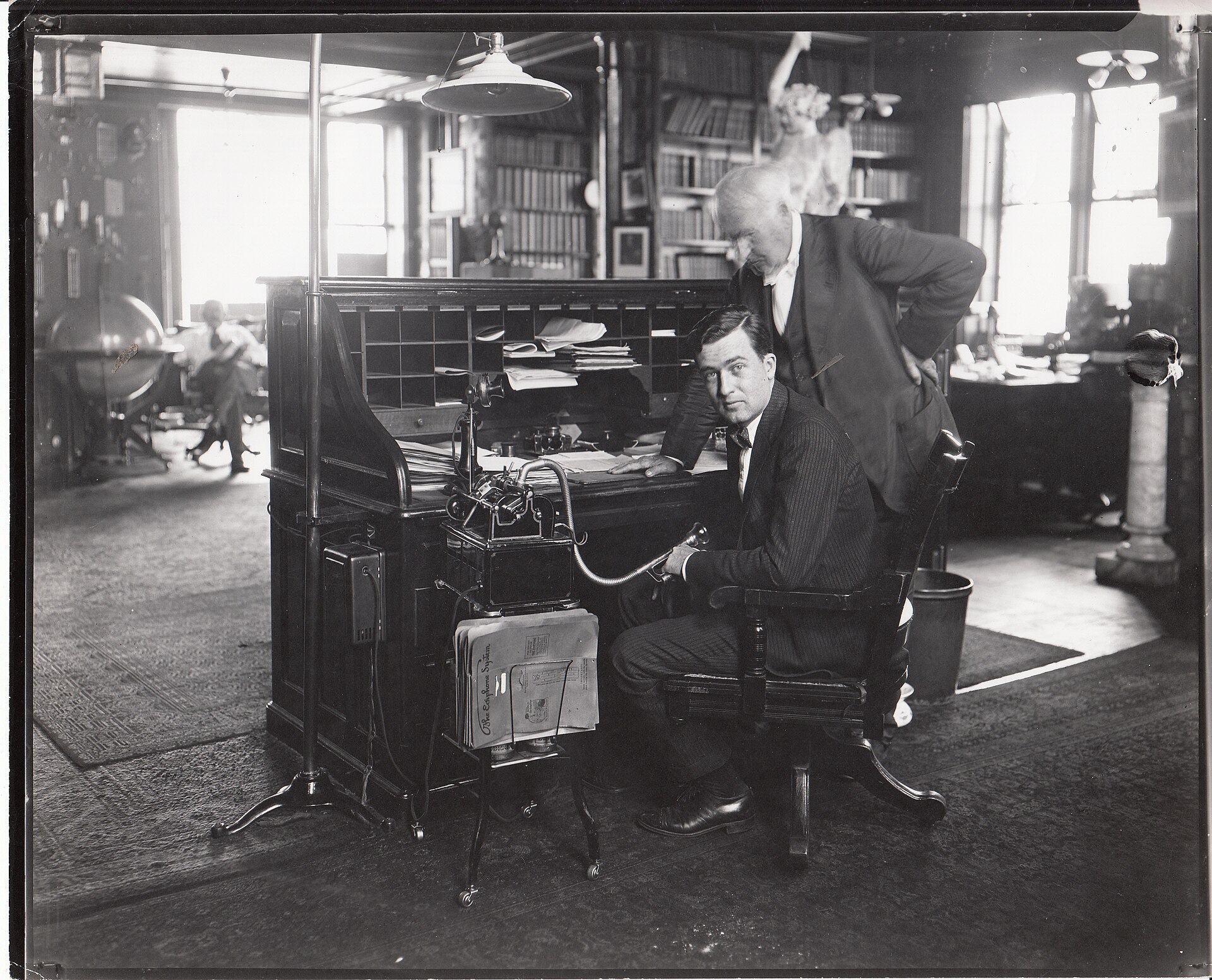
We all know some of those ultra-productive people who get a huge number of things done every day. They make life look easier, as if their days had more hours than everyone else’s. And yet we all have the same number of hours in a day. So… how could we become more productive ourselves?
As Thomas Edison is said to have put it, time is really the only capital any human being has, and the one thing they cannot afford to waste. Money, health… they can come and go, but time, once it’s gone, is gone for good.
To be more productive, look at the habits of those ultra-productive people and make an effort to bring some of their wisdom into your daily life. Every minute you save adds quality to your wellbeing. These are some of the things highly productive people do differently.
See also: How Steve Jobs ran his most productive meetings
How can we be more productive?
1. Learn to say no
Productive people know how to say no, and they mean it. They say it firmly and convincingly. They are very demanding about what they commit to and who they commit to. They are also very clear about who they won’t commit to and which distractions they will turn down.
Once they have committed to something or someone, they always follow through. And when they say “no”, they also stick to it to the end, and nothing and no one can make them change their mind.
For them, no means no: no discussion, no uncertainty. They understand the value of time. Productive people know it isn’t possible to accept every request. After all, they’re human too.
See also: 6 things you can learn in 10 minutes that will improve your life
See also: Richard Branson, Tony Robbins and other successful entrepreneurs share their productivity tricks
2. Forget multitasking: nobody is built for it
One image that comes to mind when we think of productive people is someone doing four things at once. The person who is on the phone, answering emails, typing up reports and planning a birthday party, all at the same time. That person isn’t really productive, because today we know that multitasking is a bad thing. Nobody can carry out two cognitive tasks at the same time. At least not effectively.
Our brains are not designed to do many different cognitive tasks at the same time. If you’re trying to do two things that require concentration and attention at once, neither of those tasks gets done properly or gets the attention it needs.
This often means having to go back and redo something because you weren’t giving it your full attention. It has been shown that multitasking reduces efficiency. It’s better to commit to one task, see it through to the end and then start another.
Doing two things at once is like chasing two rabbits. In the end, both rabbits get away.
3. Prioritise what you consider most important
Productive people don’t have an endless list of emails and phone calls to return. As soon as they receive a message, one of three things will happen. It will be important enough to deal with right there and then.
Or it will be important, but not enough to need their attention, so the task can be delegated to someone else to complete. Or else the matter isn’t important and can be deleted promptly. Productive people spend part of their time drawing up an action plan.
4. Learn to delegate
We can’t do it all. And even if you can, you shouldn’t if you want to be productive. We often spend the most time on the most trivial things. Many of the things we spend most of our time on are precisely the kind of things even a monkey could do.
Highly productive people focus most of their time on what really matters. The rest, they find a way to delegate. Imagine you’re an entrepreneur who is just starting out and you need to get out there and find customers.
If you spend a couple of hours making spreadsheets or greeting cards for your customers, you’re taking time away from the most productive part of the business: winning customers.
One secret highly productive people use is to look at the percentages, to find out which share of tasks takes up most of our time. They often conclude that we spend 80% of our time on things that bring us 20% of the profit. Often, just 10 or 20 percent of tasks are the ones we should really be doing, because they bring in more than 50 percent of the profit. And those are the tasks we should really keep for ourselves.
Further reading
- 16 simple habits that make you look more professional
- 4 myths about work, the office and being more productive at your company
Featured image: Unknown author, Public domain, via Wikimedia Commons.