Like most people, Natalie Houston knows what it feels like to fight procrastination. That is what inspired her to become what she is now: a productivity coach.
“I struggled with structuring deadlines, managing complex projects, and building habits and routines that would help me get the most out of my day,” says Houston. “Learning to solve those problems led me to train in productivity. There are research-tested strategies you can use to build better habits and do your work better.”
One of those habits is to stop believing a whole range of myths about the workplace. The falsehoods out there are rules that don’t apply to everyone, along with practices that have actually been shown to harm success at work.
The WeWork portal has put together a list of workplace myths and what experts like Houston think of them. Here are some of them.
1. The best working hours are 9 to 5
Henry Ford created the idea of a Monday-to-Friday week of eight-hour working days. But there is no scientific evidence showing that those hours, or longer ones, are best for workers or for the company’s productivity in the long run.
If you work in a coworking space or you are self-employed, you can choose what time you work. However, if you have an office job and are forced to keep these hours, there are things you can do to fit them to your personal preferences.
“Take a couple of hours a week to work without interruption,” says Jan Jasper, a productivity coach in New York.
2. You are more productive if you work in an office
Working in an office tends to be the norm, especially if you work 9 to 5.
“It can be hard to be productive in an office, because there are quite a lot of distractions,” says Jasper. “I often hear people say that the only time they can concentrate is if they go in early or stay late.”
According to research by the Chinese travel website Ctrip, when a group of call-centre workers did their jobs from home, they made 13.5% more calls than those who stayed in the office. Thanks to remote working, the employees were more productive.
That is why more and more companies are betting on remote work every day: it lets employees balance their family and working lives better.
See also: Five scientific principles of success every business owner should know
3. Multitasking is better
It may look as if you’re working hard when you’re answering your phone, replying to emails and writing your to-do list. But in reality you’re only getting in the way of your own productivity.
“We think we’re handling lots of things at once, but our brain isn’t designed to do many different cognitive tasks at the same time,” says Houston. “If you’re trying to do two things that require concentration and attention, you’re hurting yourself.”
According to productivity coach Susan Rose, many workers, and salespeople above all, think they should use their car as a kind of virtual office.
“If someone is making a call, they should be parked. Your mind can only handle one activity at a time. Focusing on driving is the first thing you need to do when you’re in the car.”
Research backs Rose’s view: statistics from the National Safety Council show that holding a conversation and driving are two tasks that cannot be done effectively at the same time, and drivers who talk on the phone are four times more likely to have a traffic accident.
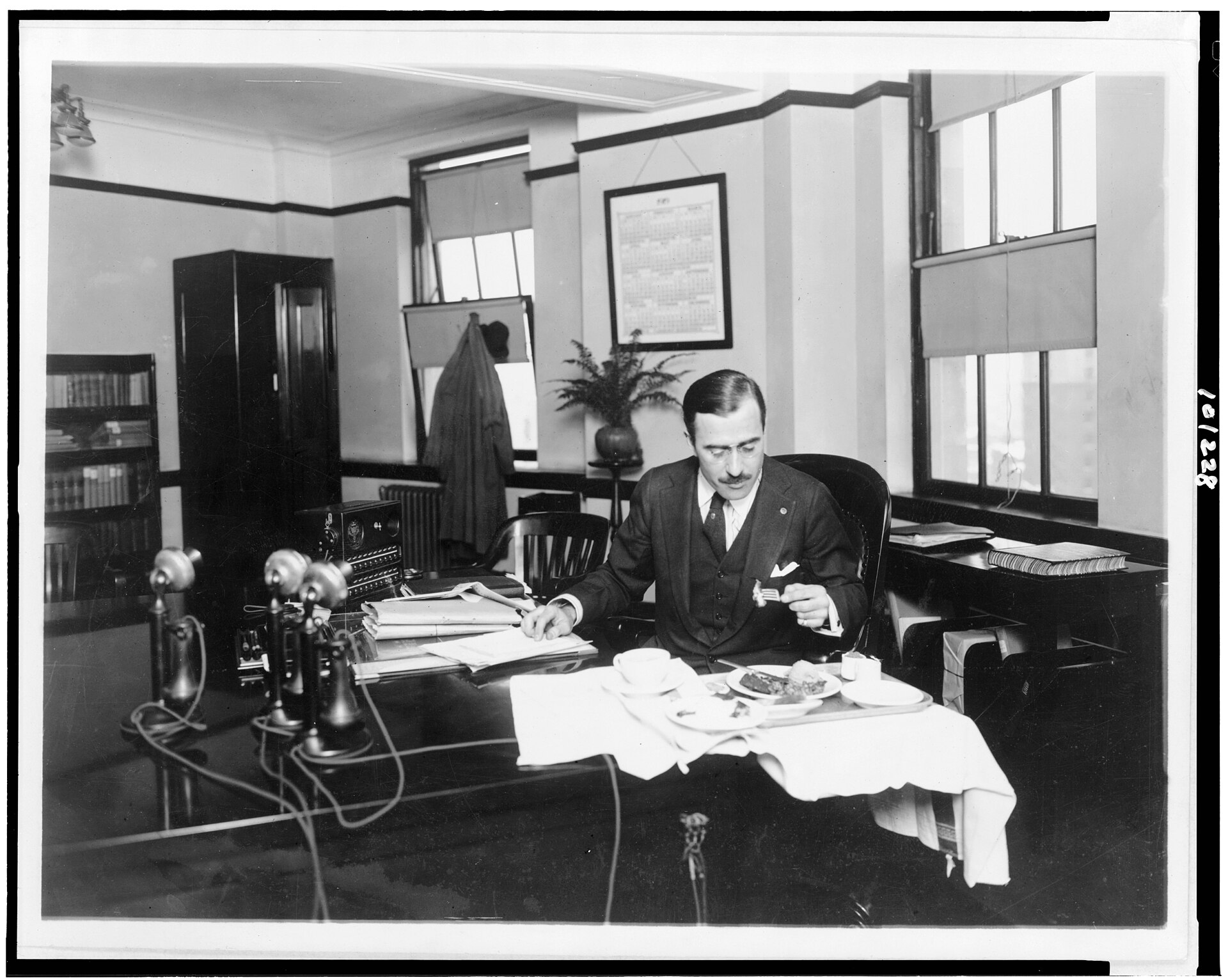
4. You’ll get more done if you eat lunch at your desk
You should never sacrifice your lunch hour just to show that you work harder and to impress your boss and colleagues. Doing so can damage your productivity and your health, because you aren’t taking a proper break.
“Eating well is one of the main health habits that allow people to achieve and maintain a healthy lifestyle,” says Jacob Rupp, a health coach. “Like most things in life, eating is mostly mental. So eating while you’re not paying attention to it could lead you to eat badly and in the wrong amount.” That’s why he recommends setting aside whatever you’re doing and focusing only on eating slowly, without thinking about anything else.
See also: Eight ways to kill employee motivation
Featured image: National Photo Company Collection, Public domain, via Wikimedia Commons.