

This method doesn’t work for every kind of business, although it could be adapted. Some years ago my company supplied distributors, and they sold to the end customer. The customer would walk in and ask for a quote for the product and service, installation included. We found that the ratio of quotes handed out to sales closed was rather low, and worrying too, considering that our product was much better than the competition’s.
As a rule, the customer would ask our distributor for a quote and, at the same time, ask other companies for quotes. As a customer, that is certainly the advisable thing to do in order to weigh up different offers.
One day I remembered the words of one of my sales mentors, whose basic premise was that “customers are stupid. If you treat them as rational people, you’re lost” (no offence meant to anyone). And I remembered an example he used to give us about how, through the options we give customers, we as sellers can steer their choice wherever we want (see: ways your mind betrays you).
The more quotes a customer has to study, the more the chance that they pick ours becomes a matter of statistics rather than a rational choice. It also increases the likelihood that the customer gets taken in by some company that gives them the cheapest quote but with a rubbish product. And I’ve seen that happen many times.
So a light bulb went on.
We brought all our distributors together to explain the new sales strategy, a strategy for raising the quote acceptance rate. We were only going to play with the “irrational psychology” of human beings.
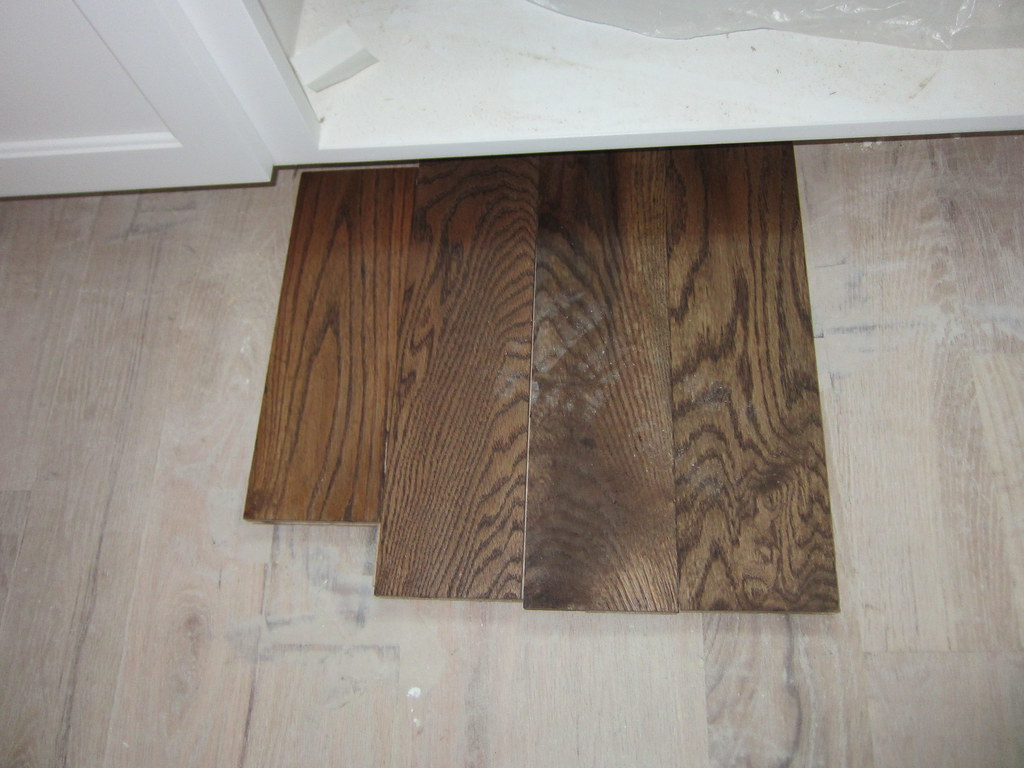
If we sell parquet and floating floors, we’ll give the customer two quotes: one for the parquet and another for the floating floor. Since we want to sell them parquet, we’ll also give them another 2 or 3 quotes with prices for medium-quality, low-quality and high-quality parquet, and we’ll also stress that if they find a very cheap quote from the competition, it’s bound to be because they’re being offered low quality. We recommend high quality even if they have to pay a little more, but without running down the medium quality, which is probably what they’ll end up buying.
If we sell windows and they ask us for a quote for aluminium windows, we’ll get the customer’s head spinning by also telling them about the advantages of PVC windows. In fact, we’ll give them one quote for aluminium windows and another for PVC windows.
First of all, while our customer is thinking it over and discussing with his wife whether to go for PVC or aluminium, he won’t rack his brains so much comparing other companies’ quotes. And if we also give him quotes for 2 grades of PVC and 3 different prices in aluminium depending on the window range, he and his wife will have plenty to talk about.
The customer wants to feel that he’s the one choosing.
Most customers believe they are choosing, but they don’t realise that the seller can choose for them simply by giving them apparent options. In the end they’ll buy what we want them to buy, and if we do it well, we’ll even choose which company they should buy from (ours, obviously).
The result of my experiment.
Quote acceptance shot up, and total sales across our whole distributor network rose by more than 100% in a very short time. It’s very simple to explain.
We like having different options, but having to choose among many options wears us out. That’s why going shopping is exhausting. The idea is to wear the customer out on our own playing field.
The customer already knew they had to compare prices and pick one, ideally with a low price and acceptable quality. When we hand them 3, 4 or 7 different quotes (options), first of all we reduce the chance that they’ll go looking for more quotes from other companies to compare. Secondly, even if they have more quotes from other companies, statistically they’re more likely to choose ours, because we’ve put more tickets in the hat.
And thirdly, and no less important, simply giving them more options makes us look more professional and keeps us in their mind when it’s time to choose a quote.
Be that as it may, the result was more than favourable, and I can vouch that this psychological trick applied to sales works overwhelmingly well.
Further reading
- How to be a great salesperson, plus sales techniques
- How to increase sales in a business in crisis
- Why you should know your own PER as a salesperson
Featured image: Jesus Rodriguez, CC BY 2.0, via Flickr.


