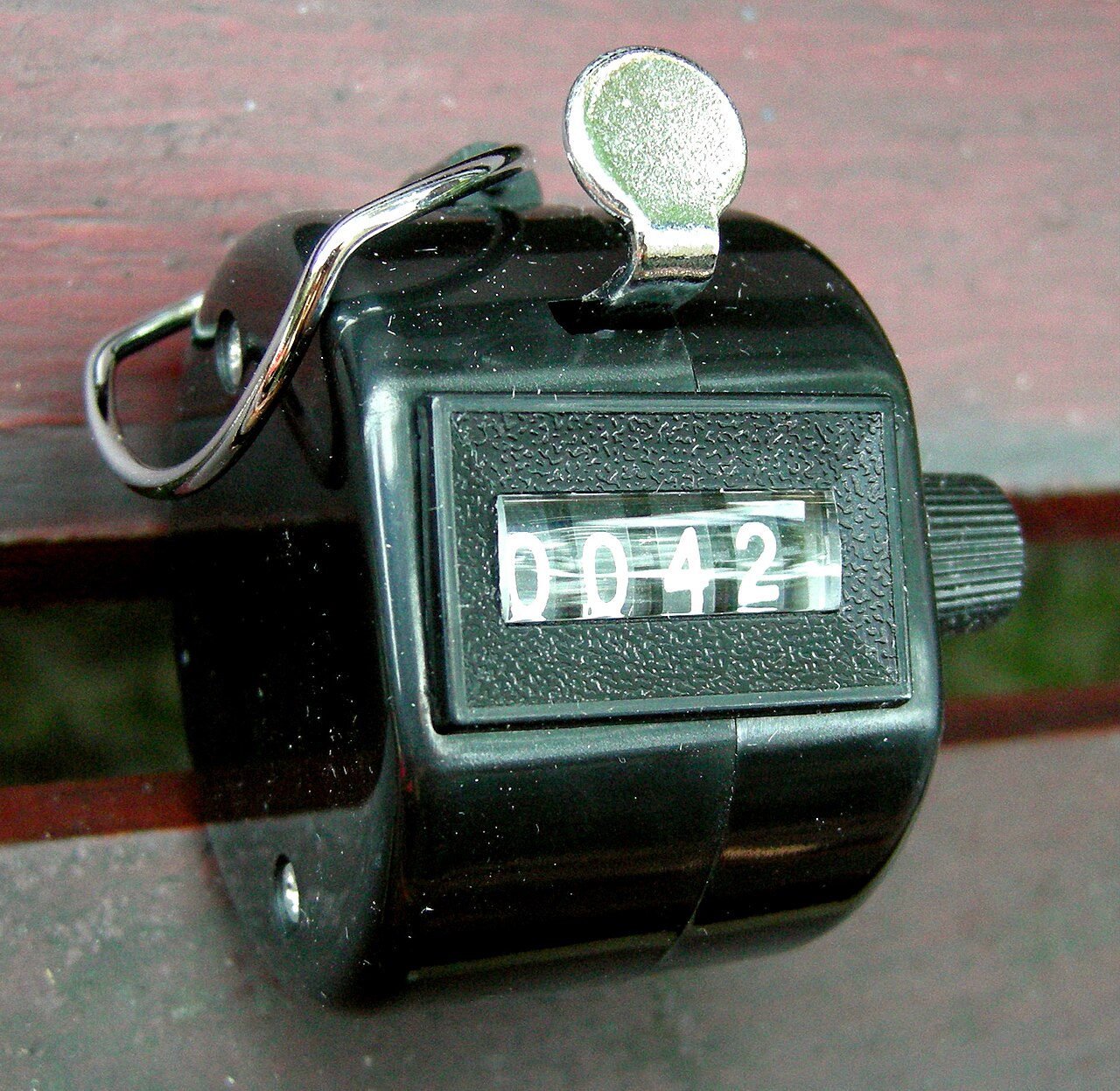
Just as knowing a company’s P/E (the ratio between its share price and its earnings) matters on the stock market, in sales there is a similar ratio between customer visits and sales closed per visit. Very few companies or salespeople give this ratio the attention it deserves, yet it can tell us some interesting things we need to know in order to improve.
Some companies require visit reports (records of the customers each salesperson has seen), but they use them to keep tabs on their salespeople and go no further. Depending on the product we sell or the type of customer, and especially if we have a very limited pool of customers, this P/E could show that the salesperson who sells the most is not always better than another. Below we explain these points and why it matters to know your value as a salesperson.
What is the ideal sales P/E (visit-to-sale ratio)?
There is no average visit-to-sale ratio, because it depends on the product and the type of sale. Working in direct sales, where we will only visit a customer once, is very different from working in a sector where the sale requires a first meeting to make contact and present the product, followed by further visits.
In direct sales, the most common ratio is 4/1, that is, 1 sale for every 4 visits. That would be the average salesperson, while a salesperson who keeps up a 4/2 ratio over time would be exceptional.
In other, tougher sectors, closing 1 sale every 10 visits could be normal.
If there is one thing I learned in the world of sales, it is that sales jobs that require more visits to close a sale tend to have higher staff turnover, which would suggest that salespeople burn out faster in them.
See also: The mistakes companies make when hiring salespeople
(Read: 15 habits of successful salespeople)
Why does it matter to know your sales P/E?
First of all, because it takes pressure off the salesperson. Many salespeople focus so hard on selling that the pressure itself “scares off” the sale.
A sale is the result of a job well done
Suppose a salesperson earns a €100 commission on each sale. If the average P/E at that company is 4/1, the salesperson should think of each sales visit (whether it ends in a sale or not) as earning them €25. Their job, then, would be to increase the number of visits in order to increase the number of sales closed.
Of course, the sales P/E is not fixed, so there will be days when we close 3 sales out of 4 visits and weeks when we strike out three days in a row (12 visits and 0 sales).
Knowing where to work to improve
More than once, when I joined a company, I found that the best salespeople were not the ones who sold the most, bearing in mind that the sales areas were very limited in terms of the type of customer.
Some salespeople closed 20 contracts over a month after visiting 240 customers in total, while others closed 15 contracts after visiting only 140 customers. After seeing how each group worked, we were able to work with both of them to improve their visit-to-sale ratio.
What happened was that the salespeople who sold less, but also made fewer visits, tended to have longer visits and to linger with customers more than necessary once they had closed the sale. Those who sold the most, on the other hand, tended to have a more mechanical, scattershot approach, which was a problem for the company, because they would use up the potential customers in the area faster than planned.
On one side, then, we had salespeople with a more polished and professional sales method who could close more sales with fewer customers and just needed to learn to linger less. On the other, we had salespeople who were considered better and more experienced when in fact they had developed bad professional habits that made them less productive, even though they sold more.
Once we knew where the problem lay, we could tighten the right screws in the sales machine to get both groups selling even more with fewer visits. In other words, to increase the value of the salespeople.
(Read: 7 sales principles I learned from a knife saleswoman)
The sales P/E is contagious
In sales, the selling method spreads among colleagues. Over the years I have seen how a new hire ends up adjusting to the P/E of the group they join.
If we take a good salesperson and put them in a mediocre group, they will become the group’s top seller, but curiously they will be a mediocre salesperson compared with other groups whose members close more sales.
If, on the other hand, we take a mediocre salesperson and put them in a group of elite sellers, they will be the worst in the group, but a much better salesperson than the top sellers in the mediocre sales teams.
And it is not only the number of sales that spreads, but also the method
In short, as a salesperson it is vital to know the average P/E of the rest of the sales team and to keep a monthly record of your visits and sales. That way, if several months turn out worse than expected, we can find the possible fault and put it down either to fewer visits or to the need to rethink our selling method.
See also: Why do companies struggle to find good salespeople?
As for the company, it is good for it to keep track of this ratio, because only then can it see who really has what it takes to be a salesperson, or a method polished enough to teach the rest. So, what is the average P/E in your sector? What is your visit-to-sale ratio?
Further reading
Featured image: Storye book, CC BY 3.0, via Wikimedia Commons.