Editor’s note: This article was first published in August 2013; the levels it cites for the S&P 500, DAX, Nikkei, VIX and IBEX 35, and the losses and debt of the IBEX companies it mentions, are 2013 figures.
The S&P 500 has broken above 1,700 points for the first time in its history, while Germany’s DAX is doing the same, setting all-time highs, and Japan’s Nikkei is heading back towards 14,500 points. And yes, the trend is your friend, as many analysts say, and fine, you should invest in markets with a clear uptrend, but… by the same token, one of the main pieces of investment advice is not to buy expensive, and we could be at one of those moments when companies are priced extremely speculatively on future earnings and are overvalued.
Just look at our own IBEX 35, where we greet with joy the results of companies losing 900 and 600 million. We are rewarding them with share price rises, and companies with 50 billion euros of debt are getting buy recommendations. Has the market gone mad? Let’s take a look.
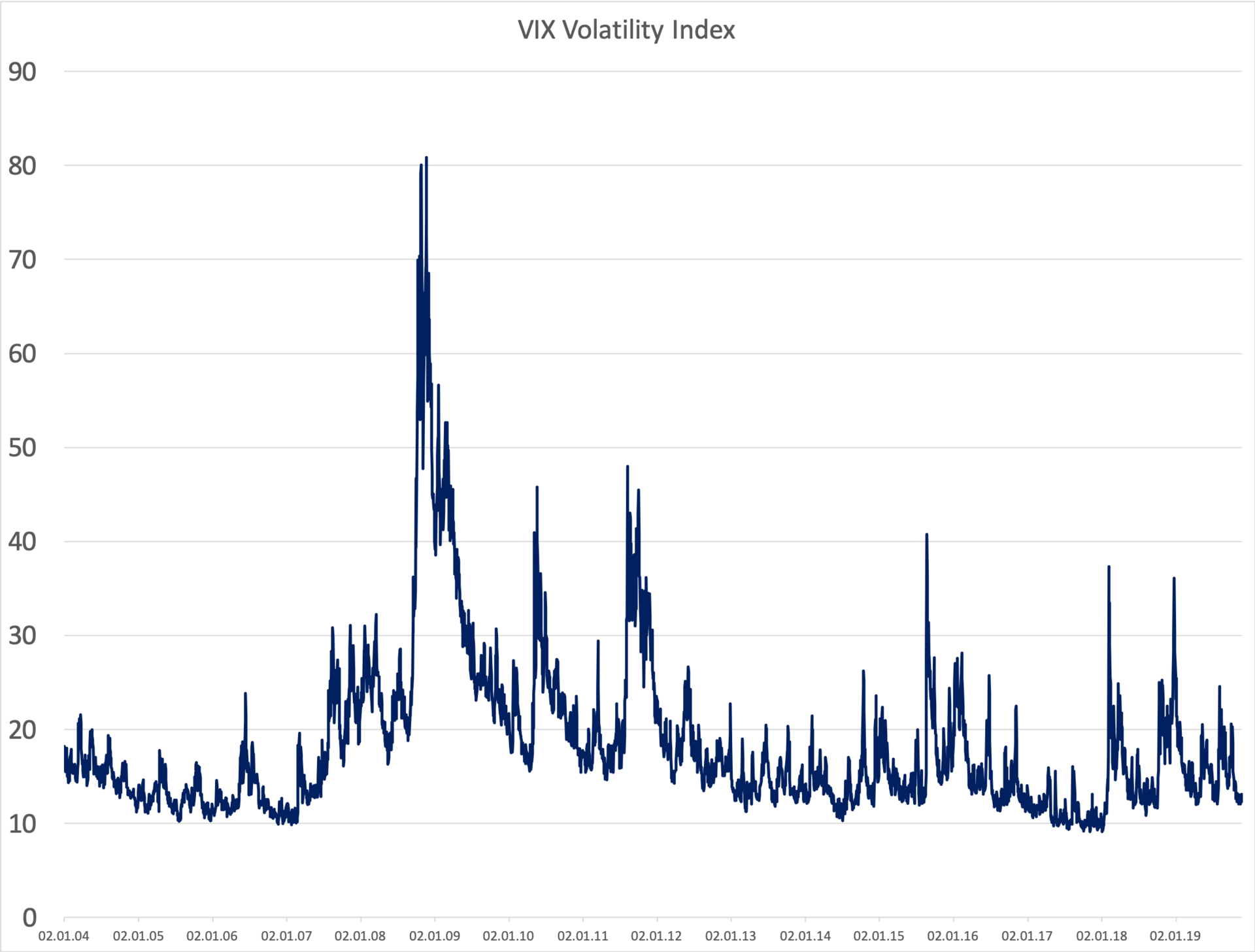
In charts published by John Mauldin, which seem to show the current strength of the markets, the VIX alone tells us that volatility has fallen to its lowest level since 2007. In fact, it is at exactly the same level as in 2007. That could be read as a positive sign, but it could also be one of the most negative.
According to Mauldin, these indicators usually reflect prosperity in the real economy, but in the current situation prices may not be reflecting reality.
The recipe for a stock market disaster is a combination of high prices, rising valuations, low volatility and a weakening trend in real revenue growth. Put together, these ingredients could spoil long-term returns and cause very serious market instability.
There is no doubt that, right now, there is more bullish sentiment than real bullish data. If we look at the main smart investing strategy, which basically comes down to the long term, low prices, companies with little debt and recurring profits, there are very few stocks on the market today that meet these requirements. That won’t stop them from rising, because we are clearly in the middle of a buying frenzy, but we don’t know when this frenzy will end (or whether it will). Nobody knows whether the sharp correction that was expected for the US market will finally arrive, how big it will be, what effect it will have on European indices, or whether the Chinese property bubble will burst.
Is the Spanish stock market expensive?
Not expensive: very expensive, if we look at the numbers our listed companies have reported. Although our shares may look like a bargain at the levels they are trading at, make no mistake: they are no bargain. Most are companies with excessive levels of debt and results that are, in general, very weak for their stock market value.
And the curious thing about the stock market is that the IBEX could rise as far as it likes. As you know, we are in a clearly sideways (slightly bearish) channel between 7,500 and 8,780, with no reason to break out of it either upwards or downwards. So all we can do is keep an eye on our investment portfolio and be ready for the unexpected, because we are not fortune-tellers and don’t know when or what. But something still doesn’t add up about these all-time highs, which are unjustified given the real, current situation.
Featured image: De nue pw, CC BY-SA 4.0, via Wikimedia Commons.