

Editor’s note: This article was first published in September 2011. Its “current” daily target and stock positions refer to 2011, and several of the stocks mentioned, such as Jazztel, Vueling, Gamesa and Abengoa, have since been taken over, merged, delisted or gone bankrupt.
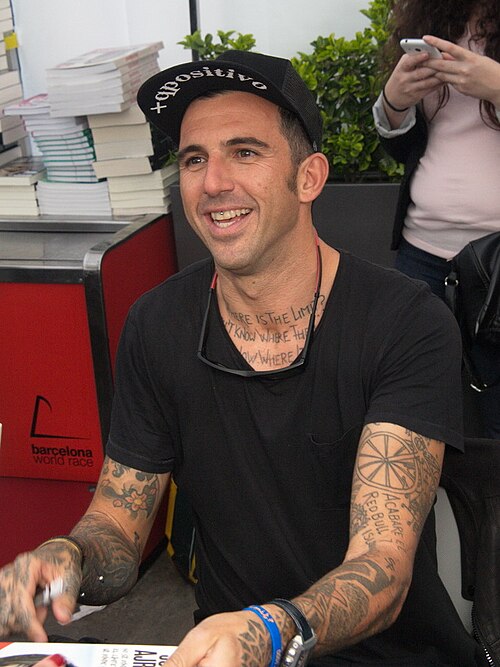
An elite Spanish athlete and stock market day trader since the age of 18, Josef Ajram claims to have the ideal investment method for making money on the stock market, even when the market trend is clearly downward. Ajram applies the drive to improve, discipline and persistence he learned in sport to the difficult world of the stock market. In fact, he’s the author of the book “Ganar en la bolsa es posible. El método Ajram” (“Winning on the stock market is possible: the Ajram method”). So what is this unusual investor’s secret?
According to Diario Empresa, during 2007 Ajram moved more than 360 million euros on credit on the trading floor, with a single guarantee of 100,000 euros. He didn’t disclose his profits, although he said he paid more than €150,000 in commissions. However, in Josef Ajram‘s own words, his investment method is for “poor” investors: he argues that if you’re an investor with a few million in cash, this isn’t the method for you. (At the end of the article we’ll give our opinion on some of these points.)
The Ajram method
The only way to succeed on the stock market right now is by “day trading“, that is, opening and closing many trades every day. Ajram recommends under no circumstances investing in the medium or long term, given how volatile the markets currently are. Clearly short-term positions.
Ajram bases his system solely on technical analysis and the speed of his trades. He invests only in the Spanish stock market. He has never invested in other kinds of markets, nor in indexes, commodities, investment funds or pension plans.
He invests either directly in shares or through CFDs (contracts for difference). The rest of his wealth is diversified into other kinds of investments, such as bank deposits and sports-related companies.
The secret of his success on the stock market lies in setting stop-losses, but never profit limits.
Which stocks does Ajram invest in?
No blue chips. Ajram is clear that for intraday trading you have to look at very volatile small caps that trade plenty of volume. The stocks he likes are Jazztel, Abengoa, OHL, Gamesa, Telecinco, Vueling and Técnicas Reunidas.
Ajram advises setting yourself a daily profit target. His initial target was €100 a day, although he says his target is now much higher.
Our personal opinion
We’re not going to judge Ajram’s method, although on the face of it, it’s a method that on its own has every ingredient needed for an inexperienced person to lose all their money and end up in debt as well. When we talked about the most serious mistakes investors make, one of them was playing the stock market with borrowed money. Well, when you invest using Ajram’s favorite product (CFDs), you’re practically investing on credit, with a promise to pay in the form of a guarantee.
I know it’s very eye-catching to hear on television lately that some people make a lot of money in a recession, as Alessio Rastani pointed out. It’s just as eye-catching to hear a trader say it’s possible to make a lot of money in a falling market. We don’t doubt that Ajram manages it, as his wealth speaks for itself, but it’s also true that in 2006 Mr. Ajram lost €110,000 on one investment. He says he went back to the trading floor and recovered that money. How do you recover €110,000 with an investment method meant for “poor” investors?
As for setting a daily profit target, it’s a double-edged sword: when we’re losing, we’ll bet again to win it back. If we lose again, we’ll have to bet a bigger amount, no longer to win but just to recover the accumulated losses, turning the art of stock market investing into a casino.
As I argued in an old article, when we compared the returns of traders making more than 700 buy and sell trades a year with our own 15 to 30 trades a year, our returns were clearly much higher than those of the supposed trading experts. See Trading vs. intelligent investing.
Remember: being an investor doesn’t mean you should be investing all the time. A good investor also knows when to stay out of the market until a particular situation has passed.
Featured image: Amadalvarez, CC BY-SA 4.0, via Wikimedia Commons.



