

Editor’s note: This article was first published in November 2011. It reflects the context of that year: post-crisis stagnation in Europe and the US and fears of a new crisis in 2012.
The organisers of the Lindau Nobel Laureate Meetings in Germany came up with the idea of bringing together the 10 best economic minds from 65 countries for a few days so that each of them could contribute their own idea or advice for getting out of the crisis. Each one put forward a measure that would help halt the current recession and ease fears of a new crisis in 2012.
One thing became clear after the four-day “retreat”: governments must act now to keep the current stagnation of the European and US economies from dragging on. Here are 5 of the 10 ideas. We’ve picked the most striking ones, along with a few that are curious coming from a Nobel laureate.
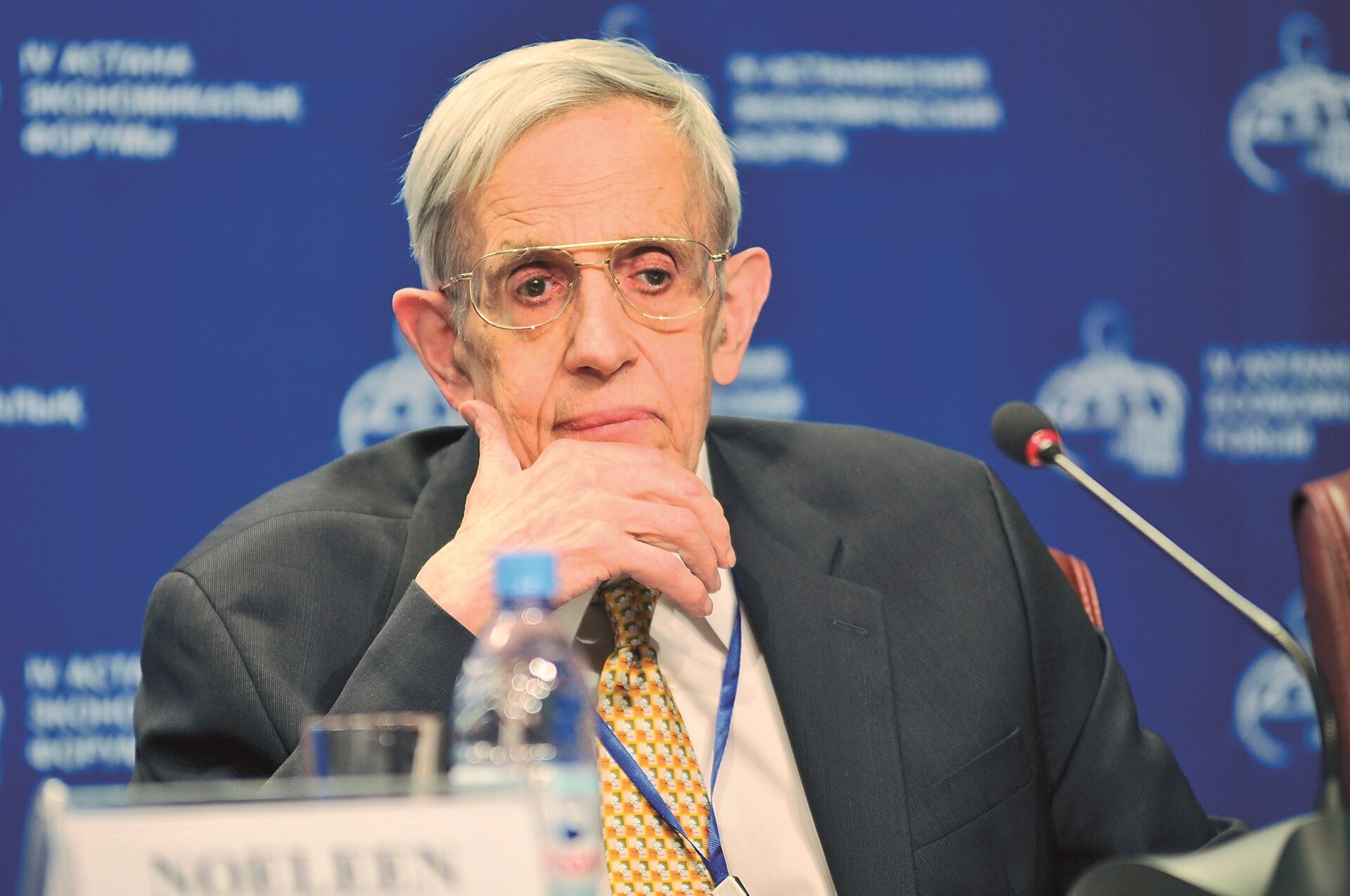
1. John F. Nash: create a single world currency
This Nobel laureate may be the one everyone remembers, since his life was brought to the big screen in A Beautiful Mind, starring Russell Crowe.
According to John Nash, good money holds its value, while bad money loses value through inflation. He proposes a single international currency: that way, financial crises would be less severe, because exchange rates would be less affected by fluctuations. It would also improve world trade. Mr Nash does argue, however, that without political and banking honesty this measure would be of little use.
2. George A. Akerlof: jail for those who drive a company into bankruptcy
Don’t worry: this man isn’t proposing to jail entrepreneurs whose businesses don’t succeed, but business owners and executives who personally profit from their company’s bankruptcy.
He proposes that white-collar criminals be severely punished with prison, heavy fines and, if necessary, expropriation of the company.
3. Sir James A. Mirrlees: charge VAT on financial transactions
Sir James received the Nobel Prize for finding the formula for fair taxation and, as with so many Nobel laureates, was awarded a prize for a great idea that is then never applied in real life.
He proposes charging VAT on financial transactions, since he doesn’t understand why every company and consumer pays a tax while big investment funds move billions without paying any.
4. Edward C. Prescott: we must abolish unemployment benefits
Edward says he sees no sense in paying someone not to work, because that person becomes a burden on the economy. A magnificent idea, to which I would also add paying workers much less and making the working day longer.
Perhaps we could also bring back an old-fashioned employment contract: “you work, and the employer gives you food and lodging”. Congratulations on the prize, Edward, although I would honestly ask them to review it in case there was some mistake.
5. William F. Sharpe: avoid complex investment products
I completely agree with Mr Sharpe, because the truth is that financial derivatives are largely to blame for the crisis. People have always invested in shares, and it has even been very healthy for the economy and for companies. But once derivatives started to spread whose long-term risk not even the analysts themselves can predict… there’s no need to spell out what can happen. Warren Buffett himself called these products “financial weapons of mass destruction”.
Sharpe calls for more oversight of these products by the regulators, and for investors to be properly warned of their dangers. As we said in a previous article, one investment product was largely responsible for the current crisis: CDS (insurance contracts). This Nobel laureate believes investors should return to simple ways of investing.
Featured image: Economicforum, CC BY-SA 3.0, via Wikimedia Commons.



