Editor’s note: This article was first published in December 2011, when hybrid shops were described as a growing trend with the first premises just appearing in Spain. The format is now widespread.
Innovation is the right word for what traditional shops need, hospitality included. As an innovative business idea, today we’re suggesting hybrid shops, which are increasingly popular in some countries, including Spain, where the first premises of this kind are already appearing. So what are they?
I’m sure this idea could be applied to a wide variety of businesses. It would come down to the entrepreneur’s quick thinking, but for now we’re talking about places that combine a restaurant and supermarket, a café and shop or a café and supermarket. The success of these businesses lies in a carefully worked-out marketing strategy, as well as in meeting a real customer need. Here are a few examples.
Two types of hybrid shop
1. The café-shop hybrid
Think of the mothers and fathers who take their children to school and then meet up at a café. As a rule, they’ll need to buy everyday items such as bread, milk, water, juice and so on, so it would be handy for them to pick up those basics while they have their coffee, rather than having to do it after leaving the café.
In Spain there are also cafés and tea rooms that specialize in quality coffee and tea imported from different countries (Greek coffee, coffee from Colombia, Italy, Brazil…). In these places, if customers like the coffee or tea, they can buy it by weight, so the business has two revenue lines.
In the same way, when someone goes into a shop and finds they can have a soft drink or a coffee while doing their shopping, that’s profitable for the business too.
2. Hybrid restaurants
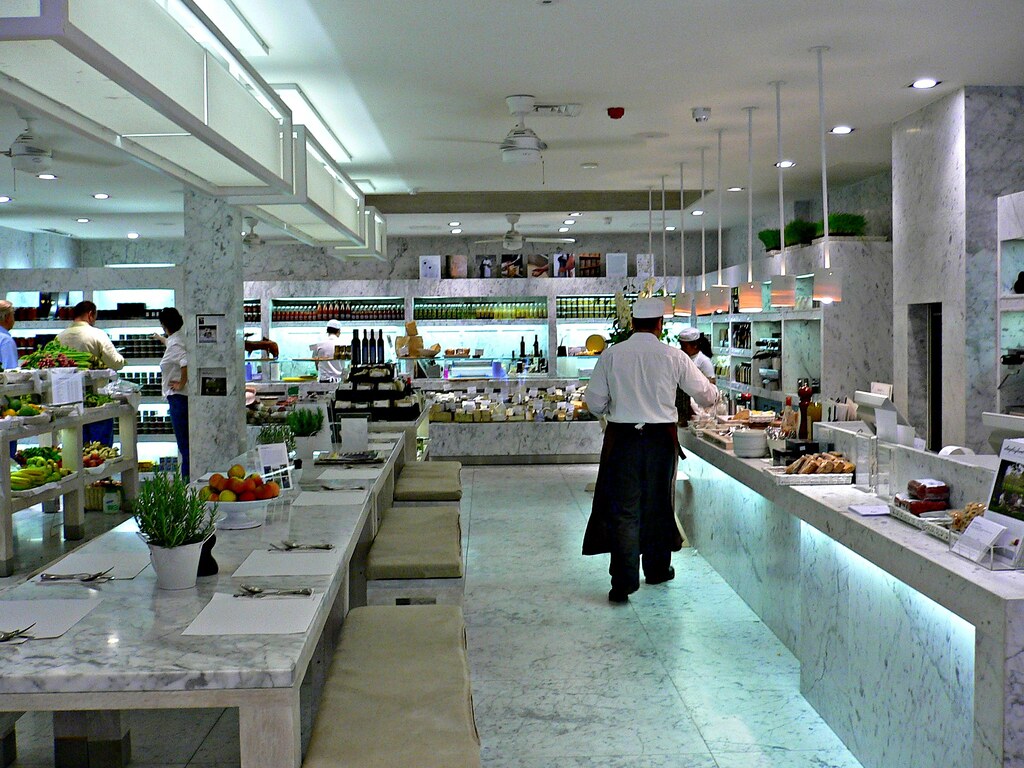
Like the previous example, these restaurants usually specialize in quality food products. Customers have a meal at the restaurant, and if they like the Manchego cheese, the Iberian ham or the meat products, they can buy them just as they would at the deli and meat counter of a supermarket.
These businesses also have two revenue lines, and the two are usually clearly separated: on one side, the restaurant has its own clientele, and on the other, there’s a counter serving the public that sells all these products. Customers of each side see the other business and can always step in. Another clear advantage of having both is that the restaurant doesn’t need an outside supplier, since the “shop” side supplies it, which allows a higher profit margin.
At the start I said this kind of hybrid business model could be applied to other sectors, and the truth is that if you find a way to fit it into a clothing store, a travel agency, an insurance business and so on, you could make your main business more profitable while creating a second revenue line. As I said, it’s a matter of thinking creatively.
Another of the biggest advantages for the entrepreneur is that it’s two businesses in one, so you can reach the profitability of two small businesses with the tax costs of a single company.
See also: Is opening a café worth it? Ideas for this kind of business
Featured image: Hereward L, CC BY 2.0, via Flickr.