

Editor’s note: This article was first published in September 2021, and its prices are Spanish 2021 figures: a coffee at 1.20-1.50 euros and investments of 10,000 to over 100,000 euros. Its remark that electricity is the number one enemy reflects Spain’s high power prices in 2021, and its closing section reflects COVID-19 restrictions in 2020-2021.
Is opening a café a good business? How can we make a café more profitable? In this article we’re going to clear up many doubts about this business, considered highly profitable, and offer some ideas to help you stand out.
We’ve often heard that opening a café or bar is a business where everything is profit. And it’s true that the profit margins are very high, but we need to look at the factors that work against profitability.
Most cafés don’t make it to 5 years, even though it’s a highly profitable business. Let’s see why.
Is a café profitable?
To start with, following the basic law of more customers, more profit, we’ll first focus on how to make customers come back and on choosing your customers. This is a complex subject, because having a café in a busy, high-footfall spot in a capital city is not the same as having one in a village. The rules change.
See also: 17 business ideas for small towns
Customers come back to a café for three essential reasons:
- Quality
- Service
- Cleanliness
These are the 3 main reasons, because price may be important, but it isn’t everything, since it’s included in quality. In fact, we can see how Starbucks has succeeded, and its prices certainly couldn’t be called cheap.
- If you serve with a smile, the customer comes back.
- If the place is clean, the customer comes back.
- If the coffee and the other things they had were good quality, the customer comes back.
- If your prices were cheaper than the competition’s but you break any of the other three rules, the good customer won’t come back, but the problem customer who only wants to spend little will.
Coffee: the most profitable product in a café
Never forget that coffee is the product with the highest profit margin in a café. Since it has such a high margin, don’t squeeze it more than you should by using blends. Try to make sure your coffee is of excellent quality and without torrefacto (beans roasted with added sugar, common in Spain). Or at least with a low percentage of torrefacto.
There are upmarket cafés that charge a high price for their coffee, and it turns out the coffee is 70% natural roast and 30% torrefacto. A bomb for the stomach and for anyone who appreciates good coffee.
The difference between a kilo of natural-roast coffee and a kilo of blended coffee can be 2 to 5 euros (there are much more expensive coffees, but then you’d have to raise the price of a cup a lot more). It’s not worth serving a poor product for that amount of money. You may be wondering, if it’s not worth it, why some places do it.
They do it for a simple reason. If these places use 2 kilos of coffee a day for the 30 days of the month, they think they’re saving about 180 euros a month. A considerable saving, but they forget that they’re losing customers worth more than those 180 euros. Let’s call it poor business management and a big mistake.
Coffee also works as a draw
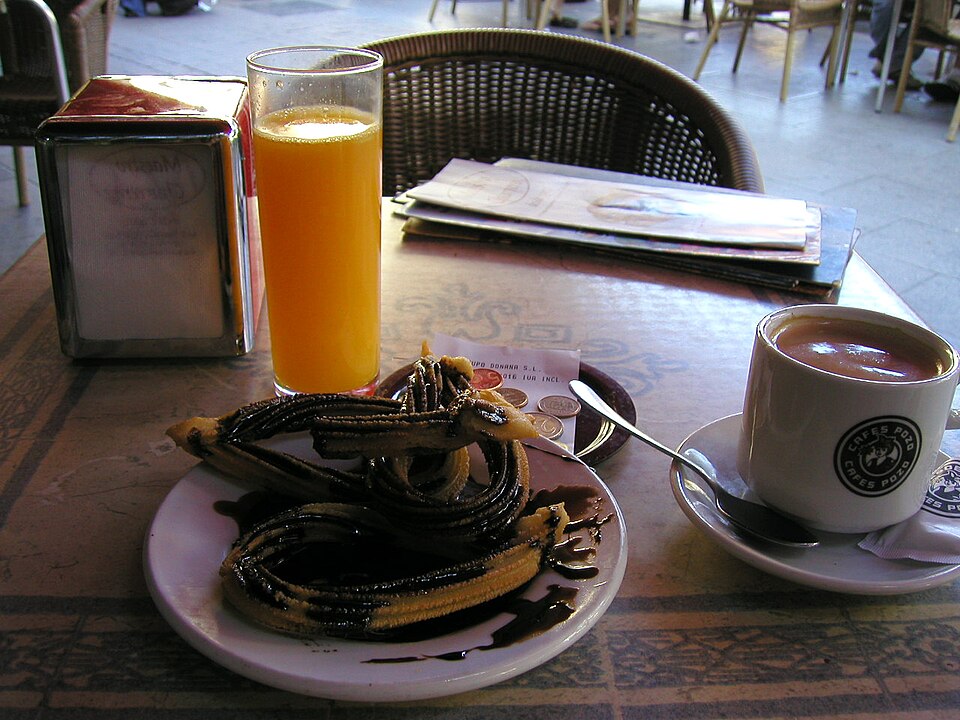
Sometimes we shouldn’t focus so much on the fact that, with a coffee that may cost 1.20 or 1.50 euros, you’ll have to sell a lot of coffees to generate significant revenue. Bear in mind that breakfast can be the main draw for winning the loyalty of a customer who will probably also come back any afternoon or evening.
And now we’ll look at how we can expand the range of things that make a café profitable.
The cubata
The cubata or cuba libre (a spirit with a mixer, typically rum and cola) is another product with a high profit margin, but it can also be the one that causes your place the most trouble, because bad drinking brings bad customers. So if you want a select clientele, price your cubatas higher than your competitors do.
Some cafés don’t sell alcohol at all, which, depending on the style you want to give your café, might not be a good idea. If you want to create an upmarket atmosphere, well-presented drinks at a high price can turn your place into a meeting spot for the right kind of people, and not just for those looking to get drunk cheaply, who are problem customers that don’t fit with what we should be aiming for.
Innovation
All success depends on constant innovation. Offer new flavours of toast or pastries; set yourself apart from your competitors. Create a welcoming atmosphere: comfortable chairs, pleasant lighting, decoration and so on.
Even if the custom that exists in Andalusia (the tapa) doesn’t exist in your country or city, it could be a great success. A tapa is a “free” snack you give your customer with a drink, usually with a soft drink, a beer or a cubata.
On the subject of innovation, we gave some ideas in our article “Ideas for hospitality businesses”.
And if you’re the first to offer this kind of service, setting yourself apart from your competitors, you’ll be one step ahead.
Why cafés close
So far we’ve talked about high-margin products, in the case of coffee a return of more than 1000%. A simple Coca-Cola costs the bar about 0.27 euros and it sells it for 1.50 euros.
You’ll need to keep a close eye, above all, on refrigeration. If you have a lot of fridges, electricity is, as things stand, the number one enemy of this business. Air conditioning for the premises, a drinks fridge, another for beer, ice cream, pastries, machines… electricity eats up a large part of your business’s profitability, because whether you have more customers or fewer, your monthly electricity bill is about the same.
Then there are taxes, occupational risk prevention, basic security measures for the premises and so on.
Even so, after covering all these expenses, the business is still profitable (as long as customers come in).
Ideas to make more money in a café
Some products have a low profit margin but act as a draw to sell other products with a higher margin.
Simply selling bread in the café means that someone who usually has breakfast somewhere else, if one day they want to buy bread, will take the opportunity to have their coffee in your café because they need bread. The same happens if you add a cake or pastry section to the café.
Profit in business can come from selling one big thing with a high margin, or selling many things with a small margin. And if, on top of selling lots of small low-margin products, a high percentage of those customers also buy the product with the highest margin, you tend to enter a circle of added profitability.
Hybrid cafés
This is an idea worth considering that took off in the United States. A hybrid café can be a place where you have a café on one side and also sell clothes, for example. In the same way, it can be a clothes shop where you walk through a door and find a café.
It’s an ideal way to leave the family having breakfast while you’re shopping for whatever you need. Entrepreneurs who run lottery outlets have also applied this idea. Let’s say they are cafés where, at the back, you can buy lottery tickets and play Bonoloto, EuroMillions and so on (popular Spanish lottery games).
In this case you have two highly profitable businesses under a single legal entity. It’s a matter of thinking about how you could turn a café into a hybrid.
How much does it cost to open a café?
This is one of the things people search for most when they become interested in the café business, but it’s actually a rather irrational question, because it depends on what kind of café you want to open, its size, its decoration and so on.
I’ve seen cafés where more than 100,000 euros were invested and I’ve seen cafés where the investment didn’t exceed 10,000 euros. Clearly, the café that cost 100,000 euros to open did much better. It thought bigger, more upmarket, and became a reference point, while the cheaper one never became a welcoming place. Even so, although that café was somewhat grimy, it allowed the married couple who ran it to pay off all the debts they had before opening it.
So they made the bar pay off handsomely.
The biggest enemy of a bar or café is the work
Nobody wants to work as a waiter for the rest of their life, so what makes you think that if you spend every day behind the bar, even if it’s your own business, you’re going to last more than two or three years? It’s hard. This is where you need to draw up a plan and a clear strategy.
You should find a way for your bar or café to run without you having to be there; otherwise this business will end up wearing you out.
I once met a hospitality entrepreneur who used to say: “A bar or café is a business that makes you a slave, but when you open two more bars, it stops being one.”
What he meant is that with 3 premises, obviously he can’t be in all three at once, so that’s when he looks for a way for the other two, at least, to run on their own, and once he’s achieved that, why not make the third one run on its own too.
That way of thinking is what separates a waiter who works in a bar from a hospitality entrepreneur. This doesn’t mean you shouldn’t put in more hours than anyone else when you first open.
Remember: achieving a big profit in the long term takes a big effort in the short term.
That said, a bar really is all profit and one of the most profitable businesses there is, but if it’s not managed properly, it will also cause family problems and sometimes health problems.
Is it worth opening a café despite the pandemic?
Clearly, when governments have to take measures to contain the pandemic, the businesses hit hardest are those in hospitality, including cafés. And there’s little you can do about that, because if you’re forced to close, there’s no income.
One solution during a pandemic would be to offer delivery. In fact, many bar owners in Spain did exactly that, since at least home delivery, or food and breakfast to take away, was allowed in some Spanish provinces.
This is what’s called reinventing yourself, and when things get ugly and there’s no other option, it’s what you have to do.
See also: 37 low-investment, high-profit business ideas
Featured image: jonmcalister, CC BY-SA 2.0, via Wikimedia Commons.



