Editor’s note: This article was first published in April 2012; it is an opinion piece covering Rajoy’s first budget, Spanish unemployment at 23.6% and the Greek debt crisis. Its forecasts of Greece’s imminent bankruptcy and a possible end of the euro should be read as 2012 commentary.
Greece is financially dead. It has no way out and no chance of solving its debt problem, so all it can do is borrow a little more to delay its imminent bankruptcy. Greece is an example of austerity measures that lead nowhere, and all they achieve is that some Greeks take their own lives in front of the government’s doors.
Spain has started down that same road of cuts, which, according to Greg Fuzesi, an economist at JPMorgan in London, began too late, so he foresees some very hard and uncertain years for our economic recovery. International investors, including Berkshire Hathaway, Warren Buffett‘s flagship company, want nothing to do with continents applying austerity in the middle of a recession, because in their view those measures lead nowhere.
The European Union is weighed down by countries such as Spain, Portugal, Ireland, Greece and Italy. The aim is to increase exports in order to achieve economic growth. In fact, Spain has increased its exports, which would be great news if it weren’t for the fact that domestic consumption has contracted.
We can send the rest of the world a message of economic growth, but when we present the real figures, the only growth we show is growth in the number of unemployed.
Nicholas Spiro, head of Spiro Sovereign Strategy, a prominent consultancy in the City of London, has assessed the budget measures Mariano Rajoy has presented. He argues that they lack credibility as a path to the country’s economic recovery. Ironically, markets find them hard to believe because they are not austere enough; in other words, he should cut even more. Yet for Spiro and JPMorgan, these measures could very likely lead us to a situation like Greece’s, because every investor knows that austerity, inflation, falling consumption and recession are a cocktail designed to keep a country from getting back on its feet.
With unemployment at 23.6% in Spain, very high youth unemployment and rising taxes, if the government ever decided to touch pensions, introduce healthcare co-payments or cut social benefits, we shouldn’t rule out tragic situations like those seen in Greece in recent months.
Spiro’s conclusion: the more Mariano Rajoy’s government talks about austerity in Spain, the more frightened the markets become.
I still think the real debate needs to be opened, and that means starting to talk about debt forgiveness. Otherwise, we may soon be talking about the disappearance of the euro, with all the consequences that would bring.
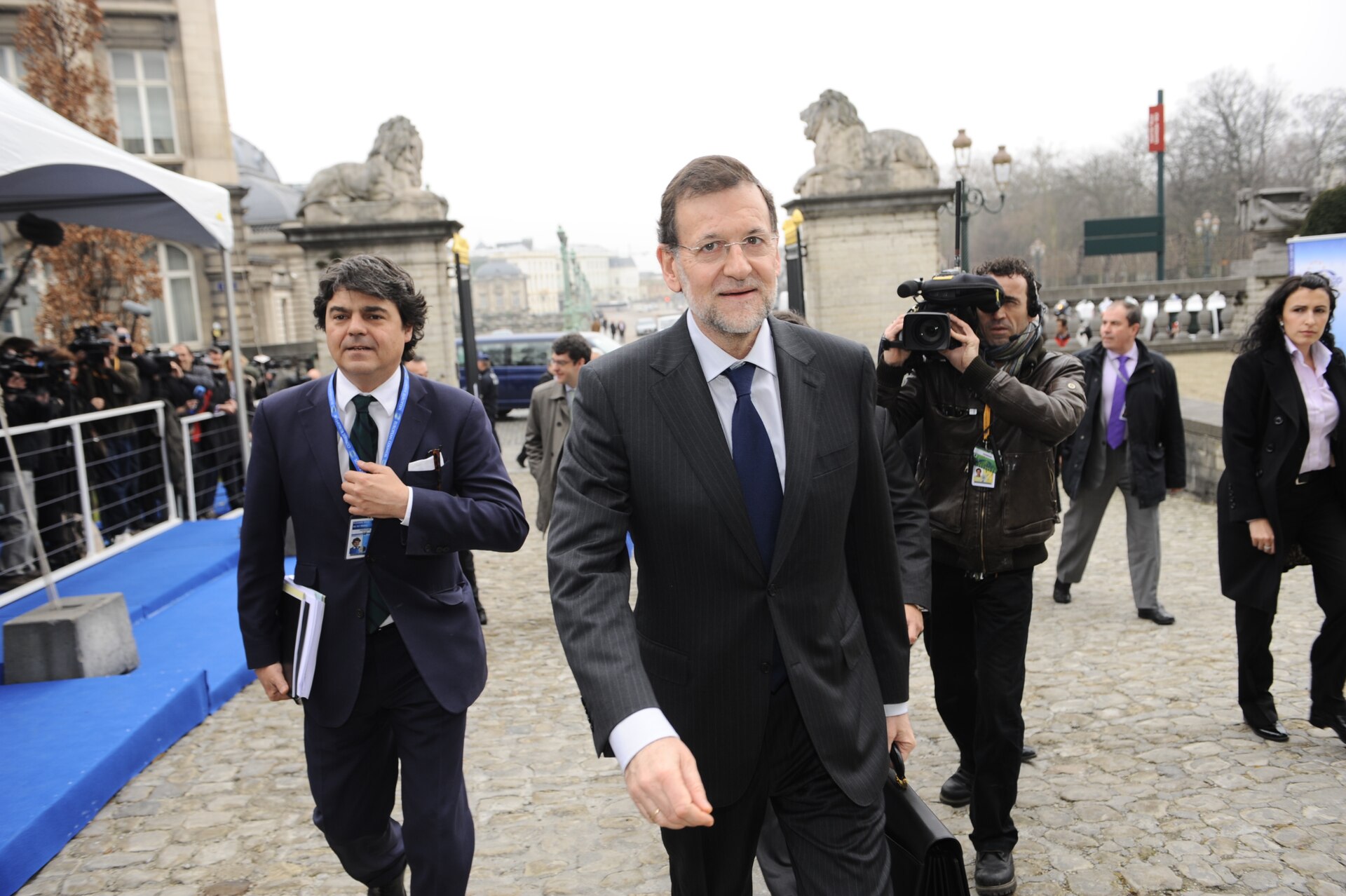
Featured image: European People's Party, CC BY 2.0, via Wikimedia Commons.