Editor’s note: This article was first published in August 2012, as an opinion piece before the ECB meeting of 6 September 2012 and the German Constitutional Court ruling of 12 September 2012. Its two possible scenarios are predictions since overtaken, and the bailout, cuts, bond yield and unemployment figures are from 2012.
That’s the deadline estimated by billionaire George Soros: about three months to fix everything that has been done wrong in Europe so far. Soros himself can’t see a clear way out of the European crisis unless the ECB steps in, so he is calling on European leaders to win Germany over. Then again… until now we were talking about a financial crisis, and today I’m not so sure any more. This is a political crisis, plain and simple.
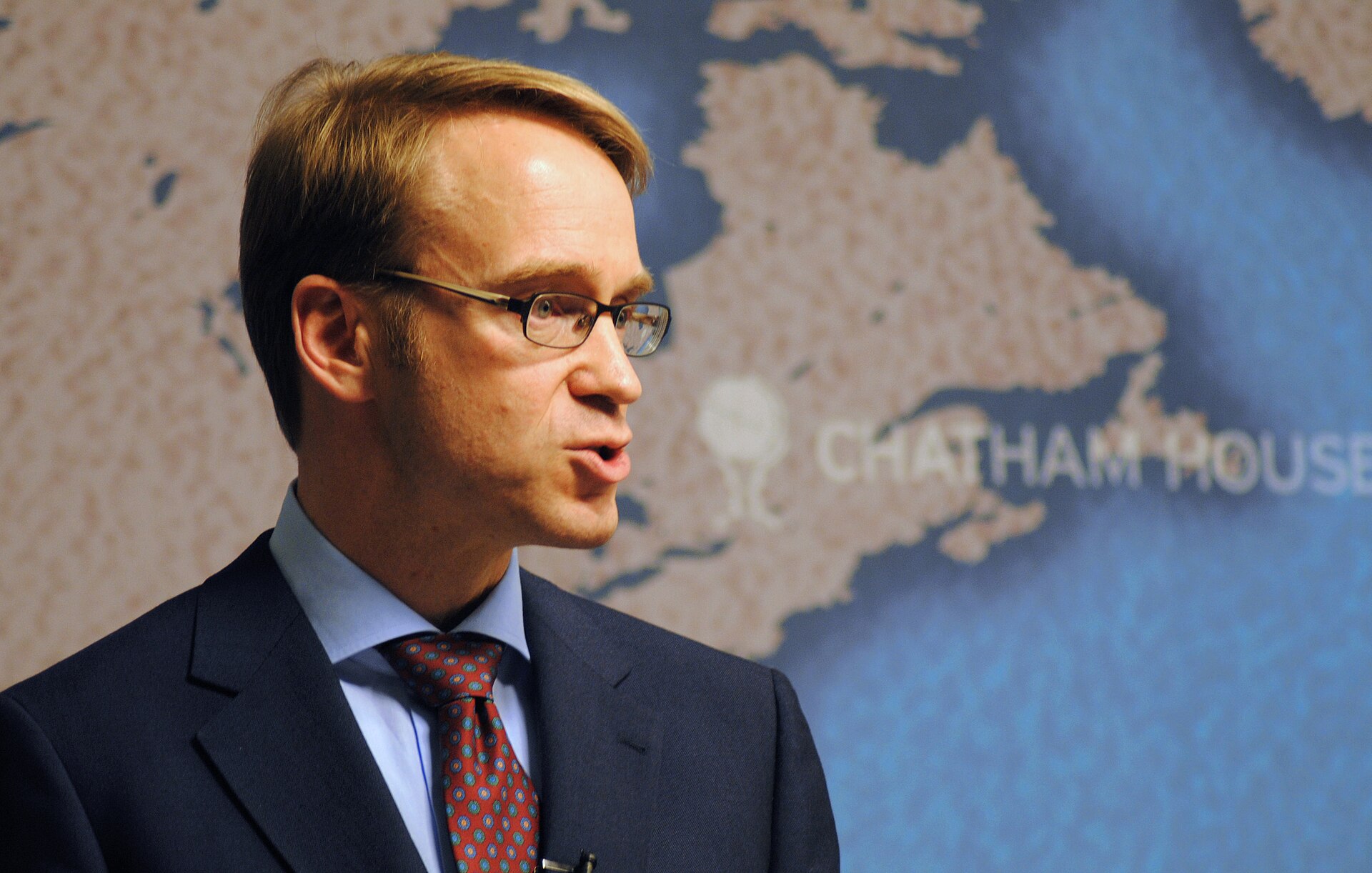
Put simply, we define a financial crisis as a shortage of money and an excess of debt, just as we define a political crisis as a shortage of action from politicians and an excess of words from those responsible for the financial crisis (the financial sector itself). I may be the only one asking “What on earth is Jens Weidmann, president of the German Federal Bank (Bundesbank), doing telling the ECB what it should and shouldn’t do, and even boasting about how much weight he carries inside the ECB?” Giving this man weight and power in decision-making is like putting the fox in charge of the henhouse, because the banks cannot and should not try to solve the problems they themselves caused.
I call it irresponsible: the lack of action, the delay in making decisions and the uncertainty being created by the people at the very top of the eurozone. Every week that goes by with some countries borrowing at rates beyond their future ability to pay makes all the sacrifices demanded of citizens through those “blessed” austerity measures useless, and we keep getting worse and worse.
What’s more, to raise 100 billion euros to clean up the financial system (with no conditions), a number of cuts had to be agreed (aiming to raise 65 billion euros). The markets didn’t like them, and the risk premium rose so much that the higher interest Spain now pays to place its bonds (which went above 7% at one point) means that those extra 65 billion we expected to raise now have to be paid out in extra interest. To put it in academic language: “We’ve made complete f****** fools of ourselves.”
Spain’s future will be decided on 6 and 12 September
On 6 September, Mario Draghi, president of the European Central Bank, will have every investor hanging on his words (as has happened before), waiting to see what he meant by “whatever it takes to save the euro” and what he considers “enough”. Two possible scenarios are taking shape, and both will be disappointing.
On the one hand, he could use his usual technique of saying something without saying anything and disappoint the markets, which still trust that the ECB will step in to buy the debt of troubled peripheral countries. Then again, there would be a contradiction at the same time: according to the ECB, it could intervene, but only if the country in question formally requests a bailout.
Rajoy and Luis de Guindos insist that requesting a bailout is not being considered, so we can deduce two further scenarios. Either the ECB doesn’t buy debt (since no bailout is requested), or the government is following its usual practice of denying a bailout at 4:01 and having it already negotiated at 4:02. In that case, of course, the bailout would come with conditions, which means more cuts. And if Spain cuts further, we’ll borrow very cheaply on the markets for a while, but when consumption stalls again and unemployment nears 7 million, the doubts will return and the ghost of a bailout will reappear, which would lead to the ghost of the euro’s disappearance. All of this could happen by mid-2013, no later.
And meanwhile, in Spain…
Spain still has no government, if, in the same way, we define a government as a person or group of people who govern by making decisions to improve the situation of the governed.
To begin with, Spain has delegated to, or is being “puppeteered” by, Germany, a country that governs perfectly for its own citizens, even if it’s at the expense of its European Union partners (let’s call them slaves). That would explain why Germany borrows on the markets at negative yields while other countries pay interest above 6%.
Thanks to the European Union, Germany has achieved through the financial crisis what Hitler couldn’t achieve through war. Accepting a bailout and letting the Troika into our country would plunge us into a kind of holocaust, where they would try to balance the books by making the weakest citizens pay a high price. We have already explained what the Troika would do in our country when the time came.
Letting the Troika in means losing the country, giving up the game and, without a doubt, the failure of any government. We seem to forget that this is Spain, where we don’t just have a winning football team, but strong companies with first-class international business models, and natural resources that are going unused and could generate millions of jobs and create wealth on our land and in our fields.
In short: if the ECB ends up not buying debt, or does so in exchange for more cuts, our government had better start thinking of a polite way to tell Europe to go to h***, because otherwise we’ll only be dragging out the agony of the Spanish people and delaying the inevitable.
PS: You have to cut and privatise in good times. And though it may sound repetitive, I agree with María Dolores de Cospedal that no country has ever got out of a crisis by raising taxes. So… what the **** are we doing? POLITICAL CRISIS.
Featured image: Chatham House, CC BY 2.0, via Wikimedia Commons.