

Editor’s note: This article was first published in February 2013. Its reference to “our two most recent politicians in Spain” (Zapatero and Rajoy) reflects the situation in 2013.
Charisma is what makes the difference, whether in a conference or in a debate. In the same way, being a persuasive person helps us when it comes to selling (selling a product or selling ourselves).
As with body language techniques, learning these techniques will give us a competitive edge in many areas. Various studies over the years have confirmed that charismatic leaders tend to get better results, as well as a team that is far more confident and committed to their leader’s project.
5 techniques to be more persuasive
1. Your voice
I’ve known people who, when they shouted at their employees, didn’t scare anyone or earn much respect. I’ve known others who, speaking in a much lower and more courteous tone, commanded enormous respect. One study shows that in the eight US presidential elections from 1960 to 2000, the popular vote went to the candidate with the lower, more measured voice. “It’s not what you say, it’s how you say it” that builds trust in others and draws votes your way.
Speak slowly: Compare an angry teenager shouting (talking fast, loud and very nervously) with a judge delivering a verdict (in a measured tone and a low voice). Watch politicians when they address the nation. While they are saying one sentence, they are already thinking about the next.
Pause: Most people who inspire confidence tend to pause while they speak. It shows they are sure of their power and their words, and confident that nobody will interrupt them during the pause.
Practise your breathing: It may seem silly, but the first thing anyone who has to speak to large audiences is taught is to breathe through the nose. Breathe in and out through your nose, filling your stomach. Breathing through the mouth (especially with a microphone in front of you) can produce sounds that make you come across as breathless and anxious.
Smile: There is no better way to show warmth than a smile. Even on the phone, the person listening will know whether or not we are smiling, and will interpret us and our words accordingly. Obviously, if we are talking about something tragic, we should skip this tip.
2. Put pictures in your words
This isn’t easy to achieve, but we should be able to turn our words into an image for our listeners. In other words, the listener should be able to visualize what we are conveying. Use metaphors people can understand. If you are talking about poverty, make your listeners picture its ugliest side. If you are motivating someone to make a lot of money, make them imagine themselves loaded with cash if they follow your advice and commit to your project.
Taking our last two politicians in Spain as an example, Zapatero lost because people visualized what four more years of the same government would look like. Rajoy won because people visualized the dismal outlook Spain would face if he wasn’t elected, and at the same time many pictured, in Rajoy’s words, the Spain he promised. In fact, Rajoy used the oldest leadership trick there is in a debate: the metaphor. It was the famous “Rajoy’s little girl” (“la niña de Rajoy”).
3. Consistency in your words and body language
Stuttering, long pauses, the typical “ummm” before starting a sentence and a very erratic tone of voice create a great deal of distrust, as do nervous, fidgety hands. People who manage to be consistent in their words and body language come across as sure of what they are saying. More importantly, they don’t bore the listener or make them uncomfortable. After all, when someone pauses for too long and gets stuck on words, it makes the listener nervous, because the speaker is passing their own nerves on to the audience.
If you present a project, a sale or a business plan without making any of these mistakes, you will leave no doubt that you are very sure of what you are saying. Whether you are right is another matter.
4. Be careful with new technologies
In the internet age, we can find ourselves in all kinds of debates, or we can put our foot in it with a simple email. Written text has no intonation, so our message can be misunderstood, taken out of context or twisted. Some jokes might not be read as jokes, and ironic remarks might cause offence.
Be careful about getting into debates on social media with your “listeners” or readers, because of this “poor explanation, poor interpretation” problem: what starts as a simple, constructive discussion can end up as a squabbling henhouse of outrage and anger.
5. Become a good storyteller
We can follow all of these tips, but if we haven’t learned to tell a story well, it will still be hard. A good storyteller should be able to take a dull story, step by step, and make it appealing to the audience. Most importantly, the audience shouldn’t get lost. Once again, we can use metaphors if we think they will make the story easier to follow.
If our audience is varied and general (not a particular profession), it’s better to use very simple language than technical language. Technical language is understood only by the most technical and educated people, whereas simple language aimed at, say, people with no formal education is understood by them and also hands the message to the more technical listeners on a plate.
Going back to politicians, their trick is different: they use the most technical and ambiguous language, in which a less educated person will probably read a different or less harsh version of the truth. Many people know exactly who they will vote for no matter what. The politicians’ secret is manipulating the people who can be manipulated.
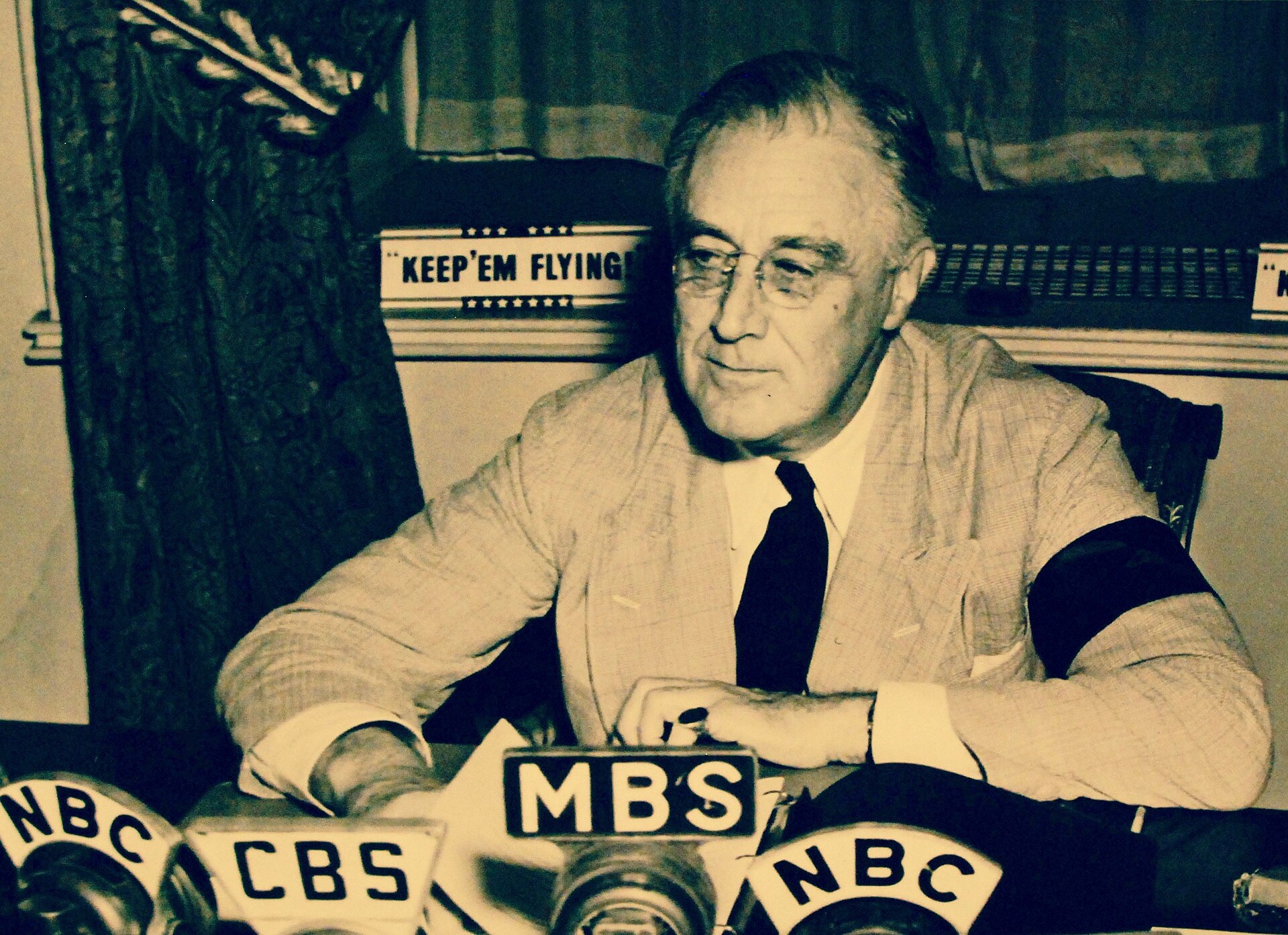
Various studies have said that the most charismatic and persuasive presidents in history were Franklin D. Roosevelt and John F. Kennedy.
P.S. If I use politicians as examples when talking about persuasion and charisma, it’s for the simple reason that, as with body language, they have been thoroughly trained and “tamed” by the best professionals in the field.
Further reading
- 7 body language techniques
- Simple tricks to lose your fear of public speaking
- How to make sure a business meeting is a success
- 15 habits of successful salespeople
Featured image: National Museum of the U.S. Navy, Public domain, via Wikimedia Commons.



