Editor’s note: This article was first published in April 2013. All figures are IMF forecasts and Spanish data from that month, including GDP of -1.6% in 2013, unemployment possibly reaching 27% and a deficit of 6.98%, and “this year” means 2013.
By Silvia Pazos Vázquez, financial executive at Aspain 11 Asesores Financieros EAFI
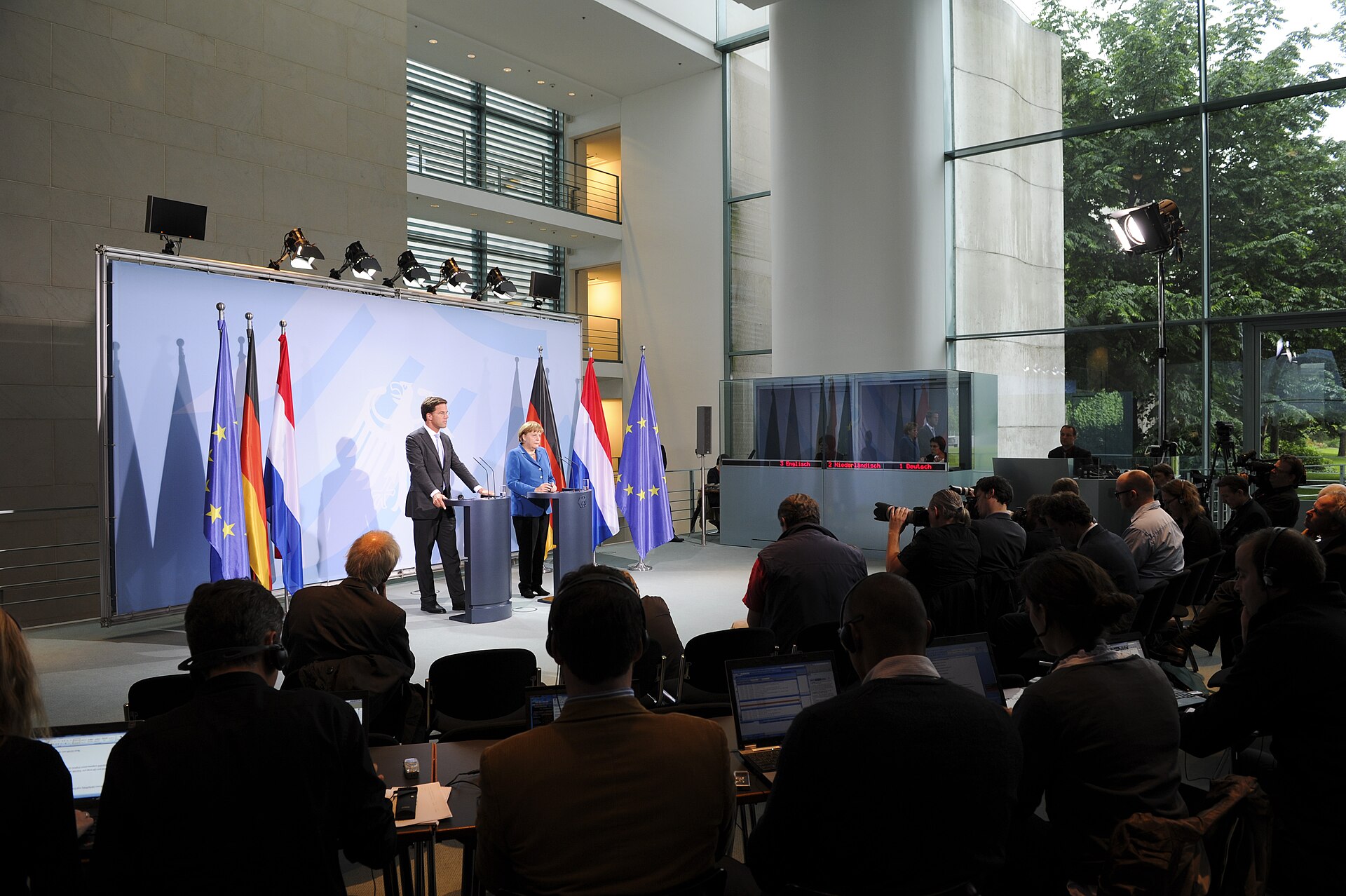
German Chancellor Angela Merkel recently acknowledged at a press conference that she is well aware of the effects of austerity, saying that austerity will claim victims in many countries, yet that has not made her abandon her firm support for restrictive fiscal measures. In fact, she does not believe that more borrowing by the member states is the solution, stressing that in the long run we will need a growth strategy that does not always rely on piling up debt. Nor did she stop there: she said she was surprised to hear in many parts of the world, even after the financial crisis of 2008 and 2009, that what matters is to grow again, at any cost, arguing that accumulating debt often becomes a principle of growth, which in her view is false and not sustainable in the long run.
On the other side, the International Monetary Fund (IMF), which in the past championed austerity as the way back to growth, has acknowledged an “error” in its calculations of growth expectations and fiscal multipliers. Early this year it published a report stating that “forecasters significantly underestimated the increase in unemployment and the decline in domestic demand associated with fiscal consolidation”, and more recently it has had to revise its forecasts for 2013 and 2014, making them worse, as in the case of Spain.
So the IMF paints a bleak picture for our economy. It expects the recession to deepen this year and does not rule out that it will continue into 2014; it forecasts new record unemployment rates and does not rule out that the Spanish government will miss its deficit commitments. It also warns that debt could reach 110.6% of GDP in 2018, prolonging the agony for our country. The combination of a lack of credit in the real economy, an unemployment rate that could reach 27% and painful cuts leads it to estimate annual GDP growth in negative territory, at -1.6% in 2013 (the previous forecast was -1.4%), with a timid possible recovery of 0.7% in 2014. Even so, as Jörg Decressin, deputy director of the IMF’s research department, pointed out, cutting the deficit will require new adjustment measures that will probably affect growth, so those forecasts may be too high.
All of this makes us think about the optimal limits of a country’s debt and the need to invest in order to grow. Frankly, there are two alternatives: either crank up the money-printing machine, with its effects on the monetary base, to grow and bring down unemployment, or carry on with Europe’s “austericide”, whose negative consequences are already starting to show in the figures for German car sales. Unfortunately, until Germany feels for itself the side effects of economic measures that we consider mistaken, the Monetary Union will not have the fundamentals to hold together.
As for our own country, we want to acknowledge the positive side of the deficit falling to 6.98%, but we are still spending 100 billion euros more than we take in, once the financial bailout is taken into account. The only way out, without being alarmist, is to renegotiate the debt, because its maturities are very short. That would allow us to lower Social Security contributions and personal income tax (IRPF), forcing credit to start flowing again without cuts to the most basic parts of our welfare state. We can understand raising indirect taxes, but another VAT increase would mean a fall in disposable income that Spain could not sustain.
As entrepreneurs, we want to raise our voice and say that we are capable of getting out of where we are, that obstacles are there to be overcome, and that now is the time to pull together with businesses, support entrepreneurs and give tax incentives to companies that hire. In short, it is time to start rebuilding our outdated model, based on construction and tourism, and move towards specialisation, offering opportunities and hope to those whose perseverance will lead us out of the current situation.
Finally, in the coming weeks we will send out a macro report on the state of our financial system and the growing provisioning needs of Spanish banks. In our view, the bank bailout may turn out to be insufficient unless the right measures are taken on real estate holdings and loans to property developers. Needless to say, our greatest enemy is the loss of transparency, and every corruption case erodes our competitiveness and credibility.
Featured image: Richard van Elferen, Minister-president Rutte from Nederland (+31), CC BY 2.0, via Wikimedia Commons.