

How much money should you save each month, depending on your age, to retire with one million euros or dollars, and what return do you need on your money for that to happen?
Continuing with the series of charts put together by Andy Kiersz, we are once again setting our horizon at 65, an age that, as many old people will tell you, comes sooner or later (hopefully for you). We have already shown the remarkable difference between starting to save at 25 or at 35: ten years in which compound interest made a huge difference to our final return by the time we retire.
Now we are going to look at how much money we need to save each month to reach one million euros at 65, depending on the expected return. Obviously our money will grow more slowly at a 2% annual return than at 10%, so the amount we need to save depends on that factor, as well as on the age at which we start.
How much you need to save each month, by age, to build up one million dollars
The figures below come from the chart published by Business Insider.
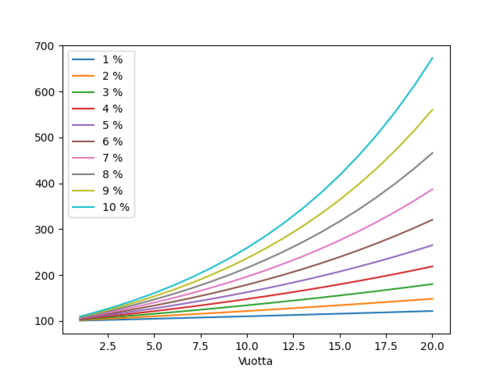
If you are 20 and want to retire a literal millionaire, you only need to save 361€ a month, assuming a 6% return. If you start at 25, you need to save 499€. Their chart shows how the monthly saving needed to reach one million euros by 65 rises dramatically as the years go by.
Of course, the amount you need to save also depends on the return you expect on your money, and a second chart in the same article shows how it changes if you put your money to work at 2% a year or at 10%.
Clearly, the sooner we start saving, the easier it will be: at the same expected return of 6%, going from saving 361€ to having to save 2,153€ if you start at 45 can make things a lot harder.
See also: How to get rich in five steps, according to Charlie Munger
Put another way, if you are 20, your first payment of 361€ ends up turning into 5,336€ by the time you are 65. And yes, I know we are forgetting about the dreaded inflation, and some readers will now be questioning whether investments that yield 6 or 10 percent a year can be found at all.
Those returns should not be very hard to get by investing in the stock market: if we add up share price appreciation, dividends and the ability to increase our available capital in bull markets, it should not be complicated.
In fact, with equities you should be aiming for more than 8% a year on average.
Further reading
- Five steps to build a dividend investing strategy and earn a 10% annual return
- The DCA strategy: how to invest if you expect the market to fall
Featured image: Juhis jwvaofbrnscwdof, CC BY-SA 4.0, via Wikimedia Commons.



