

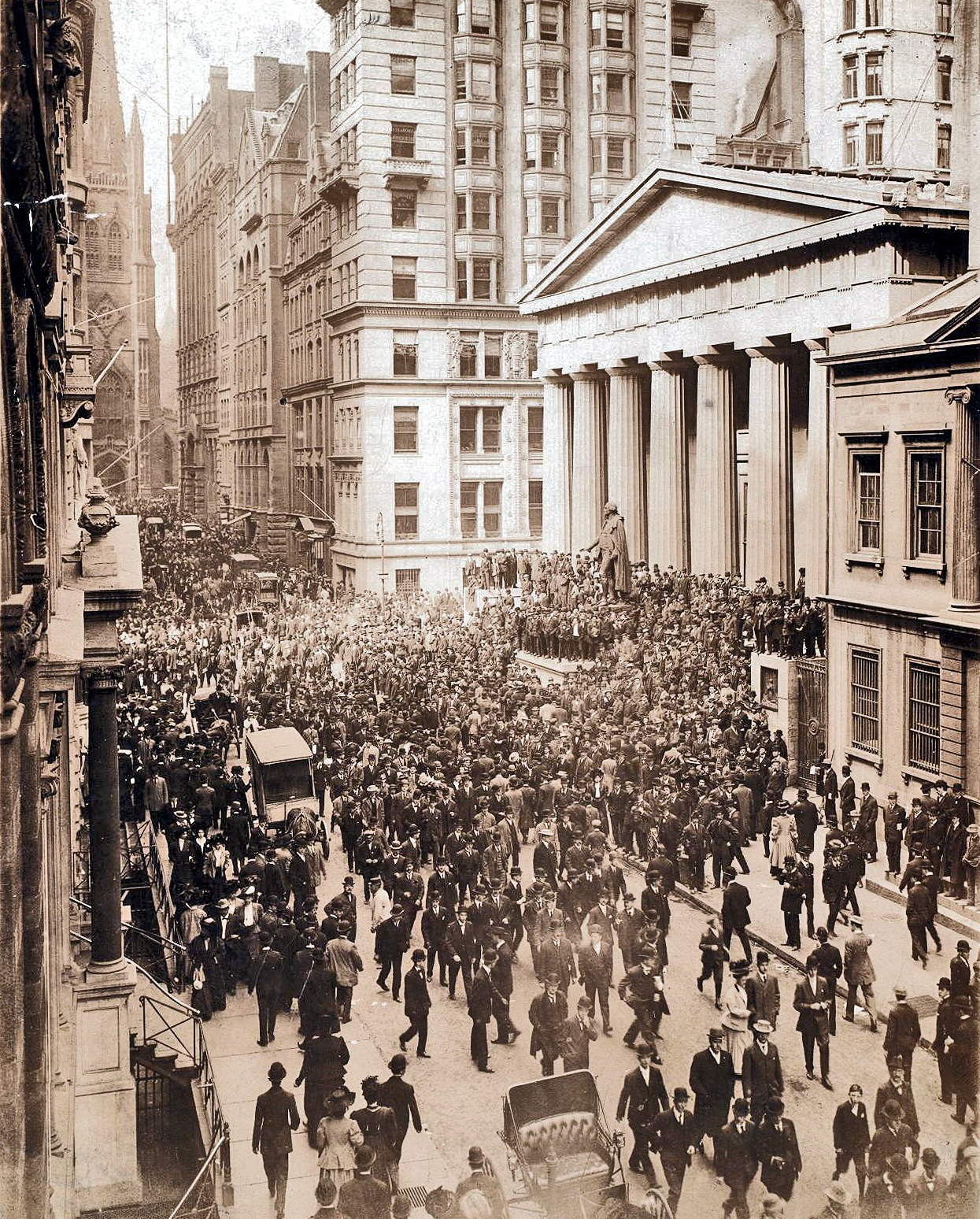
Although we always mention Benjamin Graham or Warren Buffett when we talk about the great geniuses of investing, Jesse Livermore was probably the best trader or speculator in history. Jesse Livermore was born in 1877 and took his own life in 1940 with more than 5 million dollars in liquid assets, one of the largest personal fortunes on Wall Street at the time. Reportedly, he killed himself because of problems in his love life combined with his bipolar depressive disorder.
Jesse Livermore was not drawn to long-term investing, because he knew that markets never rise or fall forever. Ironically, though, despite being considered the best trader in history, he himself said that if you trade intraday every day, or even every week, you will end up losing money. That matches my own view of intraday trading.
Where does this investing legend’s greatness lie?
Livermore’s achievement lies in the fact that he left home at 14 with 5 dollars in his pocket and, with no previous investing experience, managed to make 1,000 dollars by the age of 15 (a huge amount of money in 1902). He was a self-made investor who built a multimillion-dollar fortune and lost it several times over, until he arrived at what came to be regarded as the perfect investment method (at least when he got it right).
His name started to get around when he was 18 and began betting against so-called bucket shops, shady outfits that acted as brokerage houses using some unethical and fraudulent practices. Livermore made so much money with these trades that he was banned from them in practically all of Boston, so at 20 he moved to New York. There he shot to fame on Wall Street after the stock market crash of 1907, shorting the market and making a profit of 3 million dollars.
But Livermore’s lack of training became obvious when, with his apathetic and antisocial character, he ignored the advice of some people in the industry and preferred to keep working alone. He began carrying out bad investment strategies, gradually losing those 3 million dollars in accumulated gains and deepening his losses during the flat market between 1908 and 1912.
He ran up 1 million dollars of debt and eventually declared bankruptcy.
But Livermore withdrew to reflect on his investing successes and mistakes until he came up with an investment method that went against the fundamental laws followed by the investors of his day. He returned to the financial markets and over the following decade became a living legend of trend trading, making a great fortune between 1920 and 1929.
Then came the crash of 1929, the biggest crisis Wall Street investors had ever experienced, which caught practically all of them on the wrong foot. While some investors were throwing themselves out of windows, Jesse Livermore painted his masterpiece, having predicted the crash. It is said that during that crisis, Livermore made 100 million dollars.
Inexplicably, in 1934, Livermore declared bankruptcy again. He had lost all his money once more, although by 1939 he was a multimillionaire again, having recovered the 5 million dollars he left when he died.
What investing lessons did Jesse Livermore leave us?
The good thing about this investor, speculator, trader or whatever he was is that he knew how to recognise his mistakes and set them down in notes that would later become the book written by Richard Smitten, Jesse Livermore: World’s Greatest Stock Trader. He acknowledged his own limitations, even though in some trades he had beaten every return Wall Street had until then only dreamed of. These are some of the pieces of advice he left behind, and they remain deeply valid today.
1. You cannot make money consistently if you trade every day or every week of the year.
Livermore realised that this was his main investing mistake. Highly active trading still costs 90% of traders their money today.
2. Markets are never wrong. Opinions often are.
3. The money lost through speculation alone is insignificant compared with the huge sums retail investors lose over the long term when they don’t get out of the market in the middle of a crash.
At first sight, this advice would seem to clash with Warren Buffett’s advice, which says that if you have invested correctly, your investment should stay put forever and you should buy more shares when prices fall. But of course, Livermore is not talking about investing but about speculating, starting from the premise that most retail investors behave like speculators: they don’t study solid companies and therefore don’t hold good companies in their portfolios. When a market disaster strikes, many of the shares retail investors bought simply because they were cheap never return to their original purchase price, with a bit of luck; with a bit of bad luck, those companies end up going under.
4. Never buy a stock because it has had a correction from its previous high.
This mistake was probably the one that cost him the most money in flat markets, where the most common advice from stock analysts to investors who are out of the market is to wait for a correction before buying into the stock. In reality, it’s a very unprofitable strategy if the stock has fallen from its previous high.
5. Big market moves take time to develop.
6. Don’t stay bullish or bearish for the whole market. Take profits when you think you have reached your profit target.
7. The game taught me the game. And it showed me no mercy. It took me five years to learn to play and make big sums of money.
In other words, the only way to learn to invest is by investing.
8. Losing money is the least of my problems. A loss doesn’t worry me once I have taken it; I forget about it overnight. What keeps me awake is not taking the loss, which is what does serious damage to your pocket.
Basically, when you carry out a speculative strategy and it doesn’t behave the way you expected, cut the loss immediately.
9. The speculator’s deadly enemies are ignorance, greed, fear and hope, because not all the books and courses in the world can cancel out these human feelings.
10. Wall Street never changes. The pockets change, the stocks change, but Wall Street never changes, because human nature never changes.
What we can identify more clearly in this investor’s career is that he felt much more comfortable in a bear market than in a bull market. We will talk about that in a future article.
Sources consulted: Wikipedia | Investopedia | MoneyMorning
Further reading
- Penny stocks in depth
- The pyramid of financial success
- Poker advice applied to investing, by David Einhorn
Featured image: Unknown author, Public domain, via Wikimedia Commons.



