

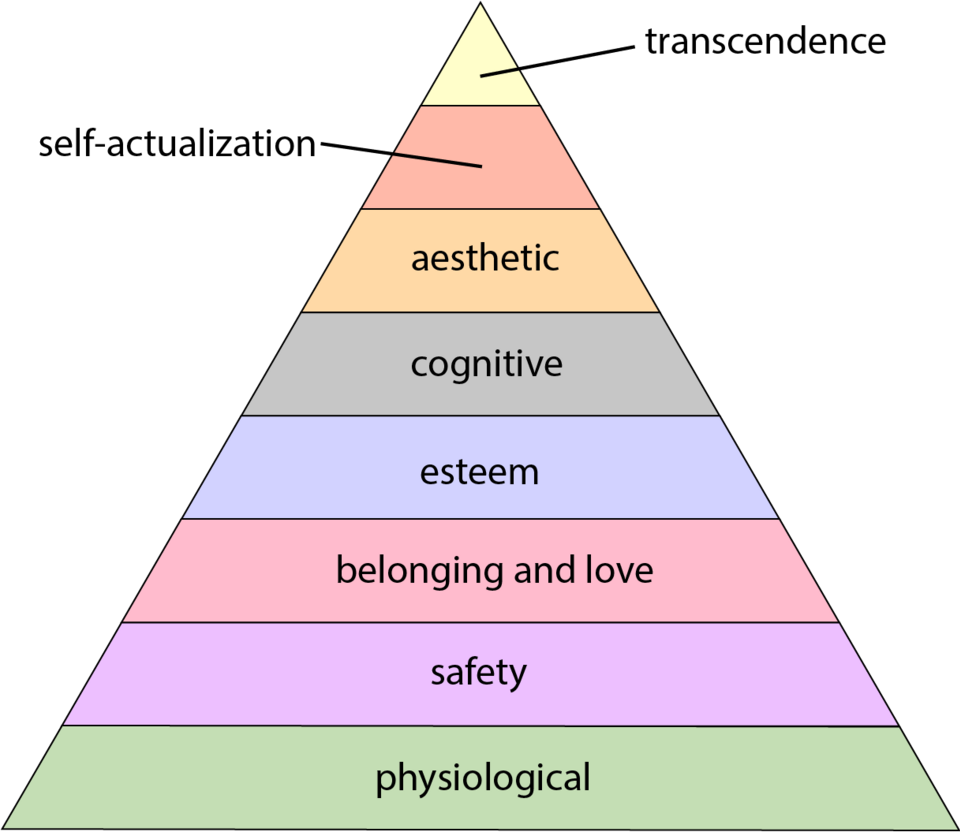
Just as Maslow created his own pyramid with the hierarchy of human needs (basic needs such as breathing and food, then safety, love…), the Mister Squirrel website has created its own pyramid of financial success based on Maslow’s hierarchy, applied to money matters. And, it must be said, it turned out brilliantly. Here are its levels, explained one by one.
1. Survival
Just as with breathing and food, we need to get the basics right when it comes to money. At this level, Mister Squirrel highlights two important things. First, you need the right attitude towards money. If you think the government will take care of you, that money will take care of itself, or that you’re going to win the lottery, then you’re not thinking about money the right way. You have to take control. We know it’s hard, but many people never quite manage to climb out of the hole.
The second part is about taking emotion out of the picture and learning to live on just what you need. You must spend less than you earn. As we’ve explained on several occasions, this simple point, which seems easy, is usually one of the hardest, because most people spend more than they earn.
(Read: 8 ways to commit financial suicide)
2. No debt
Debts will keep growing and growing if we don’t face them. Mister Squirrel advises cutting up your credit cards and tackling, quickly and decisively, the debts that are charging you the most interest. Remember that the most profitable investment you can make is paying off your debts, especially credit card debt, also known as “the never-ending debt”.
3. Learning
Once we have our spending under control and are paying off our debts, it’s time to set some money aside for what the “squirrel” calls the “just in case”. We call it building an emergency fund: a cushion that covers unexpected expenses, so that a lack of even minimal savings doesn’t force us to take on more debt to deal with them.
This is where the learning stage begins. There are exceptions, but someone who is financially illiterate rarely succeeds with money. Learn about everything from investment products and ways to shield your savings from tax to a grounding in equities, since that is where you’ll find the best investment opportunities. And, most importantly, define a financial goal. To define a financial goal, you’ll need to devote many hours to financial education.
4. Investing
It’s time to use everything we’ve learned. We need to start putting our money into the investment products we’re ready for and properly understand. Be clear about your investor profile and how comfortable you are with risk. This stage should start as early as possible, because it will be the longest.
(Read: Here’s the difference between starting to invest at 25 and at 35)
5. Optimisation
Once we’ve set our goals and our money is already at work earning interest, it’s time to get more sophisticated. In other words, we need to start squeezing out every last bit of return. Mister Squirrel talks about looking for other investment platforms, or negotiating with or switching banks to find the ones that suit us best. Remember that there’s no difference between leaving a €200 tip at a restaurant and paying €200 in avoidable fees or commissions. It’s €200, and it’s ours. Basically, this stage is about earning more and paying less.
Likewise, protect yourself financially according to your relationship situation. (Read: 5 money conversations you should have with your partner before getting married.)
6. Freedom
If we’ve done everything above well and bad luck hasn’t crossed our path, at this stage we should already be receiving passive income from our assets. This is where we have a positive, healthy attitude towards money and where our expenses are predictable. Basically, this stage is about not doing anything stupid with money, so that this financial happiness lasts.
Personal opinion
As a learning exercise, that is the theoretical path to financial stability. In practice, there may be stages we don’t have to go through (or not for long). The more we learn, and the earlier we learn it, the sooner we’ll climb the levels of this pyramid. Essentially, though, it captures the process of financial success: save, stay out of debt, invest and reinvest. And when we talk about investing, that can mean the stock market as well as a business of your own. In fact, the highest returns are usually found in building your own business.
Further reading
Featured image: EucalyptusTreeHugger, CC BY-SA 4.0, via Wikimedia Commons.



