Editor’s note: This article was first published in June 2014, as news about a regulatory announcement by the Ministerio de Fomento. Spanish rules on car sharing, Uber and ride-hailing licences (VTC) have changed several times since.
The idea of car sharing emerged as an excellent way for users to save on travel costs. Various companies and apps have appeared where, if a driver is going to travel from Andalusia to Galicia, he can take on several passengers who plan to make the same journey and share the cost of fuel and other expenses.
Well, the Ministry of Public Works (Ministerio de Fomento) will now go after this practice with hefty fines, claiming that it is a very serious infringement that does not guarantee adequate safety and quality conditions. It is therefore classed as a “very serious infringement”, punishable by fines of between 401 and 600 euros for car-sharing users.
Likewise, companies or individuals who promote, offer or provide these services could face fines of between 4,001 and 6,000 euros. If you are a repeat offender of this “terrible crime”, you could be fined up to 18,000 euros.
While users are already criticising the measure, with cries of “dictatorship”, it has been warmly welcomed by taxi drivers, a group that claimed it was being harmed by these car-sharing services.
In short: people and companies who offer or carry out passenger transport in their vehicles without holding the administrative licence for this service, and who receive any kind of financial compensation (and sharing the costs of the trip counts as financial compensation), are committing an offence.
Update: 10/06/2014
This morning the ministry clarified which kinds of car-sharing companies would operate legally or illegally, and although it did not name any app, some conclusions can already be drawn.
In principle, shared trips where the driver simply splits the costs of the journey among the other passengers would be a legal way to travel. On the other hand, users who use apps to charge a set amount for the trip, with a clear profit motive, would be carrying out an illegal activity, since they do not hold an administrative licence that legally entitles them to do so.
We therefore conclude that BlaBlaCar will be able to operate without any problem, since it works as a way of sharing travel costs, while the Uber app would be outside the law, and both the company and the users of the app could be penalised with the fines mentioned above.
Put this way, the measure sounds more reasonable, since a person who provides a taxi service without a licence and without paying taxes on it is clearly competing unfairly with taxi drivers.
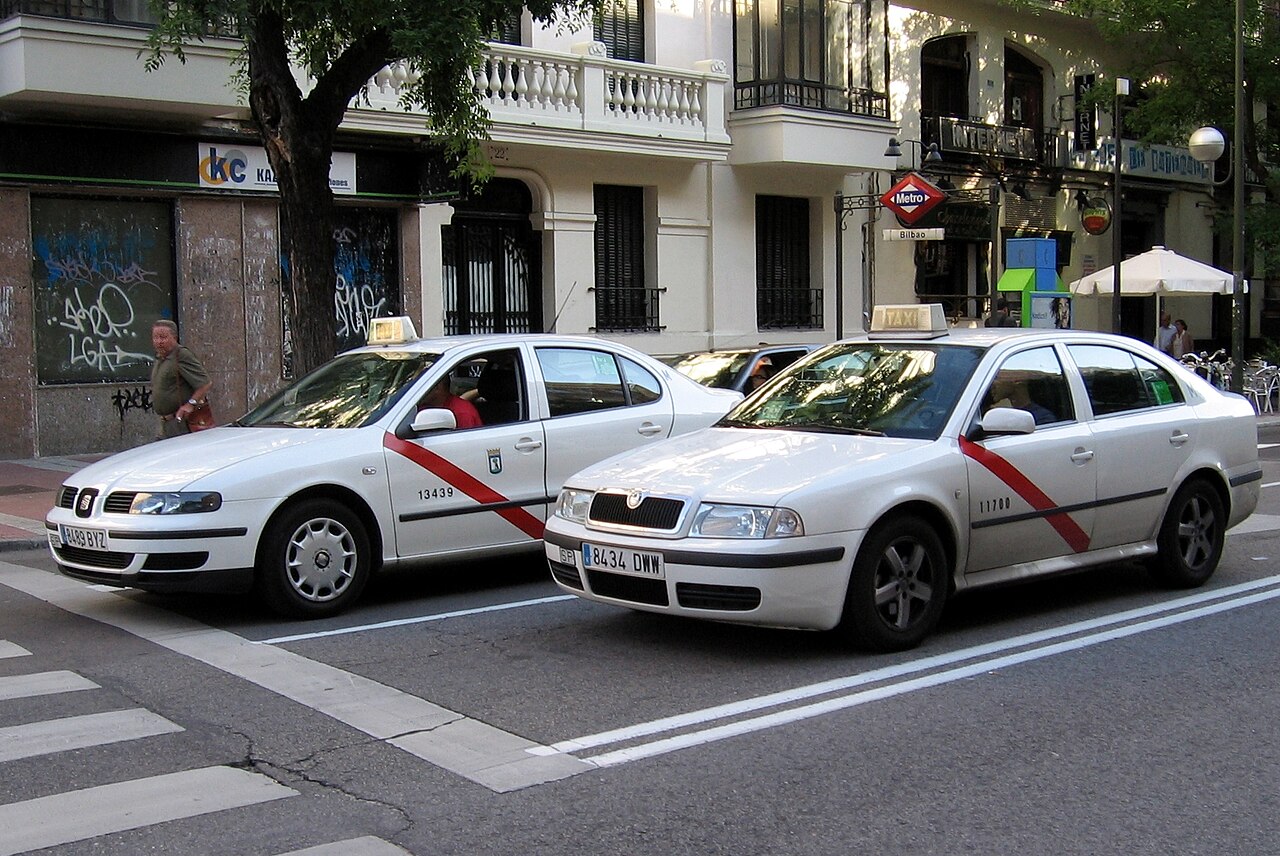
Featured image: William Avery, CC BY-SA 3.0, via Wikimedia Commons.