

Editor’s note: This article was first published in November 2014. The statements that Siebel Systems “still has a 45% market share today”, that Sanders’s $2 million is “about $15 million today” and the references to “this far-reaching crisis” in Spain are from 2014.
A few days ago we talked about the ideal age to start a business. The truth is that there is no set age, but if we look for the typical entrepreneur, it isn’t a twenty-something but rather someone with plenty of work experience who is around 40. Of course, the sooner you start, the sooner you’ll learn about business.
We understand that, in this far-reaching crisis we’re immersed in, and with comments like “if you’re over 40 and long-term unemployed, you’ll probably never work again”, many people between 40 and 50 feel it’s already too late for them. And that’s what we’re here for: to tell them that, even though the media talk about the hundreds of millions a teenager has made by creating a tech product, that isn’t the norm.
One in three new businesses in the United States is started by entrepreneurs over 50. In fact, entrepreneurs aged 55 to 64 have had the highest rate of entrepreneurial activity over the last 10 years, according to the company Easy Life Cover.
These entrepreneurs already have experience, and often the contacts and know-how within an industry, so their companies tend to have much higher success rates than those of younger founders. Often, these businesses are later run by the founders’ children.
But there’s more: many of the most successful companies in the United States were founded by entrepreneurs over 50.
And we’re not talking about mid-sized companies, but about McDonald’s, Coca-Cola and KFC (Kentucky Fried Chicken), among others.
So, want examples of entrepreneurs who founded their companies later in life? Let’s look at a few.
John Pemberton, Coca-Cola
During the (American Civil) War, wounded soldiers were treated with morphine. But a pharmacist and doctor from Georgia named John Stith Pemberton had something better: a kind of wine-based brew made with an infusion of coca leaves. It’s no myth that the original Coca-Cola contained cocaine.
The ingredients had to be reformulated because of a change in the law, and at 55 he created the company known today as Coca-Cola.
Harland Sanders, KFC
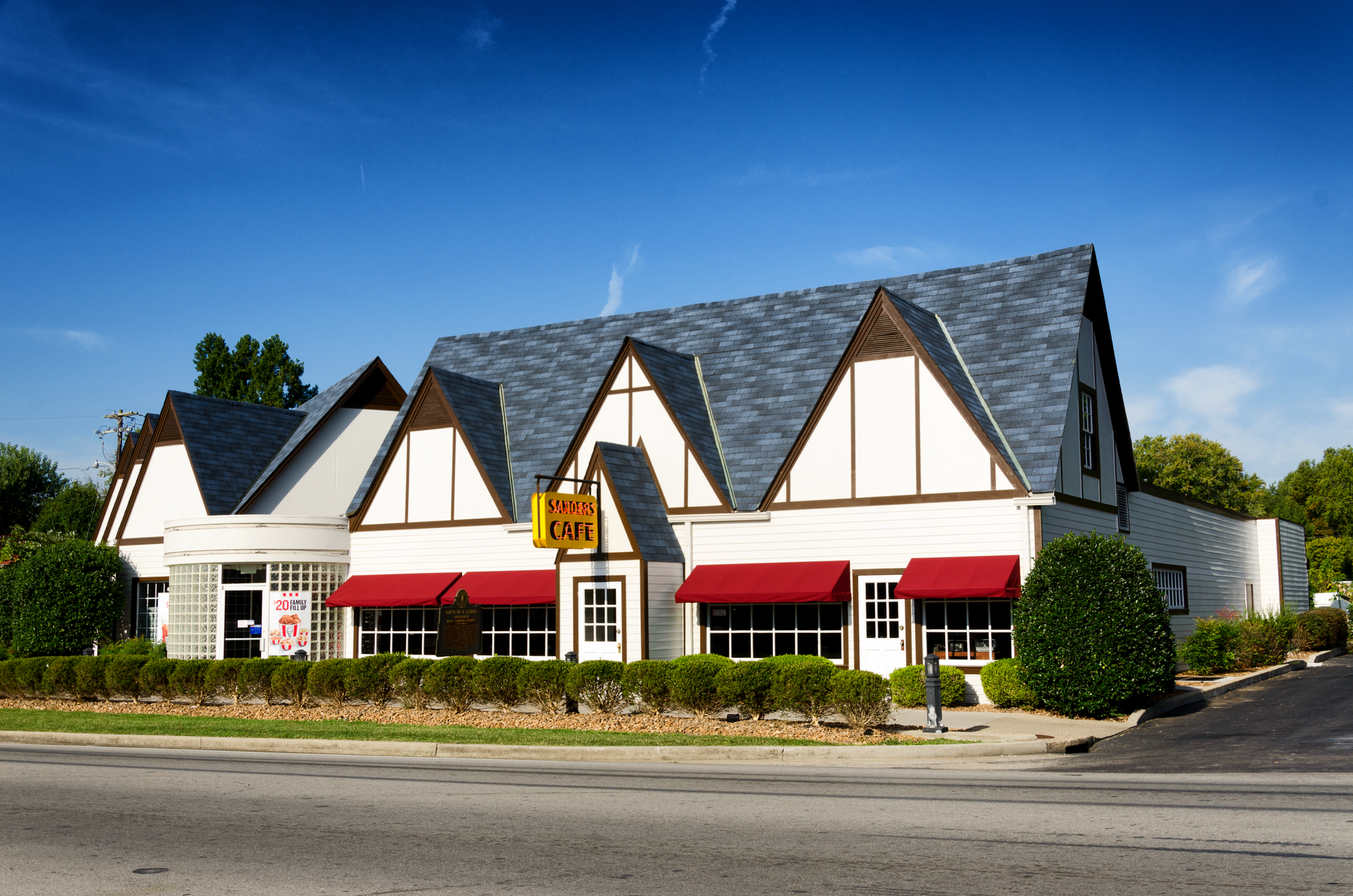
After a lifetime of all kinds of jobs (farmer, riverboat pilot, insurance agent, firefighter…), Mr Sanders had a problem: he kept getting fired. One day he decided to open a small service station, which was a success, but it failed when Interstate 75 opened.
At 65, he cashed his $105 Social Security check and met with potential franchisees, whom he persuaded to work with him. Soon after, Sanders sold the company for $2 million in 1964, which would be about $15 million today.
Ray Kroc, McDonald’s
For a long time, Ray Kroc made his living selling machines. When he was 52, he met Maurice and Richard McDonald, who ran a restaurant in California. Kroc became interested in their business because, while most companies bought a single machine, the McDonald brothers bought eight.
Kroc talked the McDonalds into franchising their business and building a brand, but the plan ended practically in bankruptcy, and Kroc took the opportunity to buy the company for $2.7 million. From then on, with Kroc’s business vision, McDonald’s became one of the biggest franchises in the world.
Thomas Siebel
Siebel had several jobs over the course of his life until he joined Oracle, where he climbed the executive ladder and became a successful executive.
But it wasn’t until he was 41 that he decided to found Siebel Systems, a company that would later be acquired by his former employer, Oracle. Even today, Siebel Systems still has a 45% market share.
Reid Hoffman, founder of LinkedIn
After graduating from Stanford, Hoffman spent more than 15 years deciding what he wanted to do. He took part in creating PayPal, and with the money he made from it he co-founded LinkedIn at 35. The professional social network went public when Hoffman was 43.
(See: Reid Hoffman’s advice to college students for career success)
Dave Duffield, PeopleSoft
A business administration graduate, he helped create several successful IT and consulting companies, but he launched PeopleSoft when he was 46. He would later create Workday, another very profitable company today.
The truth is that, just as easily as we find success stories of teenagers and young people who build successful companies, we could find countless cases of entrepreneurs in their 40s and 50s.
In fact, since everything seems to come from the United States: over there, the norm isn’t for a retiree to say he’ll play pétanque for the rest of his days. It’s very common for people to find a second working life after retirement, sometimes by setting up a small company, and sometimes by building a business empire to leave to their children.
As we’ve said before, if you can create something that Google, Facebook or Yahoo are interested in and willing to pay hundreds of millions for, they won’t check whether you’re 17 or 60.
Sometimes the limits we set ourselves are greater than the real limits that exist.
So… are you 25 and companies won’t offer you a job? Create your own job. Start a business. Are you 45 and finding it hard to get work because of your age? Create your own job. Start a business.
And now for the opposite extreme: 15 people who became millionaires before the age of 20
Featured image: Ka!zen, CC BY-SA 2.0, via Wikimedia Commons.



