

Editor’s note: This article was first published in October 2014. The closing section on Spaniards over 45 who have been unemployed for more than three years reflects the Spanish labour market in 2014.
These days there are plenty of young entrepreneurs who have built companies worth hundreds of millions, even billions. Stories about entrepreneurs who became multimillionaires before they turned 18 are everywhere.
And that is when our inbox fills up with questions from readers who are past 40, or even 50, and wonder what to do. It seems that starting a company at that age is no longer for you, as if you were somehow out of place. That idea is far from reality, so let’s break down a few myths.
First of all, it is not normal for someone to sell a business idea for billions. Nor is it normal for a company to be worth $19 billion less than eight years after it was founded. And it is certainly not normal for a company to reach a market capitalisation of $200 billion in just ten years.
Let’s say these are the exceptions, more and more frequent ones, and as exceptions they are the ones that make the most noise.
It is not normal either for a 15-year-old to sell an app for $30 million.
Still, the truth is that ideas, products and services get sold regardless of the founder’s age. In fact, if the founders of Facebook or Google had been 50 years old, they would have been multimillionaires before turning 60. In other words, there is no age limit for starting a business.
The usual advice is to get into business as early as possible. The younger the better, because you build up experience from your successes and your failures. And if you fail, you have plenty of time to recover.
But despite what people think, the most common profile of a business owner is someone in their late 30s or early 40s.
In fact, the typical business owner is someone who worked for a company for many years. In some cases that person was laid off at 40 and decided to use their experience in the industry and their contacts to start a business of their own.
In other cases, the person passes 35, takes stock of their career and feels they are not fulfilling their dreams but selling their life for a paycheck.
Even people approaching or past 50 decide to put decades of experience to work, start their own company and use everything they have learned to make it a success.
If we compare, a business owner who starts at 50 has a much better chance of success than a young person starting out at 20. Experience obviously counts. The only difference is that the young person can still take big risks, while the 50-year-old has to guard against certain follies.
So why are young people the ones making these fortunes?
The answer is simple. Silicon Valley, where most of these companies come from, is full of university graduates who have become experts in the industry and have the know-how in a field that is unfamiliar to most people from outside it.
Today, technology companies are the gold mine for young people coming out of university. During the property boom, on the other hand, the typical entrepreneur was an older man in construction who took advantage of the housing bubble in the same way young people today take advantage of the tech bubble.
In fact, people who had worked on building sites for 10 or 20 years decided one day to become developers as easily as a 15-year-old creates a mobile app.
But you need to know the full stories of successful entrepreneurs.
When we look at the lives of most successful entrepreneurs, it is easy to get the wrong idea. Sometimes it seems that their success came from their first idea or their first company. In some cases that is true, but many of these entrepreneurs are succeeding with companies other than the ones they started at the beginning.
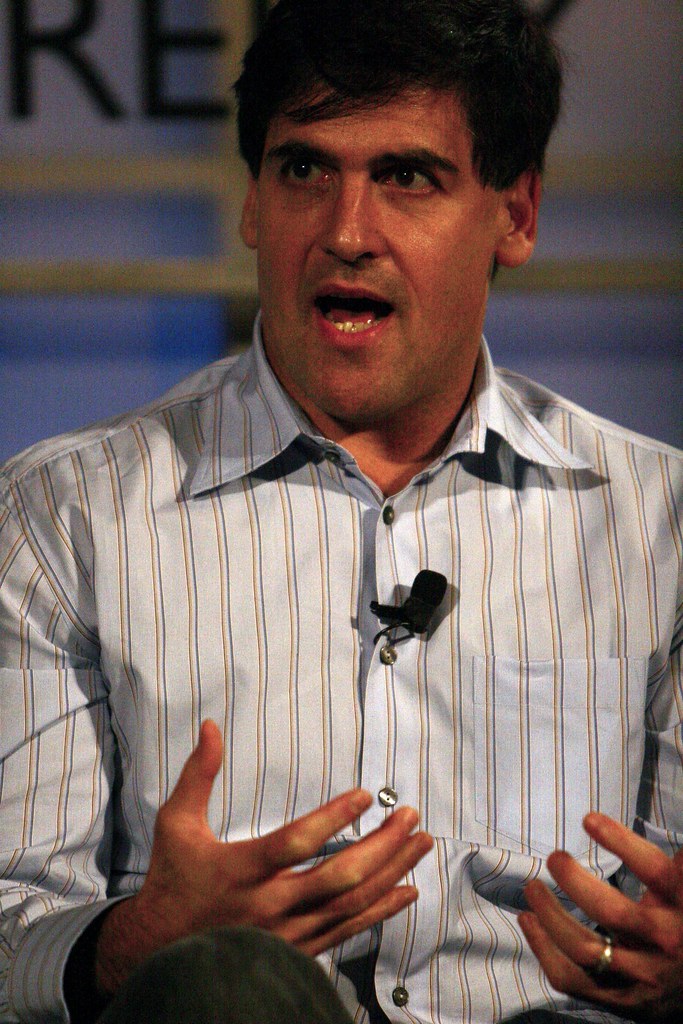
Some people forget that success is not linear. In the case of Mark Cuban, for example, it may look as if he was headed for billionaire status from a very young age. The reality is that at 25 Cuban was still working as a waiter.
(Read: What highly successful people were doing at 25)
In short, there is no set age for starting a business. If you are 20, you can start your own company, or you can work for a company and gain experience. If you are 50 and have experience in an industry or a talent, it is an ideal age to start your own company, as long as you are clear about what you want.
And you probably won’t like hearing this.
If you are Spanish, over 45 and have been unemployed for more than three years, you will probably never work for a company again. And if you are hired, the salary will not be enough to cover your needs (I suppose there will be exceptions).
So you should probably adapt to the times and start shaping some of the projects you have in mind. Work and job security as we have known them in Spain are disappearing. It is time to use that famous buzzword: reinvent yourself.
Further reading
Featured image: kris krüg, CC BY-SA 2.0, via Flickr.


