

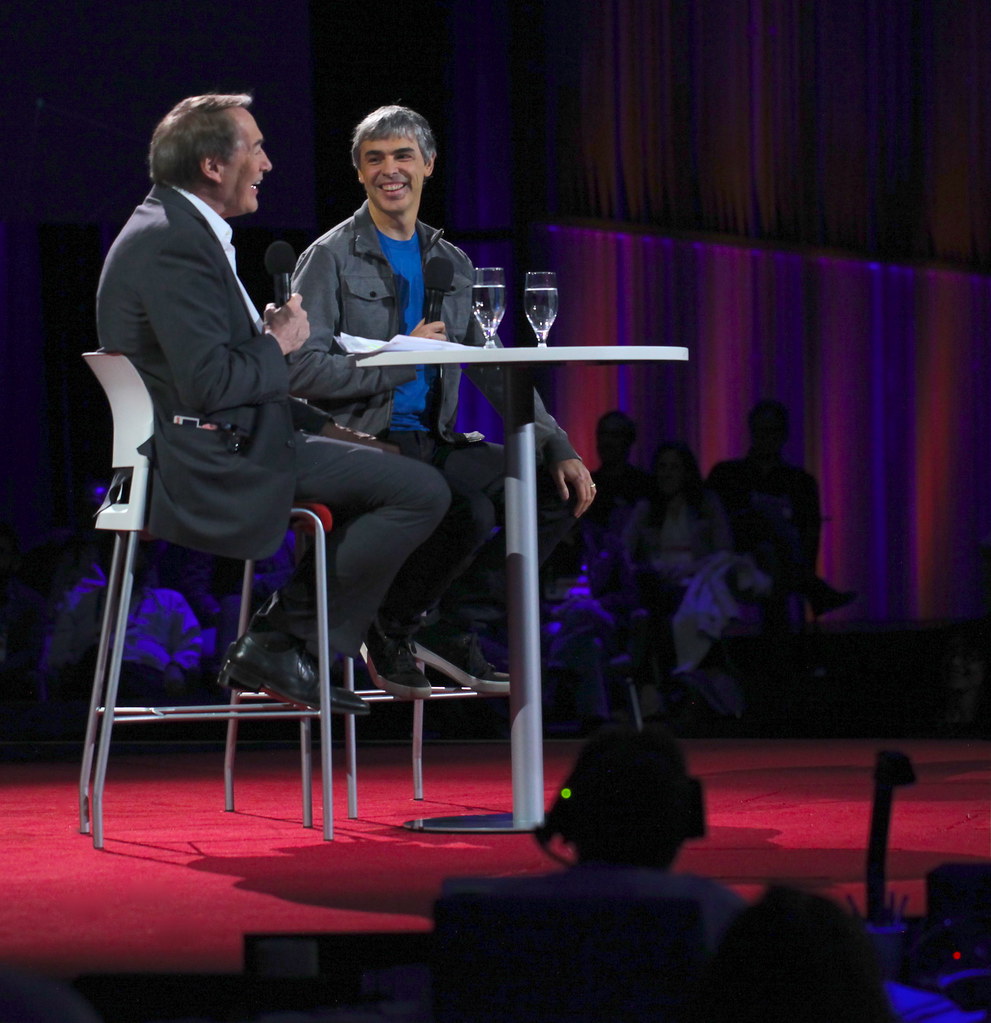
Editor’s note: This article was first published in March 2015. Virgin Group is described as having more than 400 active, profitable companies, and Elon Musk as a young entrepreneur already considered the new Steve Jobs. Tesla Motors was renamed Tesla in 2017, and Larry Page is shown as head of Google; he stepped down in 2019.
Richard Branson of Virgin Group, Elon Musk of Tesla Motors and SpaceX, Jeff Bezos of Amazon and Larry Page of Google all have something in common: they are very rich, they use technology as an ally to grow their businesses, and their philosophy is to focus entirely on users. You could say that money is secondary for them, and that is probably why money ends up pouring in.
Think big. Until now, when people talked about thinking big, what came to mind was the need for large sums of capital and a commitment to decades of effort to become a millionaire. Technology has changed that. Today crowdsourcing tools, crowdfunding, angel investors and venture capital funds play an important role for entrepreneurs who want to take their business idea to the whole world.
In fact, it has never been so easy to build a technology-based business and find a way to get it to users in record time. Never before in business history have companies grown as large and as fast as we see today.
1. Richard Branson: take risks, but mitigate them
On the face of it, Branson has taken brazen risks, and for that reason the group, which today has more than 400 active, profitable companies, has left some along the way. Branson experiments endlessly with his ideas and looks for success or failure quickly. Some live and some die, but the risk is always calculated.
Branson says that one of the most important things an entrepreneur must have, besides a tolerance for risk, is protection against the critical downside. In other words: make bold moves, but make sure you have a way out if things don’t go well, and if one thing doesn’t work, don’t let it put everything else at risk of collapsing.
Focus entirely on the customer
Branson is devoted to the customer, and so his main strategy is to enter industries where customers are unhappy, setting up a business or product that already exists and making it better.
Branson was the first airline boss to install individual TV screens for every passenger on his planes. Over time, the rest of the airlines followed.
Branson says he started in the airline business with a single plane and, doing the numbers on paper, they really shouldn’t have survived as a company. But customers made sure the company survived and grew. His airline is the company with the fewest complaints in the airline industry.
2. Elon Musk: be driven by passion and purpose
For Musk, nothing is more important than passion and purpose. This young entrepreneur, already considered the new Steve Jobs, says he didn’t go into electric cars, rockets and solar power because he thought they were great business opportunities. He simply wanted to have a positive impact on the world, and to do that he had to make a difference by creating something better than what already existed, something humanity could benefit from. And the truth is, Elon Musk is well on his way.
3. Larry Page: be a rational optimist
Being negative doesn’t bring progress. Page has described himself as a tremendously optimistic person, completely confident about any challenge he takes on, and says it is fantastic that today you can take on any challenge with very little effort and a bit of good technology.
In his book What Would Google Do?, author Jeff Jarvis argues that Google is now more than ready to take over any industry it sets its sights on, including the financial system. For now, though, Google is focused on projects (some of them unknown) aimed at improving technology around the world and bringing the internet to every corner of the planet.
Larry Page says the world has enough resources to provide a good quality of life for everyone, but we need to get organised and move fast. This company, along with other tech companies, will probably end up doing for the planet what not even governments do.
- If Google went into the restaurant business, what would its restaurants be like?
- The 10 biggest internet breakthroughs we’ll see in 2015
4. Jeff Bezos: experiment and think long term
Bezos is a busy man who isn’t interested in small changes. He wants change on a massive scale.
His thinking has proved to be long term: Amazon has posted somewhat worrying earnings figures because of its thin profit margins, something that doesn’t seem to worry Bezos. He just wants to convince people that buying on Amazon is a safe purchase and that the shopping experience will be really good.
In fact, when Amazon has had technical glitches that sold products for pennies, Amazon has absorbed the loss.
But the most important thing for Bezos is to experiment, and keep experimenting until you find what works. He says that when experimentation leads you to something that works, the other failures are relatively small.
Featured image: Steve Jurvetson, CC BY 2.0, via Flickr.


