

A few months ago we published 3 chess secrets applied to business, by Josh Manion, a chess master and successful businessman. Some of our readers, however, came up with analogies between chess, life and business that were even more interesting than the article itself, so we are taking the opportunity to republish them and expand on them a little.
These readers are Raúl, from Los Angeles, and Héctor Valencia Pérez, both lovers of the game.
-
In life and in business, just as in chess, we have to be cautious, shrewd and patient when making our moves.
-
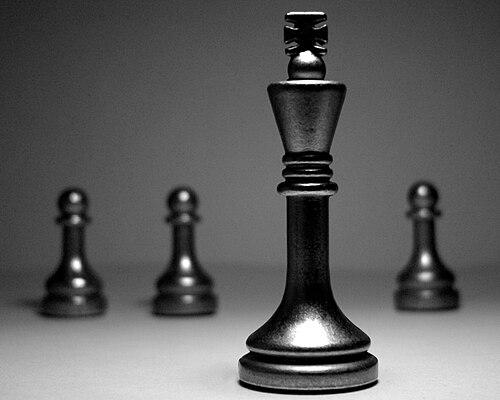
We have to work out who we really are, and whether we are just a pawn on the board. At any moment you can decide to become a more important piece. But notice that in chess the king is the weakest piece, and it needs all the others to achieve its goal.
-
Work out who the queen is. It could be your mother, your girlfriend, your wife, a friend, a business partner… the person to whom we give the most importance.
-
The bishops would be our right and left hands: trusted people we will need in order to move forward, because nobody succeeds alone.
-
The knights are the strategies we have at our disposal, which must be used and applied correctly and effectively.
-
The rooks would be our strongholds, our infrastructure.
-
The pawns are the people who are willing to fight to reach the group’s goal. Clearly, the pawn is the most “expendable” piece. Every king needs pawns to win, but the pawn will always be at the king’s mercy. They are the most necessary pieces in the game, and in any company too, yet they are probably “the piece” that enjoys it least.
How can chess help a businessperson?
The three basic principles of chess applied to business would be:
- A. Control of the centre (of the board), which would be your market niche.
- B. Mobility of the pieces, which covers management, production, marketing, sales and strategy.
- C. The king’s safety. In this case, the king is the company, and only the “numbers” will save it.
-
Competitiveness is everything. In life, in business and in chess, there is always someone across from you ready to checkmate you. We are always competing, and that is something we should never forget.
-
You can have a big advantage and still lose. In the same way, you can be at a big disadvantage and still win.
-
Success in a game of chess, as in life, depends on just one thing: how you think. Nothing more.
-
Mistakes are fatal. We talk a lot about the benefits of failure, but in business and in life, just as in chess, you can be doing everything right and a single error can cost you the game. You cannot take back your mistakes; we have no choice but to keep going.
-
Once we make a mistake, we learn from it so we don’t make it again in the next game, because there will always be more games as long as you don’t give up your passion for playing.
-
Sometimes it is time to attack, other times to defend yourself, and there is a time to think and reflect. In the end, the game is not won by the moves but by the thinking and strategy you work out before moving a piece.
-
You can imitate a champion’s play and still lose. What worked for others won’t necessarily work for you. No two games are the same.
-
You have to keep adjusting your strategy to your opponents’. We can plan a whole series of strategies, but we must be ready to adapt quickly to the new situation according to the other side’s moves.
All these points are interesting, but never forget this one: “In life, as in chess, when the game is over, the king and the pawn go back into the same box.” 🙂
Further reading
- Life is like a football match
- Life is like a game, and this is how you play it
- Success is not a marathon but a maze
- Resilience: keys to success when things get tough
Featured image: Flickr.com user "Lukas", CC BY 2.0, via Wikimedia Commons.



