


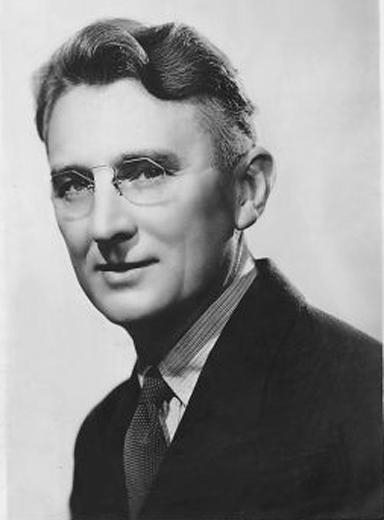
In the field of persuasion and influence, Robert Cialdini, author of the classic Influence, and Dale Carnegie, author of the even more classic How to Win Friends and Influence People, are two of the greatest authorities. Both have sold millions of books around the world, and to this day science has only been able to confirm their views.
Although each explains it in his own way, their advice can be used when asking for a raise, getting through a job interview, succeeding in our business relationships and even, as we’ve explained before, applying these influence techniques in marketing to sell more in our business. In other words, learning these universal principles of influence and applying them day to day, in every area of our lives, will bring us countless benefits.
What are the best ways to influence people, according to Cialdini?
Robert Cialdini divides his universal principles of influence into the following six points, to which we’ve added two tips from Dale Carnegie.
1. Reciprocity
If you smile at a stranger, they’ll most likely smile back. If you don’t smile at them, you probably won’t get a smile from that stranger.
This principle suggests that people will treat you the way they’ve been treated by you. If you do something first (a favor, a gift or a positive attitude), it will most likely come back to you. So before you ask, you should give. And if you give first, you may not even have to ask.
Example: if you go up to a man and ask whether he can give you a ride somewhere in the city, the most likely answer is no. But if two days ago you helped that man change a tire, he’ll almost certainly say yes. It’s a very basic principle, but also a very powerful one when used properly in all kinds of relationships.
That’s why, when people say success is more about giving to others than receiving, it isn’t a matter of karma or spirituality but of the principle of reciprocity: the more you do for others, the more others will do for you.
2. Commitment and consistency
An initial question can increase the chances of success with the next one. Most people have to make an extra effort to break their word. People will feel the urge to go along with a request if they themselves have publicly said they are committed.
The rule of commitment and consistency basically says: get a commitment, and then make use of that person’s consistency.
Example: Cialdini gives the following example, based on an experiment by social psychologist Steven J. Sherman, who managed to increase by 700% the number of volunteers willing to go door to door raising funds for a charity.
How did he do it? By first running a survey that asked people:
“How would you respond if someone asked you to help by giving three hours of your free time to raise funds for this cause?”
Many didn’t want to seem uncharitable, so they said they would be willing to help. Once they had made that verbal commitment, the number of people who acted consistently with their words grew dramatically.
In sales, with a very hesitant customer, you can ask as a last resort: “If I get you the car model you want, in the color you want, at the price you want, will you buy it right now?” If they agree verbally, you’ve probably removed any objection at the moment of signing: commitment and consistency.
3. Social proof
An action seems more correct when others are doing it too. And in reality, that action doesn’t have to be correct, ethical or even legal. If you go camping and see the area littered with rubbish, you’re more likely not to bother looking for a bin and to do the same. If you see a clean area, you’ll probably keep it that way. There are always exceptions, but it’s the logical response.
Various studies have shown how more than 80% of diners in a restaurant can be steered towards choosing among just three dishes. How? Simply by labelling them “our three most popular dishes”. Nothing more.
You can make a product the best-seller by saying it’s the best-seller (even if it isn’t).
The principle of social proof even has applications in psychological therapy. If a child is afraid of dogs, all you have to do is let them watch other children playing with dogs. After a few days, the child will probably decide to come closer, like the others, to play with and pet the dogs.
See also: One of the mistakes young salespeople should avoid when they start at a new company
That’s why, in sales, references from other customers who have already bought considerably boost the intention to buy.
4. Liking
In the United States, a trial lawyer’s main job is to make the jury like the client. It doesn’t matter whether they (allegedly) stole or (allegedly) killed. The jury will be unable to convict someone they like, because if we like someone, in our minds they are innocent of any crime.
It’s the secret of the best salespeople. When a salesperson offers a product, the customer could buy it anywhere else, but they aren’t really buying the product; they’re buying the salesperson. If the customer likes the salesperson, 70% of the sale is already closed.
5. Authority
Authority refers to people’s tendency to be persuaded in the direction you want when they see you as a credible person who knows the subject. Although there’s some logic to it, it is also a flaw in our mental processing.
Why do we obey a person standing in the middle of the road who signals us to stop the car? Because they’re wearing a uniform. If a doctor tells us to take certain medicines, we’ll do it without thinking, because they’re an authority in their field.
The problem is that this also works for so-called experts, and we’ve already seen how anyone can become a fake expert in a few days.
That’s why, if you want your message to have credibility and validity, you’ll spare your listeners a lot of doubt by properly stating your credentials.
6. Scarcity
What is rare or scarce has more value. The scarcity principle can create interest in something that didn’t previously attract us, and it has an astonishing power to speed up the decisions of the undecided.
Some nightclubs use this principle by creating a queue at the door. They don’t let people in even when there’s room inside, so that anyone passing by sees it as a hard place to get into. It also triggers the principle of social proof: if all those people are queuing to get in, the place must be good.
See also: An FBI agent’s 4 life lessons that apply to business
Limited units or a limited-time offer may, more than once, have led you to buy or sign up for something that, had you thought it through, you wouldn’t have.
7. People’s names
Calling someone by their name has a persuasive effect in itself, because it shows familiarity. Many businesspeople told Dale Carnegie about the power of remembering people’s names and using them.
Saying “Waiter, please!” in a restaurant isn’t the same as saying “David, could you come over, please?”
Carnegie told the story of a great partnership between two titans of business, which came about because one of them convinced the other that, once their companies merged, the company name would not be lost.
To give an example closer to home, even in the age of email I automatically stop reading messages that begin “Dear editor” or “Dear friend”, because I know they’re generic (although it might simply be the sender’s mistake). But when you see “Hi, Carlos”, you know that person at least knows who they’re writing to.
8. Make the other person feel important: listen
I’ve left this one for last because the advice to listen to others has been repeated endlessly. But by listening, we make the other person feel important, and there’s no greater persuasive power than achieving that.
Carnegie said, in essence, that to any person their own toothache matters more than world hunger, and their feats at the skating rink are far more important than the discovery of water on Mars. So if you want to influence someone, make them feel important, give them sincere attention and ask them questions.
Start from the fact that most people couldn’t care less about your story. If you want to influence someone, focus on that person and forget about yourself.
Featured image: Viktorbuehler, CC BY-SA 3.0, via Wikimedia Commons.




