Editor’s note: This article was first published in November 2015; the reference to the recent attacks in Paris refers to the attacks of 13 November 2015.
The good news is that there aren’t many terrorists in the West. The bad news is that, because there are so few, they’re harder to find, and even more so since their modus operandi changed and many of them don’t have to travel to our countries, because they were born here. The next and most serious problem is how hard it is to find them before they carry out an attack.
This is where a man who goes by the name of Ian Horsley comes in. Given how sensitive his work is, that name is a pseudonym.
Stephen J. Dubner wrote about him in his famous book SuperFreakonomics, in a chapter called “Why should suicide bombers buy life insurance?”, and although it sounds like a joke, these economists are quite serious.
Horsley started out working as a cashier at a bank, and over time he filled the positions that became vacant there. According to the authors, they were unimportant jobs. But when he became a computer programmer, he found the work more interesting, and he came to learn the ins and outs of the database the bank runs on.
Thanks to his interest and how quickly he learned, it wasn’t long before he was put in charge of detecting fraud by the bank’s employees, and later fraud by the bank’s own customers. So Horsley studied the habits and behaviour of fraudsters in depth, coming to associate men from West Africa with cheque kiting and men from Eastern Europe with robbing branches.
Does that mean that if you’re from West Africa you kite cheques? Obviously not, and so being from West Africa was only one piece of data to be added to others, which would produce an algorithm to identify potential “cheque kiters”; being from West Africa would give you more suspicion points (that’s how algorithms work).
Since the fraudsters improved their tactics as Horsley’s anti-fraud team improved theirs, he began to think like the fraudsters, and his algorithms became more and more… strict.
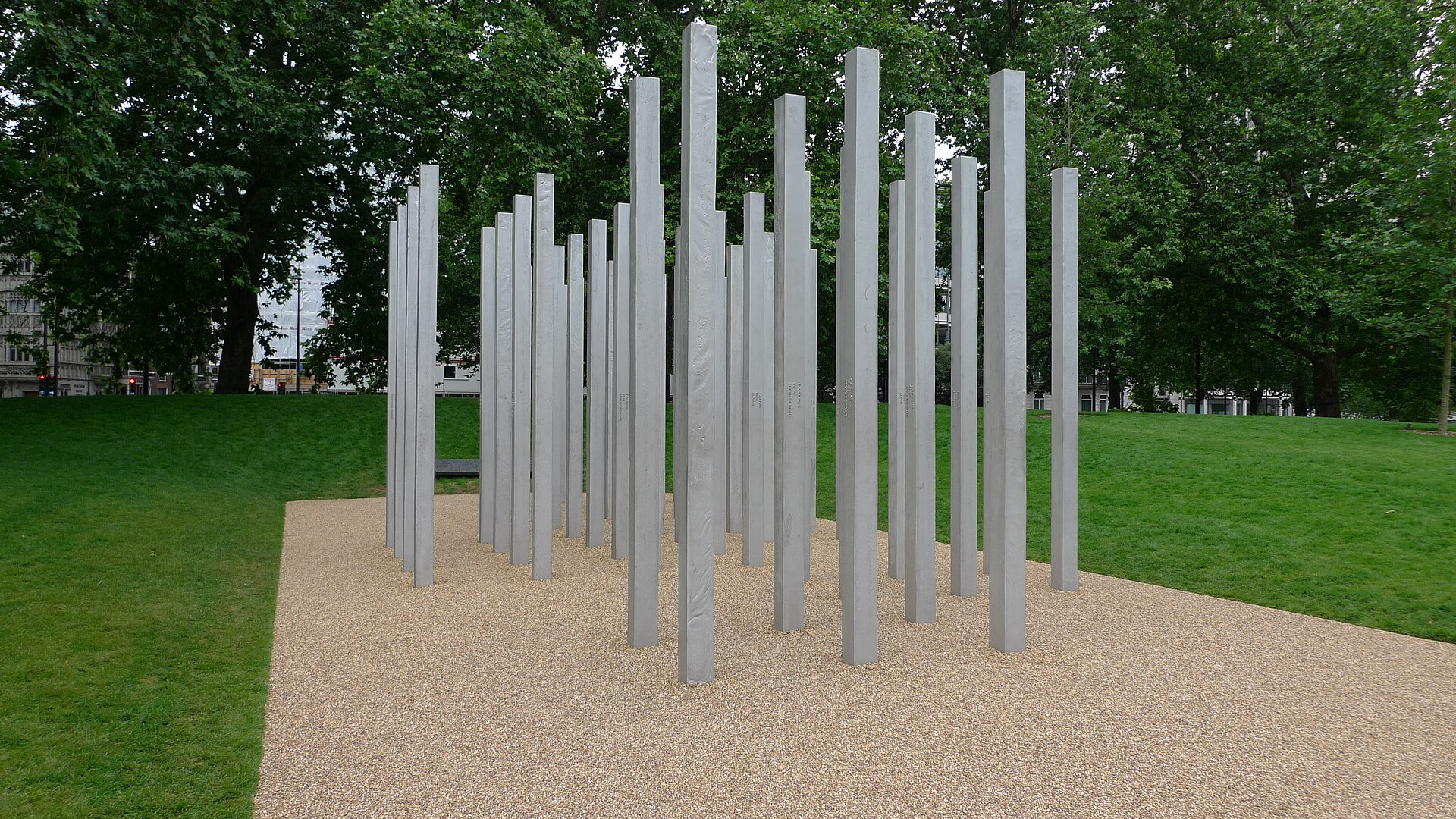
After the Islamist attacks in London on 7 July 2005, in which 52 people died, Horsley admits he was devastated, because he thought those algorithms could have helped detect the terrorists before they struck.
How do terrorists differ from a bank’s ordinary customers?
To build an effective algorithm, you first have to look for patterns of behaviour, so with hindsight Horsley turned to the banking records of the 19 terrorists who carried out the attack on the Twin Towers on 11 September 2001.
They found some behavioural traits that set them apart from ordinary customers, such as:
- Opening their accounts at a very large branch of a well-known bank, with cash (an average of 4,000 dollars).
- Typically using a PO box as their address.
- Sending and receiving transfers to and from other countries, but always below the threshold that usually triggers banks’ alarms.
- Their bank accounts showed none of the normal expenses of everyday life, such as rent, utilities, car payments or insurance.
- There was no monthly regularity in how often they deposited and withdrew money.
- They didn’t use savings accounts or safe deposit boxes.
The problem is that the profile of these 19 terrorists, who travelled to the United States intending to prepare the attacks, need not look much like that of a terrorist who was born and/or educated in the United States or Europe.
And if that data were all there was to build a profile on, hundreds of thousands of people would probably have to be investigated.
When what Horsley’s team also learned from the London bombers was added to the algorithm, more and more innocent people were ruled out, although the number of suspects was still too high, given that some of the data points that identify terrorists are as basic as:
- A very high probability of being male.
- A Muslim first name (and if the surname is Muslim too, a higher probability).
- An average age of between 26 and 35.
- Having a mobile phone.
- Being a student.
- Renting rather than owning a home.
What is less likely for a potential terrorist
Just as you have to enter variables for what is very or somewhat likely, you also have to enter variables for what is rather unlikely, and these include:
- Having a savings account.
- Withdrawing money from a cash machine on Friday afternoons.
- Taking out life insurance.
The savings account is clear enough: they don’t give much thought to their future retirement. Not withdrawing money from a cash machine on Friday afternoons is supposedly because that is the time of obligatory prayer for a Muslim. And the life insurance is because they know insurance companies don’t pay out in the case of suicide (and a suicide bombing counts as suicide, since it isn’t considered work).
Although they may seem like basic data, these variables helped to considerably distil the bank’s database to flag a very small group of potential terrorists.
And finally, they managed to create variable X, which, obviously, is secret. But Horsley does say that it is a behavioural parameter, not a demographic one.
In the end, starting from a database of millions of customers, Horsley’s team handed the British authorities a list of 30 names of potential suspects, at least 5 of whom are involved in terrorist activities.
In many professions and trades, effectiveness is measured by a good end result, but in the case of Horsley’s work, the result can only be measured by the attacks that will never happen.
Thanks to this man’s experience and work, I’m sure the Western world has been a somewhat calmer place than it might otherwise have been, although we still have a long way to go, as the recent attacks in Paris have made clear.
The information in this article is drawn from the book SuperFreakonomics, freely interpreted and adapted.
See also: Why we should listen to our intuition
Featured image: hahnchen at Wikimedia Commons (must include link if medium allows), CC BY-SA 3.0, via Wikimedia Commons.