


One of the most frequently mentioned traits of successful people is, precisely, intuition. Put like that, though, it might seem as if intuition were the same as premonition, or a special gift for anticipating an outcome, getting randomness right or having a sixth sense. Nothing could be further from the truth.
Intuition, put simply, has more to do with picking up on fine details than with having a sixth sense that foresees an outcome. So why do some people seem to have better intuition, or better luck, while others get everything they sense wrong?
There is a more logical reason behind intuition than we might imagine, and we can learn when to follow our instinct and when not to. Obviously we could be wrong either way, but the truth is that intuition is linked to experience and knowledge more than to anything else.
Whether we’re talking about business or investing, the advice tends to be the same: “Don’t wait until you have 100% of the information you need to make a decision, because if you do, you’ll decide too late. Act with 60% of the information and follow your intuition.”
Some investors pick stocks on a supposed hunch, and some businesspeople make an important decision, or hire someone, on that same kind of hunch. It isn’t really a hunch, because picking a profitable stock takes investing experience. And this is where things get interesting: a private investor with a minimum of knowledge about investing and company analysis could end up getting better results than a professional investor.
The reason is that a little knowledge makes you discard unnecessary information and keep the essential information, which is exactly what the most professional people sometimes overlook when they suffer from the well-known “paralysis by analysis”.
Information isn’t the most important thing
Although people often say that information is power, the truth is that information neither guarantees victory nor protects you from failure. Take a game of chess, where the board and the pieces are in full view of both players. With exactly the same information, one will win and the other will lose.
Malcolm Gladwell talked about this in one of his best books, Blink, where he uses the example of the psychologist John Gottman, author of What Makes Love Last? and other books on relationships.
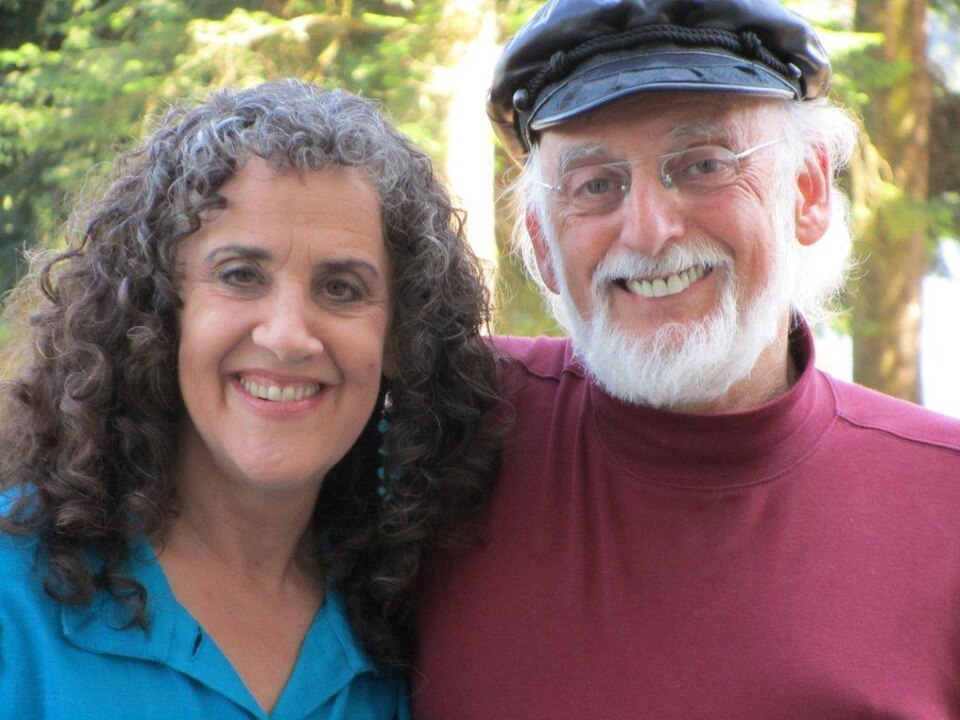
Gottman can predict with 95% accuracy how long a couple will last just by watching them for a few minutes. In other words, if this psychologist “picks you out” in a restaurant while you’re having dinner with your husband or wife, chances are you’ll end up divorced.
But Gottman has learned to reject all the information any outside observer would analyse. He doesn’t look at whether the couple argues, laughs, or talks more or less. To Gottman, that means nothing. He looks for a single pattern in couples that is a safe bet for predicting the end. That pattern is contempt: speaking down to the other person or treating them as inferior.
If Gottman finds that one partner addresses the other with contempt, the couple is almost certainly headed for divorce. There are obviously other signs, but Gottman has learned that this pattern doesn’t fail.
Some people are terrible at making decisions for two reasons
1. They lack experience and/or knowledge
Suppose I’m put in charge of defusing a bomb in that classic movie scene: “Do I cut the red wire or the blue one?” If I cut the red one and defuse the bomb, I’ll say it was thanks to my intuition, that I had a hunch, and so on. If that same wire goes “BOOM”, people will say the most reasonable thing: “That guy had no idea how to defuse bombs.”
Many people go into a profession or business while still mediocre in that field, poorly prepared, or still working to gain experience. Clearly, they will learn from each mistake they make.
If you make decisions in any field without mastering it well enough, your right and wrong calls won’t differ much from those of someone who decides by flipping a coin.
The more experience and knowledge you have, the greater your intuitive intelligence. That’s why professionals with many years of experience tend to have better intuition.
2. They analyse too much information
Too much information only serves to block and confuse you. Most of the time, it’s just a matter of looking at a few key points and discarding the rest. Numerous psychological studies have shown time and again that as the amount of information grows, instead of becoming clearer, we become more confused and get things wrong more often.
To illustrate this, Gladwell’s book gives the example of a firefighter who kept his crew from dying inside a house.
The firefighter and his team went into a burning house and did what was called for, which was to try to put out the fire. But this firefighter, for no apparent reason, shouted to the group: “Get out of here now!” Just as they got out, the house collapsed. They escaped being trapped under the rubble by a matter of seconds.
When he was asked how he knew, he said he’d had a hunch. For some time he worked believing he had that gift: hunches that saved lives. But the explanation the experts gave was more down to earth than magical.
When they asked the firefighter specific questions, they concluded that he had been acting on “unconscious experience or intelligence”. He saw that the fire kept resisting after being put out (which was not normal), that it didn’t make the noise fires usually make (also unusual), and that the floor of the house was hotter than in any other fire of that kind.
The firefighter didn’t know why, but he knew they had to get out of there. What nobody saw was that the fire was in the basement, not in the kitchen, where they were fighting it. That’s why the floor they were standing on was so hot. The fire was underneath them. He didn’t know it, but he knew they had to get out.
You sense that someone can’t be trusted, or that they’ll be right for a job
Some people really do have a talent for sensing that someone can’t be trusted. They don’t know why, but they’re usually right.
One way or another, those hunches are the product of these people’s knowledge and experience, even if they aren’t behavioural professionals. It’s enough to have met several people who acted the same way, who behaved alike, or who had a trait as distinctive as the contempt that predicts a break-up.
You don’t intuit that your partner is cheating on you; you’re seeing the typical signs of cheating. You don’t intuit that drinking bleach is bad for you. Someone simply told you, or you learned it.
The best recruiter doesn’t use pointless questionnaires. Those mechanical job interview questions often only help a jerk who has rehearsed them perfectly to pass the interview, while an excellent professional gets turned down because the interviewer didn’t like their answer to “Where do you see yourself in five years?“
I don’t know about other professions, but in sales, at least, I always liked recruiting salespeople myself, because within a few minutes you can tell whether they’re good or could become good. I’ve known as many good salespeople as bad ones, and most of them had very common traits and behaviours that you can spot in a ten-minute conversation (no questionnaires).
In short, intuition is the ability to pick up on fine details through the experience we’ve acquired, discarding unnecessary information. According to Gladwell’s research, intuition isn’t something conscious but knowledge stored in an unconscious part of our mind. That’s why it surfaces in the form of an apparent hunch. But because it belongs to our unconscious, it can also fall victim to cognitive biases, producing not an intuition born of experience but an idea born of a biased prejudice.
See also: Malcolm Gladwell: why, in the battle between David and Goliath, Goliath was the weaker one



