Some coaches say they’re like a boat that carries a person safely into port. I like that definition, but in many cases I find it more useful to be the one who gives that person a “slap” of reality to make them react.
I’ve been publishing online for more than 12 years, sharing articles for entrepreneurs and investors as well as advice and life lessons on personal development.
Personally, I’ve always stood out for adding big doses of reality and common sense. My psychology is different; my coaching is different. Some people will advise you to stay calm and composed when dealing with unpleasant people; I’m the kind who’ll advise you to drink a glass of water first, to make sure you pronounce it clearly when you tell them to go to hell.
I don’t usually recommend anything I haven’t used or lived myself, or that isn’t backed in some way by science or psychology, although sometimes science itself doesn’t know it’s backing it. For example, many scientists criticise the positive-thinking movement, yet science itself supports the benefits of positive thinking. And I’m not going to get into that dichotomy.
I was advising executives on how to manage their emotions properly before I knew there was something called coaching, and I’ve never liked being called a coach, because the word “coach” has been cheapened these days. In fact, I don’t consider myself a coach. Maybe one day I’ll invent the profession of life strategist or reality-vision technician. For anyone who doesn’t know me, I’m joking, although I have to admit it sounds pretty good.
Coaching vs psychology
Most coaches who come out of the courses that certify them to practise aren’t ready, and that’s a fact, just as 80% of law graduates aren’t ready for a trial. Many of these coaches simply repeat a set of ideas that are more than 2,000 years old, but they struggle to put that advice in context. Mind you, I’m talking about most of them, not all, because I also know that some new coaches have spent many years checking and testing all the information they received, and they also have a genuine wish to help others, rather than going into coaching purely as a way to earn money from a fashionable “profession” in which it’s hard to tell who’s good and who isn’t, since they all have the same “A, B and C”.
I’ve always said that in life there’s a time to learn and a time to teach, and here, changing the order can indeed lead to disaster. A 20- or 23-year-old life coach lacks the essential thing for talking about life, which is life experience. He can parrot hundreds of tips he’s read online, and no reader or listener will ever be able to say what he’s saying is wrong. Someone appears in a video saying “change your thoughts and your perception of life will change”, and all you can say is, “Bravo, bravo, what a clever guy”, and with a bit of marketing he’ll be raking it in very quickly thanks to this “wisdom”.
That’s why you’ll see the internet filling up with new coaches churning out personal-development clichés. The problem is that many personal-development ideas need to be put in context: they’re valid in some situations but not in others. In fact, there are personal-development ideas I myself consider wrong and not very useful.
This is a problem found in every profession. There are good psychologists and terrible psychologists (both have the same university degree), lawyers who aren’t worth a cent and tremendously good lawyers (both have the same qualification), and of course excellent coaches and worthless coaches (both have the same certification).
I’ve seen coaches tell a mother who had lost her newborn baby that she should change her thoughts and visualise the positive, focus on the future and not the past. You simply can’t tell that to a mother who has lost her child. You have to bring that mother back to reality: she has suffered a major loss that she’s going to have to accept and get over. That mother must be allowed to be sad for a while.
Something commonly taught in coach training is that after a break-up, the person should write down 10 bad things about their ex and focus on the bad side of that person. It isn’t bad advice, and it’s even a small part of a long grieving process, but there are other ways and other paths to speed up that process, avoiding focusing on the other person (whether we look for the good or the bad) and focusing instead on ourselves and our growth as people.
There are coaches who work with NLP (neuro-linguistic programming) and more spiritual coaches who base their approach on cosmic energy, where the universe sends us things if we attract them (the law of attraction). The reality is that many of the coaches I’ve met try to solve people’s problems with advice they don’t even apply to their own lives. And note that I’m not talking about them having results, only about applying it.
I’ve met coaches (life coaches and personal coaches) who are victims of repetition compulsion in their own lives and their own relationships. They themselves can’t manage their own emotions properly, so out of the seven days of the week, they’re usually bitter for five of them, except when it’s time to give some great advice to someone with a problem similar to the one the coach has in his own life and hasn’t been able to solve.
And mind you, I recommended to the last few psychologists I’ve met that they see a psychologist themselves, because the mental muddle in their heads wasn’t normal. Admittedly, I see all of this in coaches and psychologists under 40, and even around 30. Honestly, older psychologists have much more orderly lives. We’re back to the importance of life experience.
And this is where a bigger problem begins: both these new coaches and many of the old ones are constantly pretending that they don’t suffer. They manage their emotions and thoughts perfectly. They have a kind of armour that protects them from suffering, a sort of magical thinking that you too can acquire, often by buying a course or paying for a talk. Well, a state of complete happiness 24/7 doesn’t exist, because that wouldn’t be happiness.
Did you know some marriage counsellors have to hide their divorce so they don’t lose clients?
Curiously, the fact that a marriage counsellor argues with their partner or gets divorced doesn’t invalidate their advice, because they can control their side of the relationship but not the other side. Financial advisers have to hide their financial problems, because no one would trust a financial adviser who’s going through financial trouble. Many of these financial advisers are actually advising you to follow certain steps that keep you from ending up in the situation they themselves are going through.
But this kind of thinking is what’s leading motivational speakers and coaches to hide a reality: it rains on all of us. Sadness reaches us all at some point; disappointment and even anger reach us all. If someone tells you they’ve learned not to be touched by these feelings, they’re lying to you.
What we can do is limit both the duration and the impact of these feelings, and avoid feeling sad or angry about things that don’t matter. And there’s nothing wrong with feeling angry or sad. What’s wrong is staying in that state longer than necessary.
The biggest critics of coaching are psychologists themselves, who see coaching as a kind of professional encroachment, because a course lasting a few months doesn’t turn you into a sage with all the answers to hundreds of everyday problems. Psychology also goes as far as calling coaching a pseudoscience, which isn’t wrong if we stick to the fact that anything not backed by science is pseudoscience. And here we need to be clear about a concept that’s sometimes hard to grasp: just because something is a pseudoscience doesn’t mean it isn’t effective, in the same way that just because something is backed by science doesn’t mean it’s the most effective option.
See also: Muhammad Ali’s secret of success: the power of affirmations
When we talk about science, we shouldn’t forget the philosopher Karl Popper, who held that science is a set of hypotheses in which no theory can be considered absolutely or irrefutably true, only not yet refuted. This is known as falsificationism, and it means that even if we’re very certain about something, something may later be discovered that overturns what was previously considered true. In other words, there are no true theories, only theories that haven’t yet been refuted but remain open to refutation.
Where does coaching come from?
Most people think the forerunner of coaching was Tim Gallwey, with his “Inner Game” method. It’s true that he was one of the first to open up this commercial path towards business coaching, executive coaching and personal coaching. Tim described a methodology for training and for developing personal excellence in all kinds of fields, from sport to business. He’s considered the father of modern coaching.
His theory was that every human activity takes place in two arenas: the outer and the inner. While the outer game consists of overcoming external obstacles to reach certain external goals, the inner game takes place in the player’s own mind, and here the obstacles to overcome are fears, doubts, limitations and so on.
The inner game would be the most important one to play, because that’s where you overcome the self-imposed obstacles, which will also help you overcome the external ones. In other words, if you play the inner game well, you can develop your full potential.
And I must honestly say that in most of the advice Tim Gallwey gives in his books, I don’t see “pseudoscience” as such, but rather very plausible doses of common sense that every human being should keep in mind when trying to get ahead in life.
But let’s go a little further back to understand where the word “coaching” comes from. For that we have to go to the 15th century and the town of Kocs (in Hungary), very close to Budapest, where a very particular kind of carriage was given the name kocsi, pronounced roughly “KO-chee”, which became coche in Spanish and cocchio in Italian.
The English term “coach”, which in Spanish translates as entrenador (trainer), quite possibly has a lot to do with that 15th-century carriage, since the purpose of a coach or trainer is to drive a person towards a particular destination.
Although coaching is actually much older
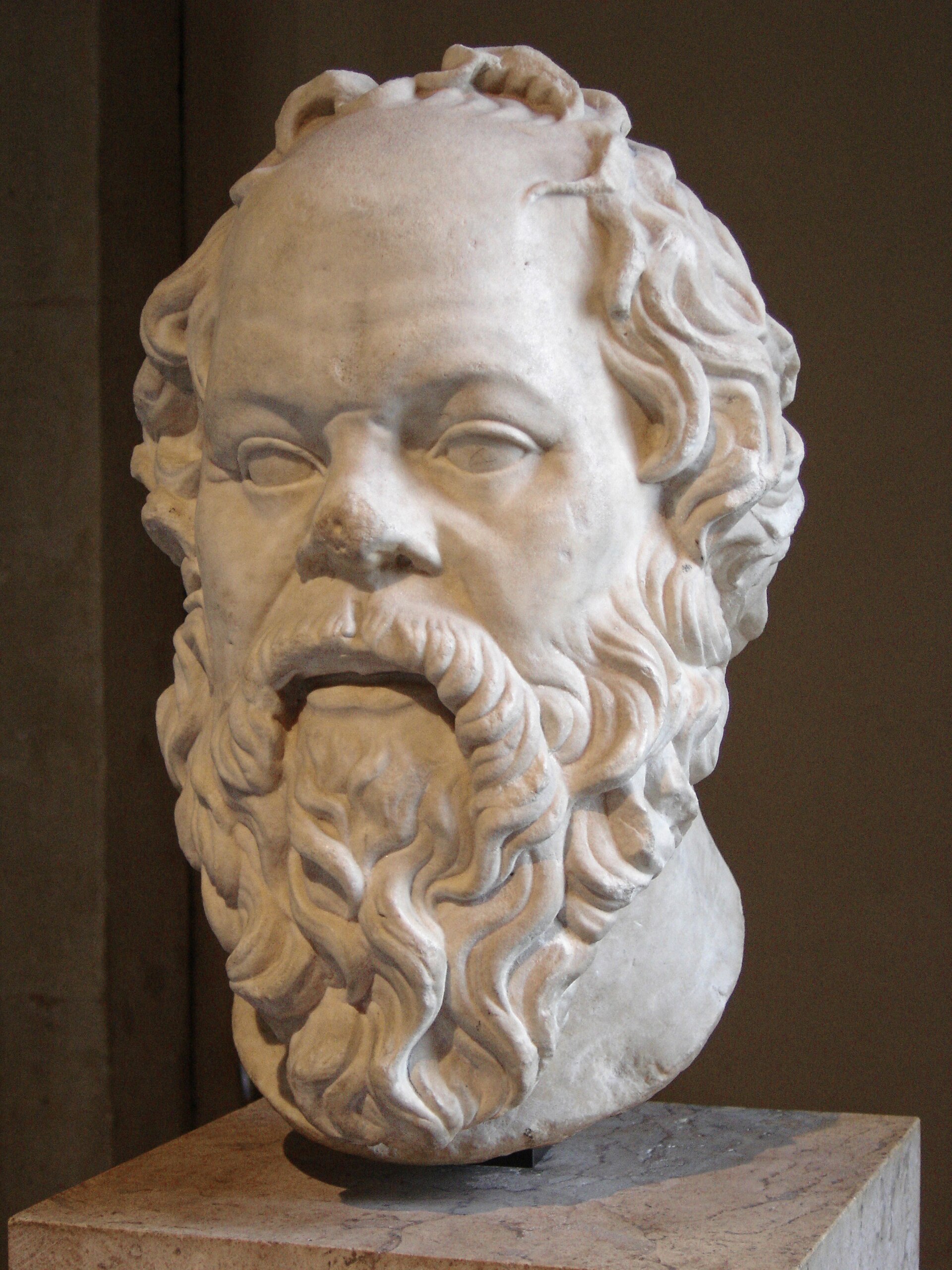
Experts believe the first coach in human history dates back to 450 BC, with the philosopher Socrates as the first coach in history. Socrates called it “the art of maieutics”, which consisted of encouraging dialogue as the best way to motivate his disciples, and in this way reach knowledge and truth.
The art of maieutics basically consisted of asking his disciples questions so that they would reach their own conclusions by themselves, because Socrates started from the premise that we all have the answers and we all know the truth. Someone simply has to drive us (coach us, take us) there.
We could say that Socrates and his disciple Plato laid the foundations of what we know today as coaching. In fact, most of the motivational quotes and life lessons attributed to many present-day authors are merely reworkings of the ideas of some ancient philosophers.
So is coaching effective?
I don’t have the slightest doubt that coaching is genuinely effective, but I’m also certain that 90% of coaches aren’t able to make it useful. Especially with life coaching, we’re seeing how simple coaching content is and how anyone can repeat it with huge reach on social media, passing themselves off as an expert.
In the end, many of these coaches deserve more credit for building marketing strategies than for any real solutions they can offer a person. This aggressive marketing is something psychologists haven’t used to this day, and psychology professionals themselves feel overwhelmed by the situation, aware that coaches are doing some damage to their profession and, to be honest, getting into serious trouble many people who could find a solution in psychotherapy.
That said, for psychologists to use words like “scam” or “useless” when referring to coaching would be going too far. Coaching is no more a scam than investing in the stock market is. That doesn’t stop frauds and con artists from appearing in both coaching and finance.
Let’s understand that coaching is a new trend that anyone can get into. With 90 hours of training, even distance learning, you can get the accreditation that allows you to work as a coach.
Psychologists have had to study a great deal more and have covered much more ground in the study of human behaviour. That’s why, in this golden age of snake-oil sellers, coaching becomes a very sweet lure to attract them.
Is coaching psychology?
The first thing coaching schools tell you is that coaching isn’t psychology, although that isn’t entirely accurate. They explain some differences between coaching and psychology, saying that psychology focuses on the negative while coaching focuses on the positive; psychology focuses on the past and coaching on the future; psychology teaches you to accept yourself as you are, while coaching tries to transform you.
Perhaps it’s because of this last point that the big question has arisen: “Can a female psychologist have breast-augmentation surgery, or should she accept her breasts as they are?”
In any case, psychology and coaching share the same goal, which is to improve the life of the patient or client. That’s another difference between coaching and psychology: psychologists see patients, while coaches see clients.
What’s clear is that a psychologist can work as a coach, while a coach can’t work as a psychologist. Even so, coaching focuses on personal development, which falls within the field of psychology.
With time, experience and the testing of information and knowledge, you come to the conclusion that a person should think positively, but only once we’ve pictured the worst-case scenario. That way, even before we start fighting for our goal, we’ve already priced in the outcome of our emotions.
Sometimes (and this is where intelligent coaching can be most effective), if we help a person see the reason for their behaviour, “force” them to understand that their past doesn’t have to be the same as their future, give them responsibility for their own life and behaviour, and instil in them the belief that they can turn things around 180 degrees through their own decisions, we can work real magic with that person.
And don’t get me wrong: the role of psychology is fundamental. What I’ve been seeing for some time, though, is that when a psychologist brings in some coaching techniques, a person’s process of change speeds up at an astonishing rate.
I honestly believe every psychologist could and should learn many concepts from the world of coaching. They could even learn to boost the marketing of psychology so that “fake coaches” don’t eat into their ground.
What makes some people take their bad experiences in life and use them to grow, while others use them to justify going down the wrong path? What makes some people thrive despite adversity while others sink and never manage to get back on their feet? I have no doubt about it. Being aware that the future is in your hands, through your decisions, is something that helps.
I’ve always wanted to make one message crystal clear: we must learn to take absolute responsibility for our lives and take control of them through our decisions. The past should never dictate your future. And this message isn’t negotiable or open to change. Whether a coach, a psychologist or a Nobel Prize winner tries to refute it, they’ll lose.
Featured image: Copy of Lysippos (?), Public domain, via Wikimedia Commons.