

Beyond the fact that there are rich people and poor people, there will always be huge differences between the income and standard of living of some citizens and others. And nothing can be done to prevent this, because although there may sometimes be injustices, often all that is happening is that some people have a different mindset from others. We will never be equal in absolutely anything, simply because we are not equal.
As we explained in a previous article, even if the money of the rich were shared out among the poor tomorrow, that money would end up back in the pockets of the rich. It would be the poor and the middle class themselves who sent it back there.
To understand this perfectly, we’ll use a financial fable taken from the book Cenizas de prosperidad (“Ashes of prosperity”).
A financial fable to understand economic inequality
There was once a village of 100 people whose only food was hens’ eggs. The village had a total of 100 hens. The problem was that a man called WarrenGates owned 50% of the village’s hens, so he took advantage of having enough hens to do business with them, selling eggs to the villagers who had no hens.
The villagers began to see this as an injustice, so the whole village got together to find a way to fix this inequality and injustice.
An assembly was called, and they ended up deciding that the way to fix the injustice was to force WarrenGates to share out his hens with the rest of the village. In other words, if there were 100 people, one hen per person would be fair and equitable.
They voted unanimously, and WarrenGates was forced to give away all his hens but one, so now every person in the village had a hen. And the village celebrated.
What happened next?
Of those 100 people, 50 made a stew and ate their hen. The other 49 didn’t eat their hen, but adapted what they ate to how many eggs it laid. That is, if the hen laid one egg one day, that person ate one egg. On days when the hen laid two eggs, that person ate two eggs that day, and they were happy on the days when they could eat one more egg than usual.
Unlike the rest of the villagers, WarrenGates decided to go hungry for a week, not touching any of the eggs his hen laid. The following week, he started eating an egg only on the days his hen laid two, saving the other egg.
WarrenGates waited for chicks to hatch from the eggs he had stored, and they grew into hens. Months later, WarrenGates once again had 50 hens, and could eat as many eggs as he wanted and sell the surplus to everyone else, who no longer had any hens.
This seemingly absurd story perfectly explains the difference in mindset between the wealth accumulator and everyone else. In the end it comes down to initial sacrifice, saving, planning and strategy.
In financial terms, some people are willing to make certain sacrifices that others are not. We are simply not equal. If 20 people won the lottery tomorrow, one of them would go out and buy a nice car, a big house and all kinds of luxuries, ending up poor again, as happens to more than 80% of lottery winners. Others would do somewhat better.
See also: Avoid these psychological mistakes with your money to improve your personal finances
With a few exceptions, the person who has generated more wealth, who has been more successful than the rest, as well as having had a little luck, usually has a story of sacrifice and preparation behind them that not everyone was willing to go through.
This financial story was taken from Cenizas de prosperidad – Más allá del desarrollo personal.
See also: 8 traits of people who will achieve financial freedom
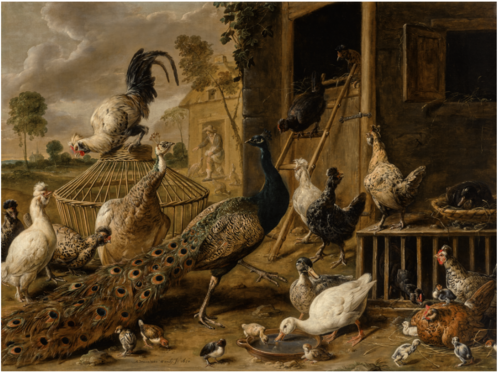
Featured image: Adriaen van Utrecht, Public domain, via Wikimedia Commons.



