Editor’s note: This article was first published in September 2015, and the fortunes it cites, Bill Gates at $80 billion and Warren Buffett at $70 billion, are 2015 figures. Yesterday refers to Bloomberg’s Robin Hood Index article of 22 September 2015, and the claim about the richest 1% comes from a 2013 report.
Yesterday, Bloomberg tried to answer the question “What would happen if the richest person in each country shared out their fortune among the neediest?” To do so, it used the Robin Hood Index, named after the famous fictional character who robbed the rich (not exactly) to give to the poor.
The very design of the Robin Hood Index published by Bloomberg makes no sense, because it takes the fortune of a single billionaire per country to work out “how much each poor person would get”, when the result would have been very different if it had pooled the fortunes of the richest 1% of the population, who control 39% of global wealth, a total of roughly $52 trillion.
Then some Spanish media interpreted the index in their own way, distorting some of the data and in some cases even misreading the numbers. But none of that really matters much, because we are going to look, and I’m not saying this to wind anyone up, at why this index starts from several completely false premises, with mistakes that are not about economics but about common sense when it comes to the wealth of the world’s richest people.
First of all, nobody owes anybody anything. This is the part that is hard to understand. As long as a billionaire has accumulated a fortune of 80 billion honestly, without stealing from anyone, that fortune is theirs. And nobody has made a fortune like that on their own: they have had to create thousands (or tens of thousands) of direct jobs, plus the indirect ones. That rich person has created financial stability for thousands of families.
The rich don’t have that money
I think this is where the Robin Hood Index fails, and it creates the first false premise, a basic error that makes it completely useless.
Bill Gates doesn’t have $80 billion, and Warren Buffett doesn’t have $70 billion. Nor does Amancio Ortega. We are talking about net worth, and the net worth of the “mega-rich” isn’t held in cash but in shares and other assets which, yes, are liquid assets, but not that liquid when we are talking about sums like these.
As we know, Warren Buffett holds a wide range of shares in large listed companies, while Amancio Ortega’s fortune is heavily exposed to the shares of his own company, Inditex, as well as other investment assets.
In other words, the rich don’t really have 80 billion in full, but “bits of paper” worth 80 billion.
We forget that if any of these mega-rich tried to turn all their wealth into cash, they would first have to sell their shares, and selling them would sink the value of the companies they were pulling the money out of, not to mention worrying the rest of the investors.
The same would happen if they handed those bits of paper out to the poor, because the poor would try to turn the shares into cash. The first ones would (probably) get away with it, but the rest would probably not be able to sell their shares at a good price, because panic would already have spread.
I know this is an absurd thought experiment, about as accurate as the Robin Hood Index itself, because the rich are not going to give their fortunes away. And even if they did, the poor would get poorer, because billionaires’ wealth is tied up in companies’ capital, and if that money leaves a company, the company, faced with a falling share price, would be forced to lay people off, cut salaries and stop investing and expanding. Put another way, if this really happened on a massive scale, it would be ruin. Utter ruin.
The day after the “money” was handed out, the economy would already be bankrupt, with unemployment never seen before. Those would be the minimum consequences of pulling $52 trillion out of where it is, not to invest it but to give it away.
And what would the poor do with the money?
Various economic theories explain that even if you gave €10,000 to every poor person in a country, those people would find a way to pass that money back into the pockets of the rich.
Poverty isn’t solved by giving money to the poor, but by creating jobs and making things easier for small, medium and large companies so that they, in turn, can create more jobs. The role of the much-criticised capitalism is (or should be) to create wealth and work. How some capitalists use it is another matter, and in that case it tends to be more a problem of government than of the rich.
Now, if we are talking about solving the extreme poverty of the people who die every day around the world because they don’t even have access to clean drinking water, there’s no need to panic: nobody needs to give away their fortune.
Calculations have been made for ending world hunger, and according to the UN Secretary-General it would cost between $75 billion and $260 billion a year in investment for about 15 years. That figure isn’t outrageous at all, considering that the US alone spends more than $700 billion on defence. And it falls below what is spent on space research. If world hunger hasn’t been ended, it must be because the world’s governments haven’t shown much interest in doing so.
In short, use the rich as inspiration, not as a possible salvation from your situation, because sharing out the fortunes of the mega-rich would solve absolutely nothing. It would only bring more poverty.
See also: What leads you to poverty, according to T. Harv Eker, author of Secrets of the Millionaire Mind
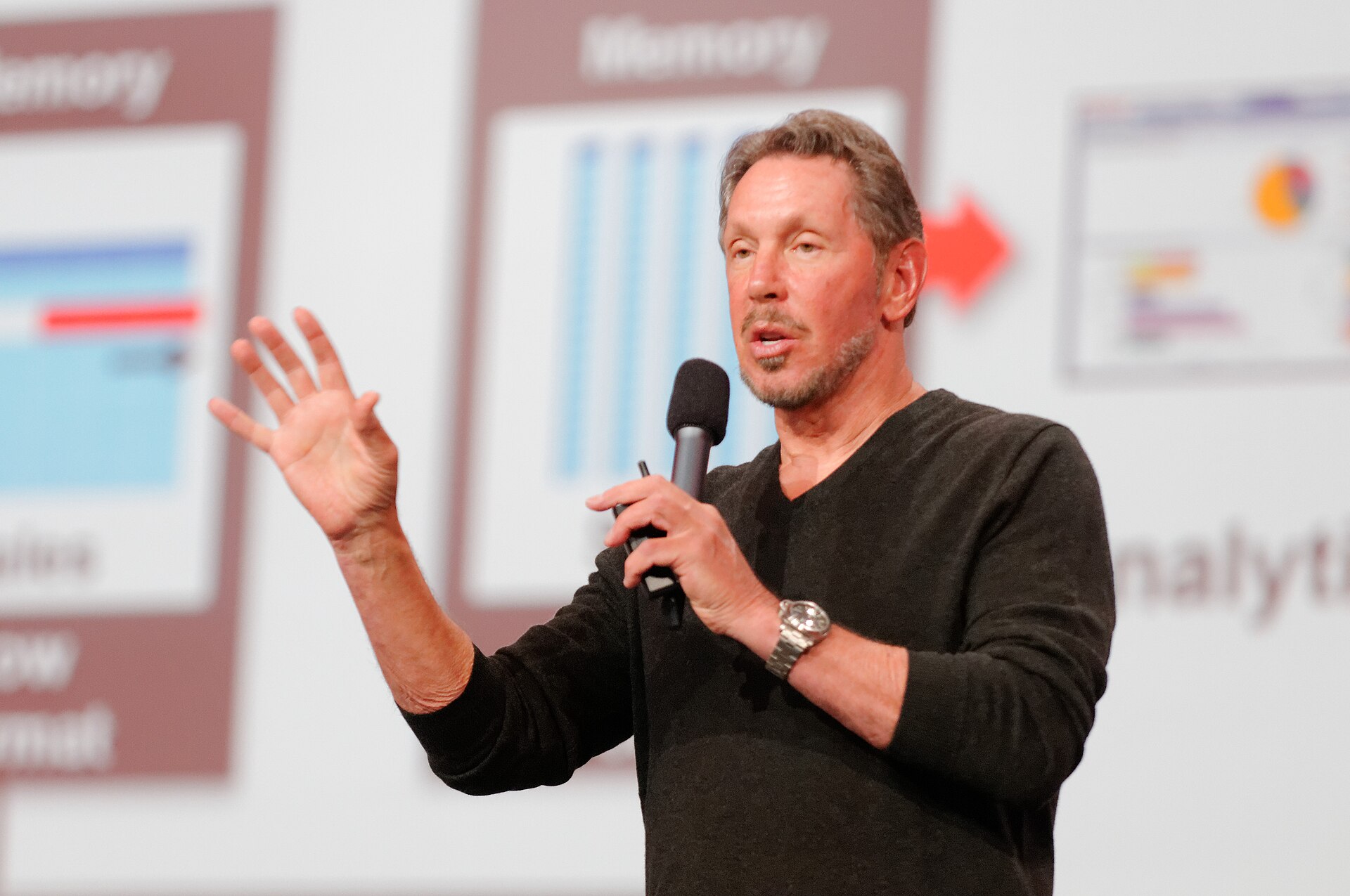
Featured image: Photograph by Mike Peel ( www.mikepeel.net )., CC BY-SA 4.0, via Wikimedia Commons.