Editor’s note: This article was first published in January 2011, and its forecasts for that year, including a second recession, a rising Euribor, the biggest electricity price rise in history and most long-term unemployment benefits running out by mid-2011, reflect that moment.
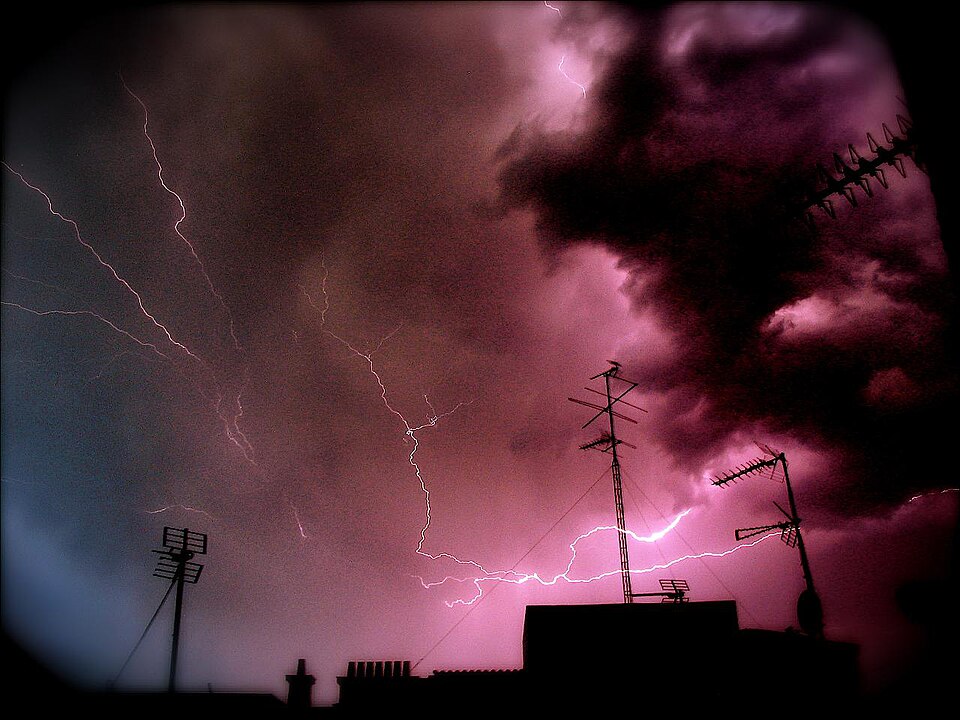
This Sunday I read an article by Teresa Velasco in a business supplement that described perfectly what could soon happen in Spain. As we said some time ago, in 2011 Spain will enter the real eye of the hurricane of the crisis, or, as Teresa aptly puts it, the perfect storm will hit us: the kind that forms when prices are very high and wages are very low.
According to some respected economists, Spain has already come out of the crisis. That’s hard to believe, given the state of the country and, above all, given that no new jobs are being created. Well, Spain has indeed come out of the recession, except that we’ve climbed out of a puddle only to fall into a lake. We’ve fallen into economic stagnation, which could lead us into a recession within a crisis.
Some of us were pleased to see how much cheaper things had become, with sales like never before, and in 2011 we may even get a second round of sales with discounts of up to 70%. What delights consumers so much is not good news at all, because it disrupts the natural flow of the economy.
We won’t get into complex terms like inflation and deflation; we’ll just say that two years ago we were afraid of deflation, and now it’s exactly the opposite effect that’s going to finish us off.
The government has raised taxes to shore up the public finances, which was necessary for Spain to look good to the markets, but in doing so it has helped choke the Spanish economy, because raising taxes in itself means prices go up. Here, in simple terms, is what’s coming our way.
Oil is going up. When we say a product like oil is going up, we don’t just mean you’ll pay more to fill up at the petrol station. You’ll also pay more for clothes, for household appliances and for practically 99% of products, because oil is the raw material par excellence and goes into making just about anything.
Add to that the biggest electricity price rise in history. If that’s hard enough on a household, imagine what it means for a company running two or three shifts with its machinery going full blast.
These “insignificant” increases eat into companies’ profitability and force them to take two measures:
- Raise prices.
- Cut workers’ wages.
A worker whose company has had to cut wages then needs to buy a product from another company in the same situation, so he’ll think twice before buying. In the end, consumers stop spending and set out to save.
When lots of people save instead of spending, companies lose profitability and have to adopt the measures we just mentioned, so we’re back in a vicious circle.
If consumers stop buying, companies stop selling and need to produce less and less, yet they pay more in taxes. So they become less and less profitable and need to let more and more staff go.
Large retailers are also squeezing small manufacturers too hard, cutting their margins to the point where, if a manufacturer keeps supplying them, it’s only to avoid closing down and to raise a bit of cash. The business doesn’t make money, and once again it has to cut wages and lay off staff.
On top of all this, the Euribor (the benchmark rate most Spanish mortgages are tied to) has started to rise. That means more trouble paying mortgages and, once again, a higher default rate, especially since by the middle of 2011 most of the long-term unemployed will have used up their benefits.
That’s the situation, and let’s hope some of us are wrong, because otherwise, as Teresa Velasco titled her article, this will be the perfect storm: if the rain doesn’t get us, the lightning eventually will.
Still, a little optimism wouldn’t go amiss.
Featured image: MGR! from Spain, CC BY 2.0, via Wikimedia Commons.