

Editor’s note: This article was first published in November 2012, and describes the trading session of 28 November 2012 and that day’s news: Bankia’s share prices, analysts’ target prices, the expected 19 billion euro loss for 2012, the 2013-2015 strategic plan with 6,000 job cuts and the pay cap for executives at bailed-out banks.
After starting the day suspended from trading by the CNMV (Spain’s securities regulator), because today was the day the requirements Brussels would impose on the bailed-out banks were announced, Bankia returned to the market at 14:11, trading at 1.079 euros. In less than two minutes the stock had already lost nearly 5%, only to climb back up to a gain of 2%.
Within an hour, the stock was down 15%, finding support around 0.92 euros and then climbing back above one euro, to 1.012 euros to be exact. The joy was short-lived: the stock dropped below one euro again and, amid constant ups and downs, finally closed at 0.991 euros, a loss of 9.34%. Capital gains for some and, I imagine, quite a few losses for others.
This isn’t a stock to buy and then go off for a coffee without placing a loss protection order. And the worst thing about it is that even with a stop loss in place, you can run into what we call “a nasty red candle”: your stop loss gets triggered, and then the stock shoots back up 5%.
Of course, Bankia shows what the market has been turning into lately: thousands of traders fighting to grab a few cents of gains.
Even so, this stock is remarkable for the number of trades you can make in a single session, given its extreme volatility when it’s red-hot. Several traders told me a moment ago that when Bankia is “hot”, it earns them more in a single session than they make in a month with hundreds of trades.
Clearly, anyone who buys into Bankia right now with any intention other than pure speculation will have nothing but headaches, at least for now.
The target price some analysis firms give the stock is around 0.36 euros, and others even give it a target price of 0 euros, which is hardly surprising for a bank that will lose 19 billion euros this year.
Bankia’s 2013–2015 strategic plan states that the bank will return to profit next year, thanks to its restructuring plan, which confirms that it will lay off 28% of its workforce, a total of 6,000 employees, and close more than 1,000 branches across Spain.
It has also announced that it will impose losses of 39% on holders of preferred shares (participaciones preferentes, hybrid products widely sold to small savers). Brussels is forcing the bank to shrink by more than 60% and is banning it from focusing on risky business such as loans to property developers. Bankia’s business will have to concentrate on lending to individuals and companies, what is known as a more traditional retail bank.
The Memorandum of Understanding (MoU) requires shareholders and holders of hybrid instruments to bear part of the cost of the recapitalisation. It also calls for capacity adjustments and a further reduction in the size of the balance sheet, as well as restrictions on shareholder remuneration policies (dividends) until 2014.
Finally, the European Commission has capped the salaries of executives at bailed-out banks at a maximum of 300,000 euros. How mean of the Commission! Do you really think these executives will be able to make ends meet on 50 million of the old pesetas?
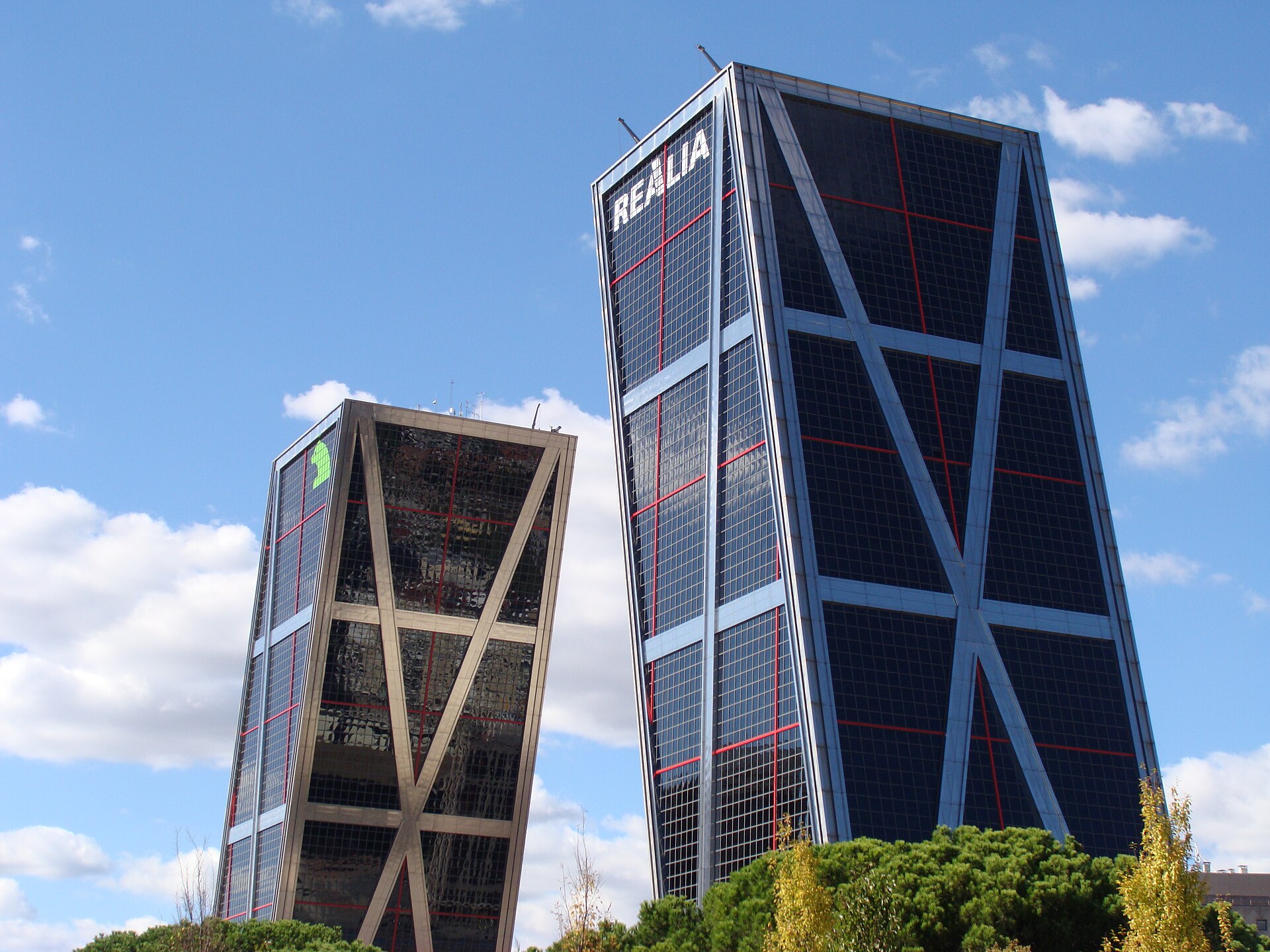
Featured image: Fernando Losada Rodríguez, CC BY-SA 4.0, via Wikimedia Commons.



