

There are some professional social situations that can be awkward, in which we need to follow certain etiquette rules. The rules are slightly different from those of ordinary social settings, yet business schools rarely cover professional business etiquette.
In her new book New Rules @ Work: 79 Etiquette Tips, Barbara Pachter writes about the specific professional skills you need to present yourself in a business environment. From how to introduce yourself to what to order in restaurants, these are the social rules to know when building relationships.
1. Always say your full name.
In a business situation, always use your full name, but also pay attention to how others want to be introduced.
If your name is too long or hard to pronounce, Pachter says you should consider changing or shortening it.
2. Always stand up when you are introduced to someone.
Standing helps establish your presence. It makes it hard for others to ignore you. If you are caught off guard and can’t get up, lean forward to show that you would stand if you could.
3. Only say “thank you” once or twice during a conversation.
Say thank you just once or twice in a conversation. Otherwise you dilute the impact of your thanks and may come across as somewhat helpless or needy.
4. Send separate thank-you notes to everyone involved.
Send thank-you notes within 24 hours, and send a separate one to each person you want to thank. Before choosing between handwritten notes and email, bear in mind that regular mail can take several days to arrive, while email arrives almost instantly. That difference in timing can matter after a job interview if the company plans to make a hiring decision quickly.
(See: A very common job interview mistake: not sending a thank-you note)
5. Never pull out someone’s chair to help them sit down.
It’s fine to hold a door open for your guest, but Pachter says you shouldn’t pull out anyone’s chair to help them sit down, whatever their gender. In a business setting, leave those gendered social norms behind. Men and women are both perfectly capable of pulling out their own chairs and sitting down.
Bear in mind that in an ordinary social setting, pulling out a lady’s chair makes you a gentleman, but pulling out a lady’s chair in business may be seen as sexist.
6. Don’t cross your legs.
Men and women both do it, but it can be distracting and even too sexy for a professional environment, says Pachter. The bottom line, though, has to do with health: crossing your legs is bad for circulation, because it increases pressure on the veins.
7. Keep your fingers together when you point.
Point with your palm open and your fingers together. If you point with your index finger, you will look aggressive. Men and women both point, but women tend to do it more than men.
8. Break bread with your hands.
Pachter says you should never use your knife to cut bread at a business dinner. Of course, we are assuming that a restaurant won’t bring you a whole loaf, but individual portions of bread.
9. Don’t push away or stack your plates.
You are not the waiter. Let the waiting staff do their job. Focus on the conversation and don’t distract your companions by tidying plates, which might make them think you are not paying attention to them.
10. Never ask for leftovers.
You are there for business, not for leftovers, Pachter writes. Taking leftovers home might be fine for family dinners, but not on professional occasions.
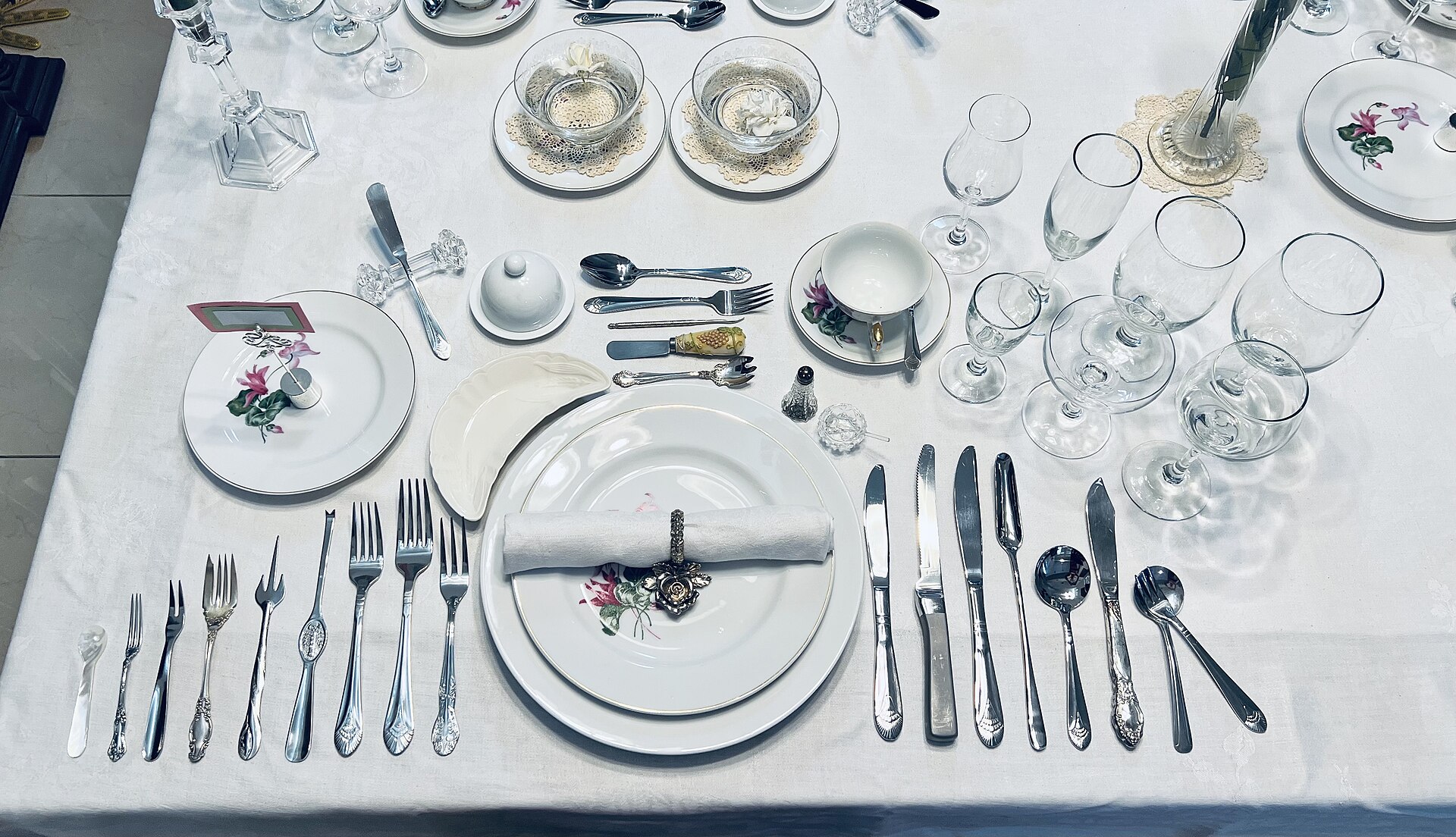
11. Know how plates and cutlery are laid out.
Food goes on the left. If the table is set correctly, your bread, salad or any other side dish will be placed to the left of your plate. Likewise, drinks go on the right: any glass or drink will be placed to your right. The knife and spoon go on the right and the fork on the left. At least, that is the protocol followed in somewhat more upscale restaurants.
12. The host always pays.
If you made the invitation, you are the host and you pay the bill, regardless of your gender. What if a male guest wants to pay? A woman has a few options. She can say: “I’m not the one paying, the company is.” Or she can excuse herself from the table for a moment and pay the bill without the guests seeing.
This option works for men too, and it is a very refined way to pay the bill. If a male guest insists on paying despite the woman’s best efforts, well… let him pay.
And to round it off: 9 things you shouldn’t do at a business dinner
Featured image: Hopefulromntic, CC BY-SA 4.0, via Wikimedia Commons.



