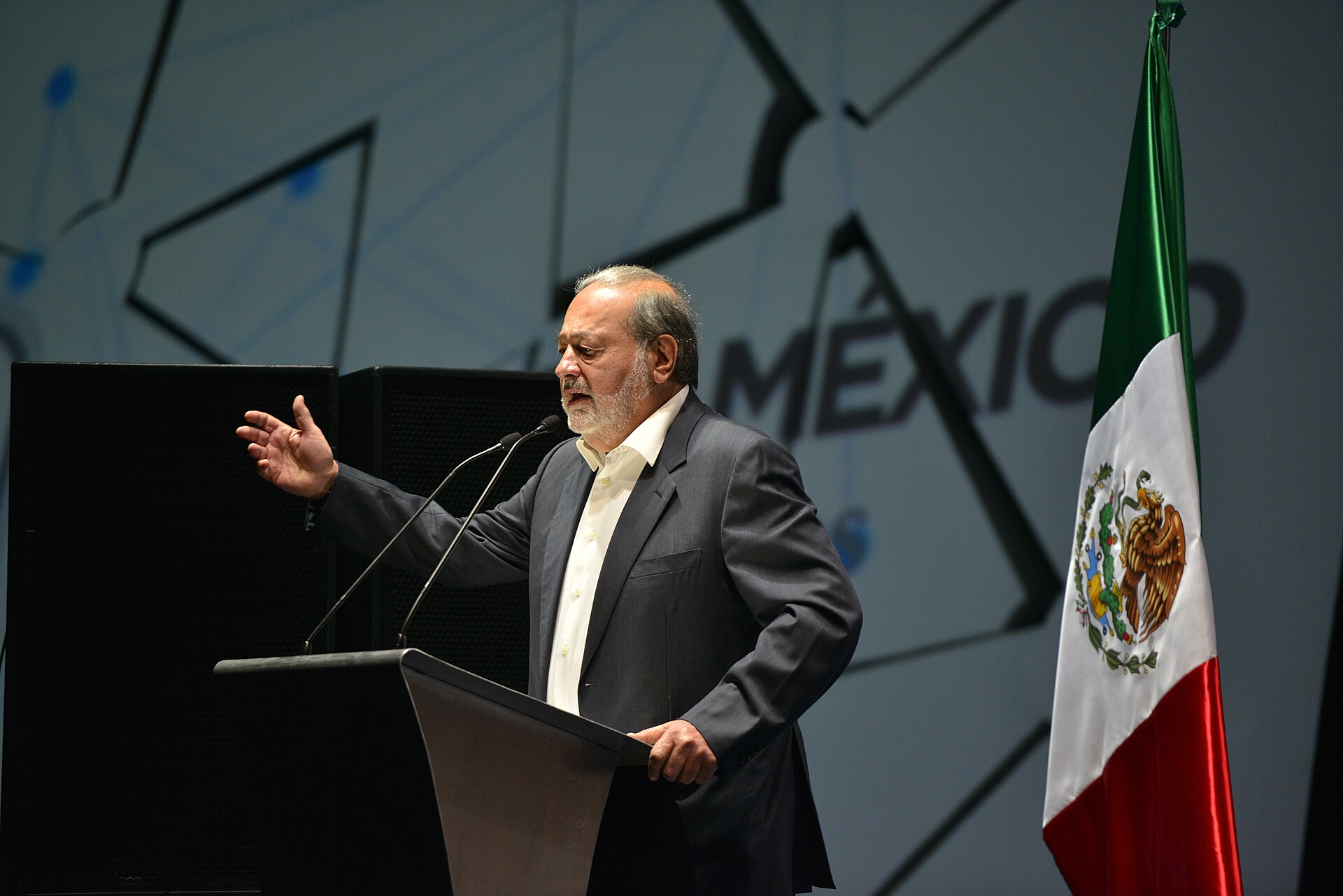
Editor’s note: This article was first published in April 2010, based on the March 2010 Forbes billionaires list, which put Slim first. The fortune of about 53.5 billion dollars and the “some 200,000 direct jobs” are 2010 figures. Slim stayed at the top until 2013 and has not been the world’s richest person for years.
According to Forbes magazine, the richest man in the world is now Carlos Slim, who has overtaken Microsoft founder Bill Gates. When I read the news, I wanted to know how he had built this fortune. His biography makes interesting reading, but not nearly as interesting as getting inside the head of this genius as he is today.
In Mexico they call him “the Engineer”, but I would personally call him the master of businessmen.
He doesn’t come from one of the humble families caught up in the poverty that plagues Mexico. But his father didn’t leave him an empire worth more than 53 billion dollars, either. And even so, he is still a down-to-earth man who lives in the same house he lived in 40 years ago.
His companies
Among his companies are:
- América Móvil: one of the largest mobile phone companies on the planet.
- Telmex: Mexico’s state telephone monopoly until Slim bought it.
- Grupo Carso: consumer goods through CICSA.
- Ostar Grupo Hotelero: a large hotel chain.
- Grupo Financiero Inbursa: banks, insurance, a brokerage firm and more.
And each of these companies has a whole chain of retail businesses behind it.
Carlos Slim is much loved, respected and admired by every businessperson who knows his life and career. But he is also heavily criticized for amassing such an immeasurable fortune in a country where poverty is everywhere. Of course, according to him, what he has is within everyone’s reach: you just have to do what he did. Still, he creates some 200,000 direct jobs.
His ten personal commandments
To that end, he published his 10 personal commandments in Forbes:
-
In-house training for executive roles. Flexibility and speed in decision-making. Operate with the advantages of a small company, because those are what make big companies great.
-
Keep up austerity in times of plenty. It strengthens the company, builds its capital and speeds up its development, and it also prevents drastic damage in times of crisis.
-
Always active in modernization, growth, quality, simplification and the tireless improvement of production processes. Raise productivity and cut expenses and costs, always guided by the highest global benchmarks.
-
A company must never be limited to the size of its owner or manager. We shouldn’t feel big in our own little backyards. Minimal investment in non-productive assets.
-
There is no challenge we can’t meet by working together, with clear objectives and knowledge of the tools at hand.
-
Money that leaves the company evaporates. That’s why we reinvest the profits.
-
Business creativity isn’t only for business; it also applies to solving many of our countries’ problems.
-
Optimism, firm and patient, always pays off.
-
All times are good times for those who know how to work and have the means to do it.
-
Our premise is, and always has been, to keep firmly in mind that we leave with nothing, that we can only do things while we’re alive, and that the businessperson is a creator of wealth who manages it temporarily.
Further reading
- Should you start a business or buy one?
- Have a business idea? How to make it happen
- Steve Jobs and the early days of Apple
- The history of Google and how it got started
Featured image: ITU Pictures from Geneva, Switzerland, CC BY 2.0, via Wikimedia Commons.