

If we go to Wikipedia, a cognitive distortion is defined as a form of error in information processing. Let’s say it is an automatic thought, probably mistaken or distorted, that could even end in emotional disturbance, depression, phobias…
In principle, in the field of psychology, cognitive distortions are something to be treated in the people who suffer from them, but… it can also happen that, in the distorted world we create, we end up making those distortions come true. And that is the territory where history’s great geniuses and great entrepreneurs operate.
Michael Dearing, of Stanford University, has put together a magnificent presentation on the 5 cognitive distortions (or automatic thought processes) found in people who succeed in business.
These are the 5 distortions:
1. Personal exceptionalism
Your work is truly special, and you feel you were born to do something truly important. You are destined to have experiences beyond the bounds of the normal.
We might mistake this for arrogance or excessive self-esteem, but many entrepreneurs felt that changing the world was in their hands.
2. Dichotomous thinking
They tend to be very extreme and critical about people, experiences or things. For them, grey does not exist. Everything is black or white.
But… is it really a distortion to think this way?
- Either you take drugs or you don’t: there is no such thing as a semi-drug addict.
- Either you are faithful or you are unfaithful: nobody is half unfaithful.
- Either you are an honest person or you are not: there are no temporarily honest people.
- Either you are cut out for this job or you are not. Either you are useful to me as an employee or you are not.
The truth is that, on many occasions and in different areas, we seek out that grey area so that we are not forced to make a tough decision. Great entrepreneurs are much clearer about this with suppliers and employees, and even with success. Either you succeed or you fail.
3. Correct overgeneralisation
Making universal judgements from specific cases.
In other words, taking isolated cases and drawing a conclusion that applies to everything. This distortion could amount to our own mind betraying us, but this way of thinking has been found in the minds of great entrepreneurs, and they have turned out to be right on many occasions.
4. Jumping to conclusions
Presuming or guessing other people’s thoughts or intentions, and predicting or prophesying the outcome of events before they happen.
This may sound crazy, but in business, experience and dealing with people over time give you “intuition”, which is basically predicting a future event on the strength of your past experience.
As for prophesying an outcome… Sun Tzu, in The Art of War: “Every battle is won before it is fought.” A maxim that basically tells us that if you plan properly, you are anticipating the outcome. So for entrepreneurs it is not a matter of “prophesying or guessing” but of tipping the outcome in their favour.
5. Creative destruction
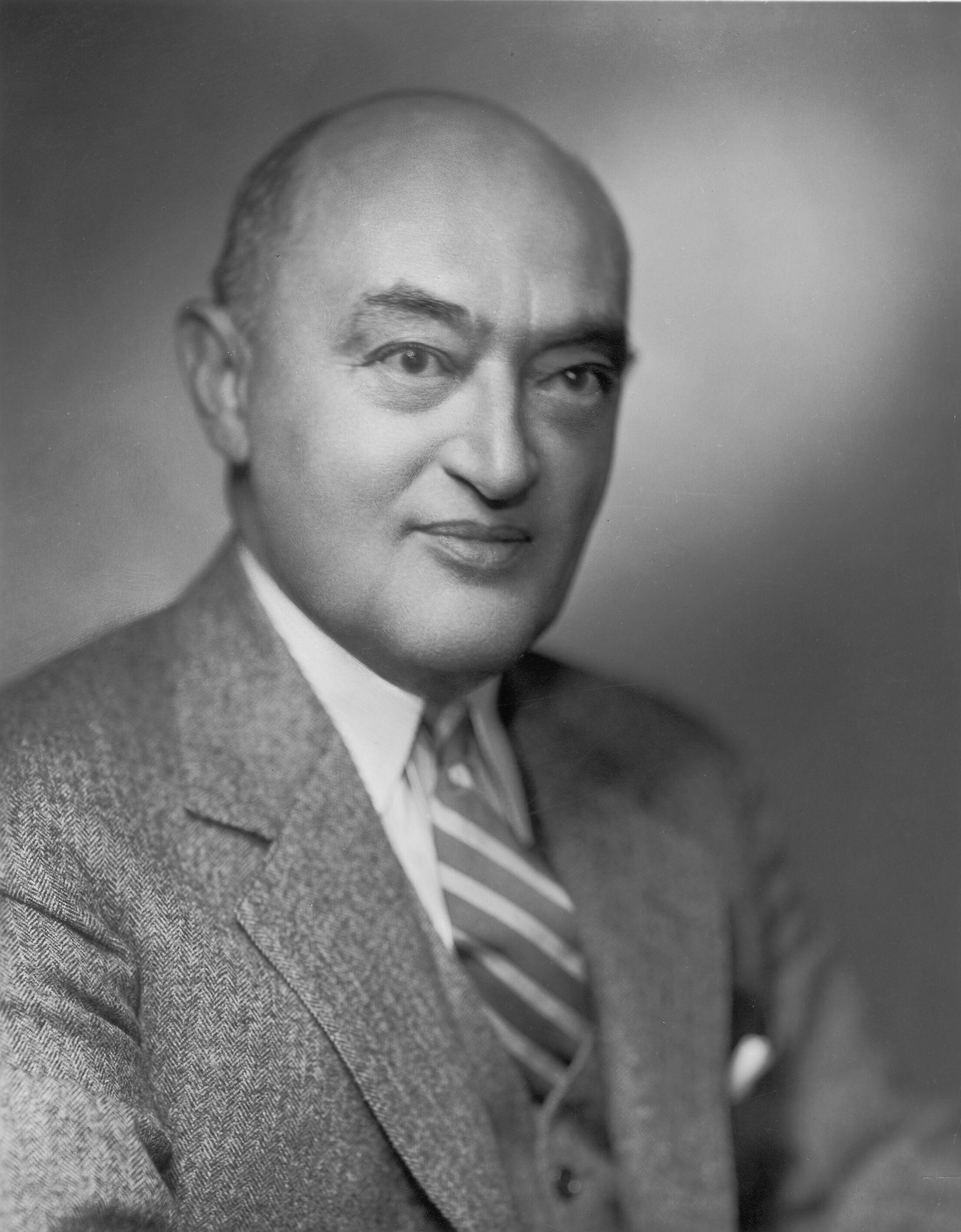
Joseph Schumpeter wrote long ago that economic growth in new markets is only possible by destroying the previous economy.
In other words, most entrepreneurs are, in a way, destroyers before they are creators. In fact, the internet can be seen as creation, but also as the greatest destroyer of an old business and economic model. This is what is called creative destruction, and it is a quality found in large doses in the minds of great entrepreneurs.
Creative destruction is natural and necessary, and it is the calling of geniuses.
The full list of cognitive distortions
Here is the full list of cognitive distortions. Most of them are very negative, so we need to be careful not to fall into them, whether as individuals or as leaders of a company.
Source: Wikipedia (Spanish edition)
The following list is adapted from the Spanish Wikipedia article Distorsión cognitiva, available under the CC BY-SA 4.0 licence.
- Polarised or dichotomous thinking (all or nothing): interpreting events and people in absolute terms, without taking intermediate degrees into account, as shown by the use of words such as “always”, “never” or “everyone” when the events themselves do not justify them. (See false dilemma.)
- Overgeneralisation: taking isolated cases and drawing a conclusion that applies to everything. (See hasty generalisation.)
- Selective abstraction or mental filter: focusing exclusively on certain aspects of an event, fact, circumstance or person, usually negative and disturbing ones, to the exclusion of its other features.
- Disqualifying the positive: continually discounting positive experiences for arbitrary reasons.
- Jumping to conclusions: assuming something negative when there is no empirical support for it (see spurious relationship). Two subtypes have been identified:
– Mind reading: presuming or guessing other people’s intentions, attitudes or thoughts.
– Fortune telling: predicting or “prophesying” the outcome of events before they happen. - Projection: projecting onto others thoughts and feelings that are not accepted as one’s own because they cause distress or anxiety.
- Magnification and minimisation: overestimating or underestimating the nature of events or people. The subtypes identified are:
– Catastrophising, or catastrophic thinking: imagining, speculating and ruminating on the worst possible outcome, however unlikely it is, or thinking that a situation is unbearable or impossible to tolerate when in reality it is uncomfortable (or very uncomfortable) or inconvenient. (This is related to low frustration tolerance, whose psychopathological importance has been widely researched by Albert Ellis.)
– Denial: the tendency to deny problems, weaknesses or mistakes; it is the opposite distortion to catastrophising.
– Negativism: negative events or aspects are magnified, while positive ones are ignored or played down; it is a form of selective abstraction, and making catastrophic predictions is typical of it. - Emotional reasoning: building arguments on how one “feels” rather than on objective reality. (See also argumentum ad consequentiam.)
- “Shoulds”: focusing on what one thinks “should” be instead of seeing things as they are, and holding rigid rules that one thinks should apply whatever the situation (see wishful thinking). The demands extend to oneself, to others or to life in general.
- Labelling: related to overgeneralisation, it consists of attaching global labels to something or someone instead of objectively describing the behaviour observed. The label is usually expressed in absolute, unchangeable terms or carries strong prejudiced connotations.
- Personalisation: also known as false attribution, it consists of assuming that oneself or others have directly caused things when that was very possibly not the case. Applied to oneself, it can produce anxiety and guilt; applied to others, it produces exaggerated anger and feelings of persecution.
- Blame: blaming others for one’s own problems or, conversely, blaming oneself for other people’s problems (martyr complex).
- Confirmation bias: the tendency to bend reality, in both perception and judgement, so that it fits preconceived ideas.
- Fallacies:
– Fallacy of control: assuming that one must have excessive control over, and responsibility for, what happens around one, with a certain feeling of omnipotence; or, on the contrary, seeing oneself as extremely incompetent and powerless to handle one’s own problems, or feeling controlled from outside by others or by circumstances.
– Fallacy of fairness: judging as unfair anything that does not match one’s personal wishes, needs, beliefs and expectations. It is a view of life with strict rules and criteria in which other opinions or alternatives are dismissed. Hans Kelsen said that justice is a mere irrational ideal.
– Fallacy of change: assuming that one’s happiness depends exclusively on the actions and behaviour of others or on external circumstances; it demands a certain conditionality, and change is expected to come from others instead of people taking responsibility for themselves.
– Fallacy of being right: assuming one holds the absolute truth and ignoring other people’s opinions; such people believe their opinions and actions are the correct and valid ones, and will constantly try to prove it to themselves or to others with elaborate but fallacious arguments; they cannot bear being wrong and will do everything possible to avoid it.
– Fallacy of heaven’s reward: expecting problems to get better on their own in the future without taking a proactive attitude, or expecting that we will be rewarded somehow.
Further reading
- Ways your mind betrays you and keeps you from moving forward in life (part 1)
- Ways your mind betrays you (part 2)
Featured image: Louis Fabian Bachrach, Public domain, via Wikimedia Commons.



