

In the previous article we talked about the power we have to condition a child, either to give that child a mindset geared for success, or to instil failure in them through the way we teach them.
This time we look at two people who literally achieved the impossible, and at the lessons they later taught everyone else. It may seem as if we are about to talk about two athletes, but the truth is that their mental training mattered more than their physical training in reaching those goals.
1. Roger Bannister and how to break the barrier of the impossible
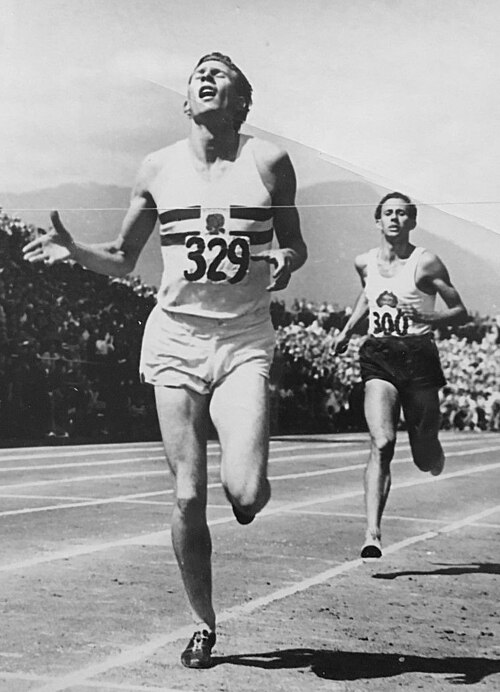
In May 1954, a man named Roger Bannister did something that until then had been impossible. He became the first man in the world to run a mile (1,609 metres) in under four minutes (3 minutes 59 seconds, to be exact).
Until then, that time had been considered physically impossible, so nobody had even thought of trying to beat it.
Bannister knew that his body would not break that barrier unless he was mentally prepared to break it. So he devoted part of his training to working on his mind, first of all visualising himself breaking the barrier, which for him was more psychological than physical.
Meanwhile, he kept training until, one day, he decided to beat that time.
And something curious happened.
As we said, nobody had ever run that time. Why? Because it was impossible. But once he had done it, it was no longer impossible; it was possible. Bannister had done it.
So the following year, plenty of other motivated runners decided to break the four-minute barrier, and curiously, 16 of them managed it. The year after that, 150 runners did.
Today, running a mile in under four minutes is perfectly achievable, and many runners chase it. It is no longer an extraordinary feat, thanks to one person who decided to do away with that limitation.
A question: what other things might we be limited in, or consider impossible, simply because everyone believes they can’t be done? In the end, this example shows that most limits are the ones we set ourselves mentally, and that when you visualise a goal until you believe in it, and put your effort into achieving it, that goal is very much within reach.
But the next example shows it even more clearly.
2. Stu Mittleman and how to achieve the humanly impossible
Stu set out to prove something that goes beyond human limits, and once again the mental challenge was almost as great as the physical one. Stu was going to show that the potential of the human body is unlimited, even at the risk of putting his life in danger.
His feat was to run 1,000 miles (1,609 kilometres) in 11 days and 2 hours. To set this world record, he had to run 21 hours a day and sleep only 3 hours a day for the 11 days it lasted.
What’s more, he reached the finish in excellent shape, and it is said that he didn’t have a single blister on his feet, even though he had averaged 140 kilometres a day.
There is probably no physical training that can get you to a mark like that unless it goes hand in hand with mental conditioning. His aim was to show that we all have unlimited physical potential if our own mind is able to recognise it, and that we can adapt to almost anything, as long as our mind doesn’t give in.
Conclusion: Sometimes, when we see those little Facebook posters about doing the impossible, it can sound like “cheap motivational theory”. But I think these two men, as others have done in their own fields, show us how mental conditioning can help you achieve impossible things. Those things were impossible, probably, because a general negative conditioning had placed a limit on everyone.
Let’s remember that many of Steve Jobs’s employees, along with their criticisms, also acknowledged that they managed to create some impossible things because to Jobs they weren’t impossible, and that is how he got it across to them.
Featured image: Unknown author, Public domain, via Wikimedia Commons.



