

Editor’s note: This article was first published in October 2013. David Goldberg, CEO of SurveyMonkey and the “$1 billion business” alluded to, died in May 2015; the article describes his habits in the present tense as of 2013.
Successful entrepreneurs tend to hand out a lot of advice, and it is always worth listening to people who have achieved what we are aiming for. Of course, once we have heard all that advice, we may notice some contradictions. In other words, a way of thinking that worked well for one entrepreneur may be the exact opposite of what another believes.
Much of this advice, contradictory or not, may be bad for you as an entrepreneur, or it may be just what you needed to hear. Either way, it is always good to have this wealth of raw material to draw on, so that you can then sort out what is useful to you and what isn’t. At the very least, it makes for interesting reading.
Paul Graham: Don’t think big
While one of Donald Trump’s most frequent pieces of advice has been to think big (“if you’re going to think anyway, think big…”), for Paul Graham this could be a mistake, because the way to do really big things is to start with things that seem small. “Don’t bite off more than you can chew.”
The truth is that both Graham and Trump are right. In Graham’s case, he simply means setting and meeting small goals which, over time, will take us somewhere if we do a good job. It is the same idea as the Seinfeld strategy, which is all about doing a small piece of work every day so that, over time, you build something almost without realising it.
Leo Babauta: Don’t set goals
For Leo Babauta, we live in an age where everyone sets themselves goals and targets. But according to him, entrepreneurs who live without defined goals feel liberated, and they stop being limited, achieving things that were never part of those goals. They tend to have more wide-ranging minds, and they may be a little crazier, but they are the crazy ones who achieve great things.
Leo’s advice is to stop setting goals so that we can live without the frustration of chasing targets and not reaching them. That way we worry less about the future and focus on enjoying the present.
*In my personal view, this philosophy of living without goals is dangerous, to say the least, although there may be some truth in it.
David Goldberg: Leave the office early
We have all heard that being an entrepreneur is a 24/7 job, with meetings outside working hours, work taken home and even number-crunching into the early hours of the morning.
But Goldberg’s philosophy shows that it is possible to take part of the afternoon off, and the rest of the evening, and still build a $1 billion business.
Goldberg believes that if you can’t devote half your life to your family and the things that matter, what is the point of being an entrepreneur? So every day he leaves the company at 5.30 pm and spends that time with his wife and children. In fact, one of his main goals in life was to be able to put his children to bed at 8 pm every day. If he hadn’t been able to do that, he would have felt like a failure.
He also says that, as CEO, he shows his employees that you have to balance life and work. There has to be life after the office to make the work at the office worthwhile. He also points out that, thanks to this company policy, he manages to keep top-level employees who value the time they can spend with their families.
Tim Ferriss: Don’t go “all-in” on your business
It is often said that someone who doesn’t commit 100% to their business from the start isn’t serious, isn’t convinced or committed, and will therefore probably fail. For Tim Ferriss, that isn’t true, and he advises any entrepreneur not to give up a full-time income to throw themselves into their business all at once.
Until your business is making tangible profits, if you have a salary, keep it until you can do without it. It is a mistake to think you have to choose between being an entrepreneur and being an employee. At the start, according to Ferriss, it is advisable to be both until you can settle on one of them. (Read: How to start a business with no money)
As we can see, whatever kind of advice it is, it has worked for these people.
Further reading
- David Lai’s tips for business success
- 10 things inspiring leaders do differently
- 10 Warren Buffett quotes on business
- Want to start a business but have no business experience?
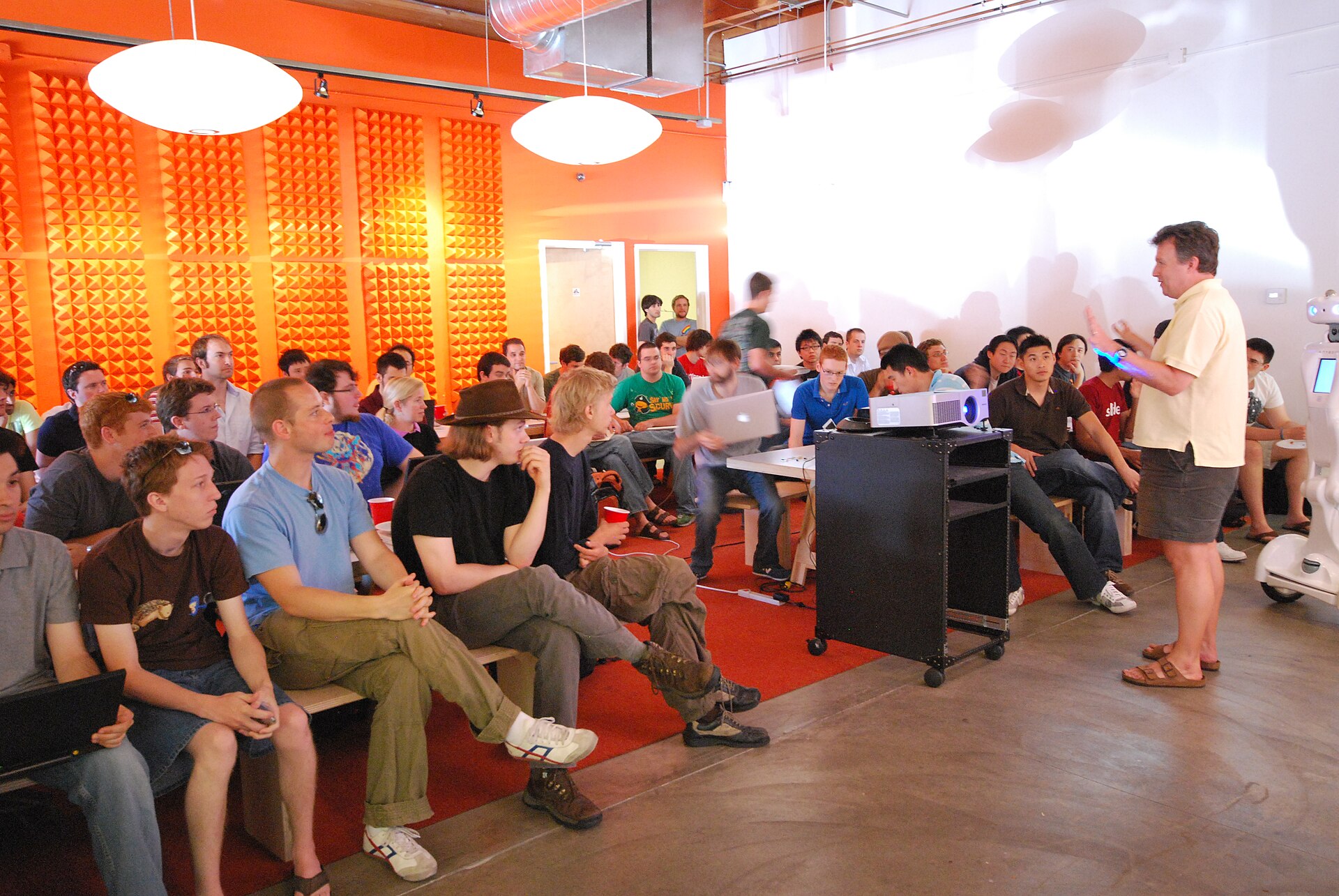
Featured image: Kevin Hale from San Francisco, CA, United States, CC BY-SA 2.0, via Wikimedia Commons.



