Editor’s note: This article was first published in November 2014, and fact 10, on Spain holding the most €500 notes in the EU and the UK Serious Organised Crime Agency, dates from around 2010. The ECB stopped issuing €500 notes in 2019, and that agency was replaced by the National Crime Agency in 2013.
Money… that great evil of humanity, yet so necessary to survive. It curses those who don’t have it and gives power to those who do… (I know, poetry isn’t my thing.)
Most people probably know that long before money as we know it today existed, our ancestors used barter. Of course, barter wasn’t really an exchange of “things” so much as buying one product and paying for it with another. And it was genuinely hard to pay for something of little value if the other person only had things of great value.
Here are 11 very curious facts about money to set your imagination running:
1. The first and oldest form of money used by humans was livestock. For a long time, people struggled with its high value when it came to trading for low-value goods: if you wanted to buy a loaf of bread, you certainly couldn’t cut a cow into four pieces.
2. The first reference of value was wheat. Wheat was a trade good that could easily be divided, and it could be used to buy even low-value goods. What’s more, holding wheat was what we’d now call a liquid asset: not everyone would accept a cow as payment, but anyone would accept wheat or other grains. In other words, a kilo of wheat was worth X, and to work out the value of a piece of land or 100 cows, people said they were worth so many kilos of wheat.
See also: Ideas for saving money by making a few changes to your daily routine
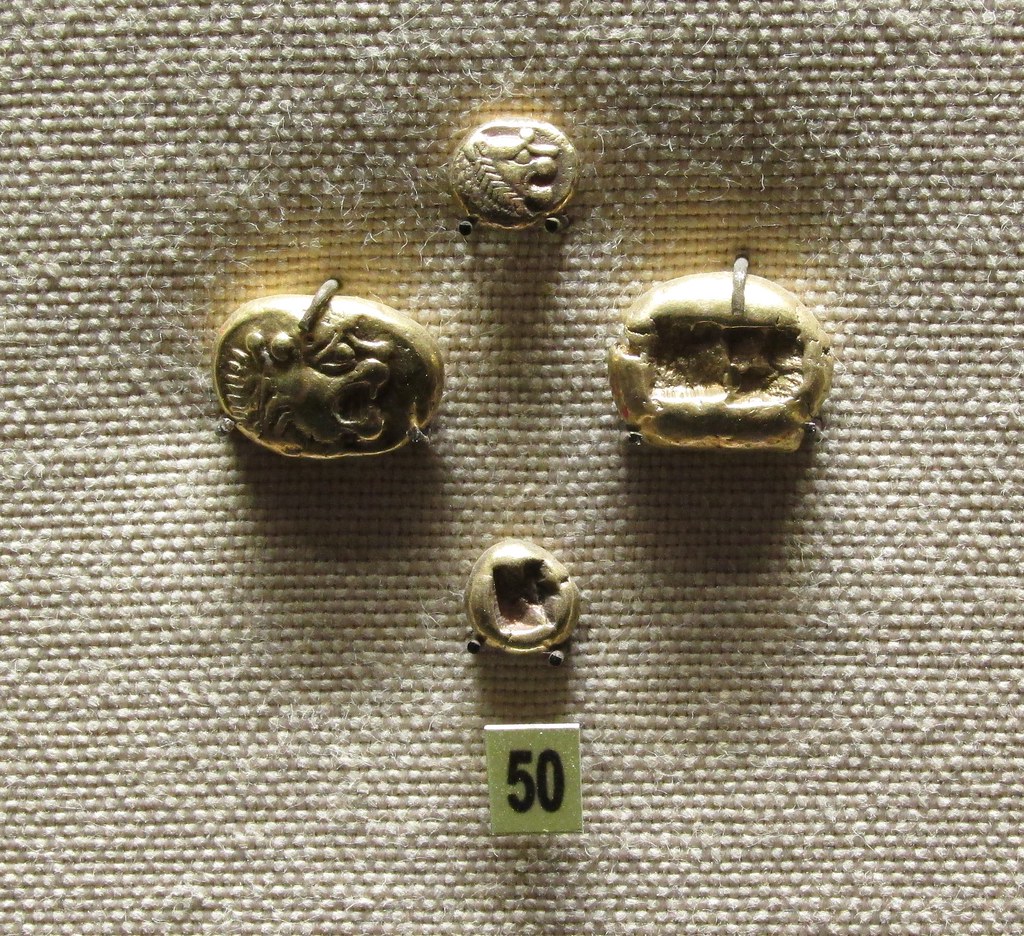
3. Modern coinage as we know it today was created around 500 BC, in what is now Turkey. The first coins were made of precious metals such as copper, silver and gold. They were later stamped with images of emperors and gods to vouch for their authenticity.
4. In 806 AD, someone in China came up with the idea of using paper notes, given how easy paper money was to produce. As a result of that experiment, every fiat currency eventually returns to its intrinsic value: zero. That’s why some insist that only gold and silver hold real value.
5. Around the year 1400, after hyperinflation wrecked China’s economy, the Ming dynasty banned paper money, and for hundreds of years trade in China was conducted mainly in gold and silver.
6. After the discovery of the New World, the first legal tender used by Native Americans was seashells, known as “wampum“. In fact, wampum was legal tender in England from 1637 to 1661. Increased production of wampum in Europe led to inflation and, ultimately, to the disappearance of this “currency”.
7. The world’s oldest currency, had it not been for the creation of the euro, would be the Greek drachma. With the drachma gone, the oldest currency still in existence today is the pound sterling.
8. The word “million” first appeared around the year 1300 as a way of expressing an amount similar to today’s million. Until then, people used “myriads“, a Greek word meaning 10,000. So the million didn’t exist; it was 100 myriads.
“Million” comes from the Italian milione (from the Latin mille).
9. The first credit card wasn’t created in 1950, but in 1914. There are stories about the birth of the first credit card that tell how, in 1950, Frank McNamara, head of the Hamilton Credit Corporation, went out to dinner one night and, on opening his wallet, found he had no cash. After that embarrassment, he promised himself it would never happen again and created Diners Club, a company that acted as a credit intermediary between businesses and their customers.
But the first credit card was created in 1914 by the Castro Contreras family. Western Union created the first consumer credit cards, aimed at its most select customers. Other businesses such as hotels and department stores joined in, issuing credit to their customers in the form of cards. And it was indeed in 1950 that McNamara managed to get a single credit card accepted by a range of businesses, not just the one that issued it.
10. Within the European Union, the country with the most €500 notes is Spain, while the UK’s Serious Organised Crime Agency says that 90% of all of them are in the hands of organised crime.
11. History’s first financial bubble happened in the Netherlands in the 17th century, driven by speculation in tulips. That was tulip mania, and the frenzy reached such a pitch that exchanges were set up to trade tulips, and a single tulip came to be worth the equivalent of 20 tonnes of wheat. Tulips were the first speculative asset of the modern world. We covered tulip mania in depth in another article.
12. And today, these would be the 10 most foolish things to spend your money on.
Further reading
- 11 reflections on money that will change the way you see it
- 34 money lessons young people and adults should learn
Featured image: brewbooks, CC BY-SA 2.0, via Flickr.