

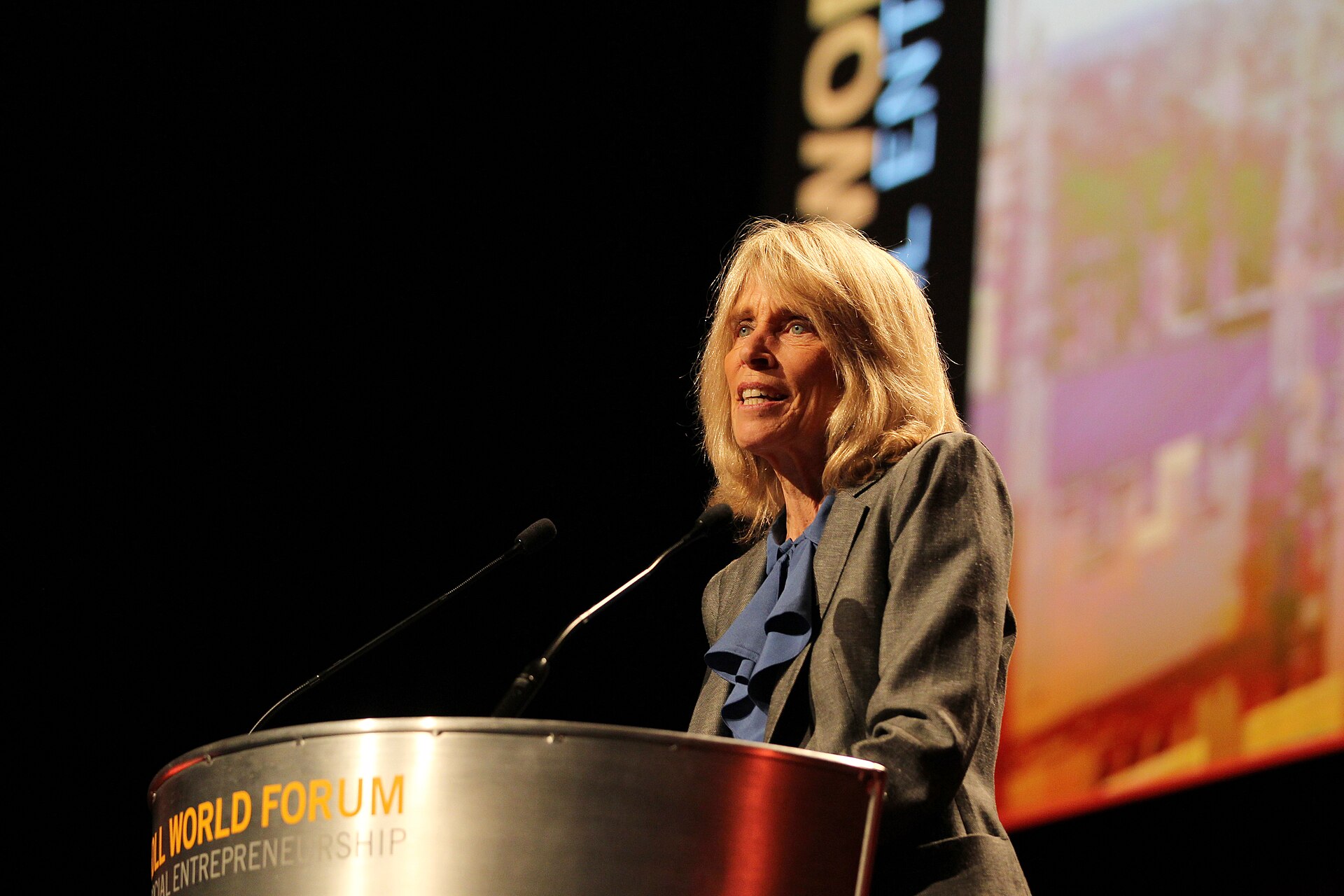
Paulo Coelho refers to a list of 10 traits shared by social entrepreneurs (entrepreneurs who solve an unmet or hidden need in the world). The list was drawn up by Pamela Hartigan, director of the Schwab Foundation, and it describes what people who are not satisfied with the world they live in end up doing. These are people who decide one day that the only way to change the world is to do it themselves, by starting their own company. A perfect example of this kind of entrepreneurship is the story of John Crowley, an entrepreneur who had no choice but to start a company to save his own children’s lives.
Of course, if someone applied these 10 points of social entrepreneurship to starting any kind of business, success would come quickly. After all, what business doesn’t meet a need for its customers? What business doesn’t need passion to keep it going day after day? Any business is a “social enterprise” if its founder believes in the product and thinks it adds something positive for the people who use or consume it.
1. Impatience
Anyone who wants to make a dream come true doesn’t wait for things to happen by themselves. There’s an old saying: “If you sit and wait for something to happen that will change your life, the only thing that will pass you by is… life.” The entrepreneur sees yesterday’s problems as today’s solutions. A problem is an opportunity, not only to change the world but also to make money from it. And the entrepreneur doesn’t put it off until tomorrow.
See also: The Chinese ten commandments for entrepreneurs
2. Awareness
Entrepreneurs know they are not alone in the world, so every action, every gesture and every move will have a consequence, positive or negative. Their work, their company, can change the world around them. Apple and Google have changed the world in a way that is, in some respects, positive. Tobacco companies have changed the world too, in a less positive way.
3. Innovation
Entrepreneurs know that everything could be different from the way it is now, even if that means taking a path nobody has walked before. Seeking innovation means running into far more people trying to trip you up, but they are ready to accept that in order to reach their dream. “A lot of times, people don’t know what they want until you show it to them.” (Steve Jobs)
4. Pragmatism
When chasing a dream, entrepreneurs don’t wait until they have every resource they think they need to start the business. They simply roll up their sleeves and get to work. Once you start working, you’ll notice that the resources and the means begin to arrive on their own.
5. Learning
Entrepreneurs usually choose a particular field in which they have some knowledge, but through constant learning, practice and mistakes they end up finding new solutions to old problems. When things go wrong, the entrepreneur has to be ready to reinvent themselves.
6. Contagion
When entrepreneurs radiate passion for their business ideas, they usually manage to get everyone around them fired up about the idea. They need to spread that passion and show others that the project is worth fighting for.
7. Perseverance
They say the only reason people fall is so that they learn to get back up. Entrepreneurs must not lose sight of their goal or lose focus. Where some people see obstacles, they see what lies beyond the obstacle: the finish line. A thoroughbred entrepreneur rarely says, “Well… I tried, but in the end it didn’t work out.” The entrepreneur fights on and looks for 100 different ways to reach the goal. It doesn’t matter if they fail 100 times, because in the end they learn from their failures to get there. As a rule, results show up sooner or later as long as the effort doesn’t stop.
8. Enthusiasm, passion and joy
Difficulties may come up, but entrepreneurs should be happy doing what they’re doing. If the venture is a burden that wears us down day after day, something is wrong. If our idea doesn’t excite us, doesn’t fill us with passion or make us happy, we have to ask ourselves where we went wrong when we set out on this path.
Most socially responsible companies, and even some non-profit organisations whose sole aim is to change and improve the world, were born from these 10 points. Their founders are often people who sometimes take on the big lobbies and never give up, even if they lose 10 rounds in a row. They face long, complicated bureaucratic hurdles while the people around them ask them every day whether all that effort is really worth it. So if we put that same passion and energy into our own projects…
Featured image: Skoll Foundation, CC BY 2.0, via Wikimedia Commons.



