Editor’s note: This article was first published in September 2010; online banking, branch closures, online grocery shopping, charging points at filling stations and Spain’s electronic ID card are presented as forecasts, and the 60-120 km range for electric cars reflects that time.
The rules of the business game have changed. I’m not just talking about new technologies, which, as we discussed in our previous article, have clearly already marked a before and an after. Now more than ever, you have to think big in business, as Donald Trump rightly said. It used to be a matter of ambition; now it’s a necessity.
In the past, a businessperson could be someone who opened a grocery shop. It was a small business, but it worked.
Today, big-box retailers are wiping out these small grocery businesses. Carrefour, Día and Lidl are large chains whose strategic positioning is designed so that the small supermarket can’t compete.
It used to be a profitable business to open a computer shop. Today, these shops can’t compete with the big retailers’ prices either.
The big fish eats the small one. That’s a real, present-day fact, which means small, independent retail is practically disappearing.
At the same time, the internet is revolutionising the market for the businesses of the future, and, as we were saying, what is still to come hasn’t arrived yet.
With the arrival of the internet, unemployment is expected to rise in a future closer than we can imagine, because if you look closely at the strategy of big companies, government agencies and, above all, banks, they are rolling out automated systems and online services.
The future of banking is the disappearance of physical branches. Banks will probably keep one main office in each city and push for branches to disappear. Online credit, online loans, and for taking out cash there are already ATMs. They won’t need as many staff.
See also: 10 small business ideas to import from Canada
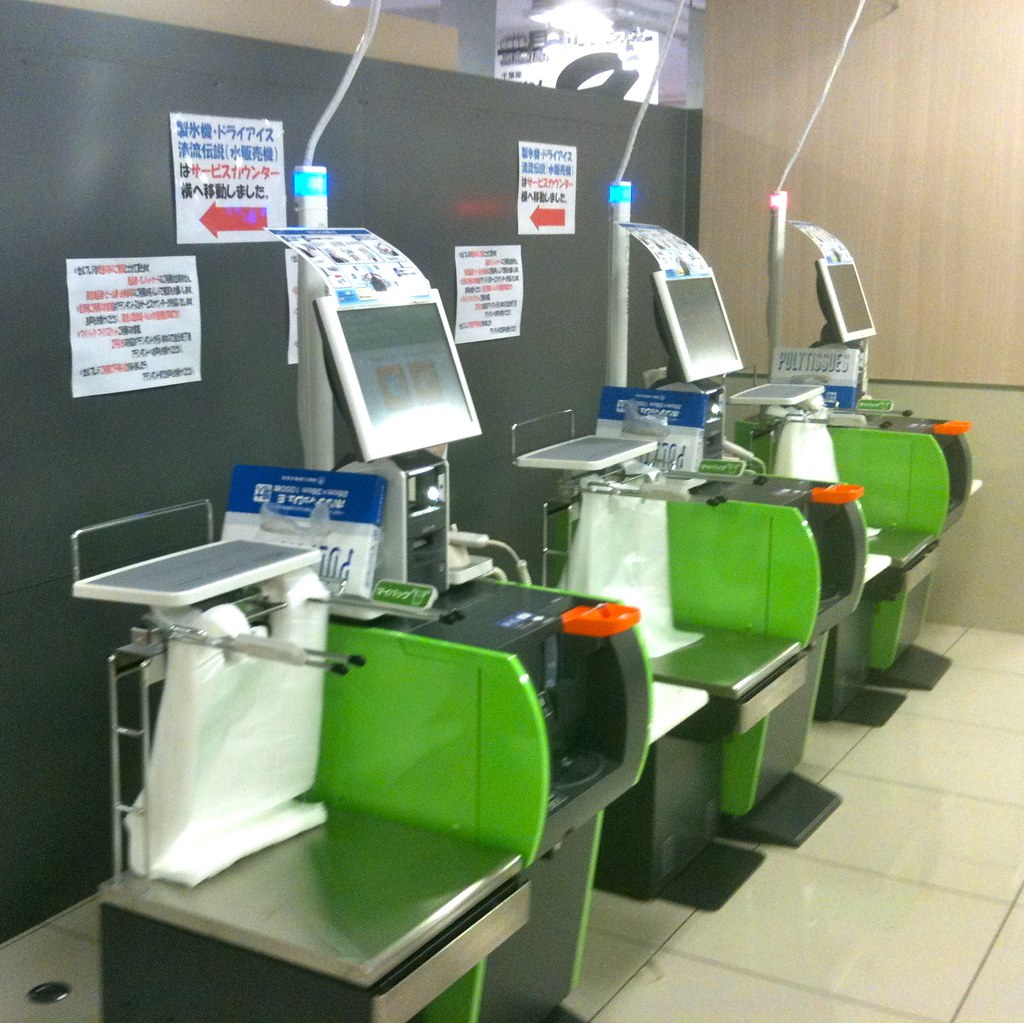
Vending machines are already being built and specialised, and they will revolutionise the market. Supermarkets that won’t need as many staff. Need a kilo of sugar? From the machine, please: “Insert your credit card to complete the payment.”
Or, even more innovative, online shopping that lets you do your weekly grocery shop over the internet. Bread, eggs, soft drinks, meat, fruit… you order online and it’s delivered to your home or you pick it up at the supermarket, which, rather than a supermarket, will be a warehouse for packing online orders.
The electric vehicle will give rise to a new kind of filling-station business: as well as petrol tanks, stations will have charging machines for your electric vehicle. For now, the makers of electric cars have no interest in producing a self-recharging vehicle (something that has been proven to be very simple). They want your vehicle to need recharging every 60 km or 120 km, so that on long journeys you’ll have to stop several times, in an attempt to make sure that the disappearance of petrol doesn’t mean lost profits for the companies.
As the saying goes, the crisis isn’t the end of an era but the beginning of a very different one, and we’re about to witness a change in the way we live that until now we could only see in a futuristic film.
Today, thinking about starting a business is a necessity, but you need to do it knowing where the market of the future is heading. If you’re planning to start a business, you must make sure your product can be sold online, because in a few years everything will be done over the internet.
Governments are preparing with the electronic ID card (Spain’s DNI electrónico) so that you won’t need to go to a government office. You’ll be able to handle all your paperwork from your computer. In a way, this means the need for civil servants will fall considerably.
Once the era of online business arrives, with no need to carry cash for shopping, shops without shop assistants and certainly without cash in the till, even the trade of thief or robber will become outdated, giving way to all kinds of cybercrime.
Today, a bank is no longer robbed at gunpoint for €3,000–6,000; it’s robbed over the internet, and security will have to be provided online.
Computing, combined with robotics, doesn’t bode well for the future of salaried employees.
We’re living in a time of change: either you adapt, or you disappear.
Further reading
- The businesses of the future
- The 10 most in-demand jobs of the future
- Selling businesses as an alternative to real estate
Featured image: CoCreatr, CC BY-SA 2.0, via Flickr.