Editor’s note: This article was first published in May 2012, and its forecasts of 100,000 jobs by 2014 and another 110,000 between 2015 and 2020, and the whole policy picture, date from that year. Germany introduced a national minimum wage in January 2015, and the work permit salary thresholds are updated every year.
Just as our ancestors did, we may have to emigrate to Germany to find work, especially if our professional profile fits those in demand: mathematicians, IT specialists, scientists, engineers and technical professions in general. What’s surprising is that between 2015 and 2020 they will need another 110,000 workers. That’s 210,000 jobs in total over the next eight years.
Merkel’s government is trying to make it easier for the foreign workers its economy needs to come to the country, while keeping up the wage restraint it has applied for several years and that everyone has criticized. At the same time, it is a country with no statutory minimum wage and one of the most formidable exporters in the world.
Why the need?
Germany faces two fundamental problems. On top of the economic one, there is its low birth rate, which has stood at 1.4 children per woman for forty years: a bare minimum for the potential growth of one of Europe’s strongest economies.
This prolonged low birth rate is analysed in terms of the economy. In the former German Democratic Republic (East Germany), unemployment is higher and the birth rate lower, and the unemployed cannot fill part of the demand for workers because they lack the qualifications. So in the East, both unfilled demand and unemployment remain high. That is why the studies commissioned show such high figures for the skilled immigrants needed to meet a demand that the country itself cannot cover because of its skills gap.
When it comes to engineers, Europe’s leading economy has an added problem: statistics on currently working engineers show that 20% of them are over 55.
The German chancellor, Angela Merkel, has three possible solutions to consider:
- Encouraging people to have children through social and employment measures, which is a long-term solution.
- Training the unemployed in the skills needed for the jobs the country has to fill.
- Attracting workers of other nationalities to cover immediate needs.
Measures at EU level
It has been a year since the country lifted restrictions on the free movement of workers. It expected 140,000 workers to arrive, but according to figures from its own employment agency only 63,000 came, so it still needs engineers to come to the country.
The German government has already decided to act. Its measures include:
- Reducing bureaucratic obstacles for workers from outside the EU.
- A law lowering the minimum salary a worker must earn to obtain a work permit, from €66,000 a year to €44,800.
- A lower threshold of €34,944 a year for the jobs that are hardest to fill, such as technical and scientific positions.
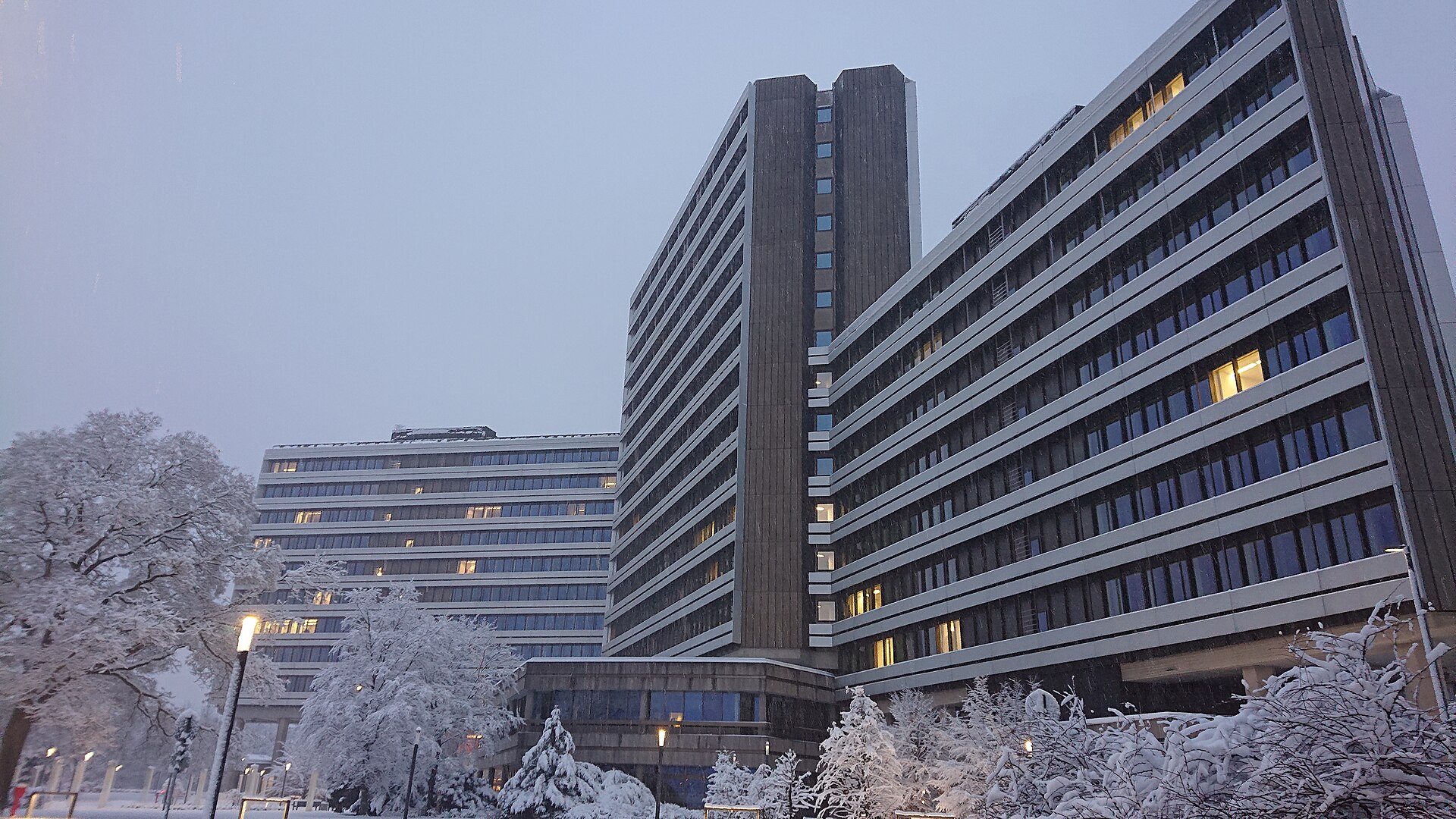
Featured image: Zepraba, CC BY-SA 4.0, via Wikimedia Commons.