

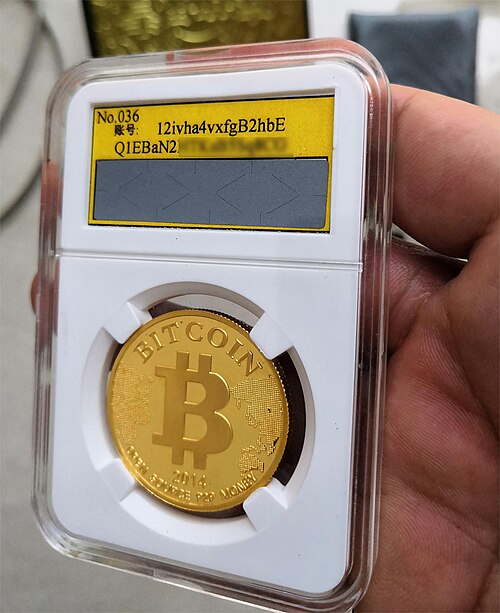
Editor’s note: This article was first published in August 2017. Bitcoin went on to pass $100,000 in December 2024, the level the author treats as a bubble scenario, and spot Bitcoin ETFs approved in the US in 2024 also affect the liquidity section. The “third Bitcoin digital currency” refers to the 2017 forks.
After a few years of bull markets, fears are starting to grow of a stock market correction, and no one knows how far it might go. When we expect corrections, some investors decide to take profits (sell their shares), while others decide to hedge one investment with another. Some use options or futures, while others go straight to what is considered the best safe-haven asset of all time: gold.
But right now, gold seems to have some competition as a safe haven: Bitcoin and cryptocurrencies.
As I’ve said before, in my personal opinion Bitcoin is currently nothing more than a speculative product, and a bubble is forming around cryptocurrencies, because most people who invest in Bitcoin only do so because its price is going up, even though its intrinsic value is zero (in my opinion).
But today I’m not going to give my personal opinion: we’re going to try to analyse Bitcoin as if it were a real asset and a safe haven, comparing it with gold. And although I personally warn about the dangers of investing in cryptocurrencies, we’re going to try to analyse it from an impartial, objective point of view.
Let me be clear, though: for me, Bitcoin is nothing but speculation on thin air. But, as I said, we’re going to analyse it as if it were a serious, reliable asset.
What should we demand of an asset for it to be a good safe haven that protects our money and even makes it grow faster than inflation?
The conditions we, as investors, should look for in a safe-haven asset are: low volatility, liquidity, security, legality, backing and value.
Gold
Historically, gold has been a safe haven. It’s valuable as a material, and it’s used in jewellery and electronics. It also has another factor that makes it more valuable: scarcity.
Gold can’t be manufactured, nor can you do what banks do with money, which is print more of it. Gold has to be extracted from the ground.
See also: Investing in currencies and forex: profitable but risky
It used to back fiat money, until it was decoupled from the dollar in 1971. Gold has been a very profitable investment during financial crises, stock market crashes, times of economic uncertainty and so on.
So the more a stock market falls, the more investors sell their shares and decide to invest in gold, pushing up the price of gold.
Bitcoin
If we use a bit of imagination, Bitcoin could share some properties with gold.
Like gold, the amount of bitcoin is limited. In fact, the maximum number of bitcoins that will ever be in circulation is 21 million. But here we need to make a small aside. Although bitcoins are limited, the creation of new cryptocurrencies isn’t limited; it’s infinite. In fact, we’ve seen Bitcoin go through a fork that gave rise to another cryptocurrency, Bitcoin Cash, which supposedly has improved technology. A third Bitcoin digital currency is expected this year.
And now some of you will be thinking: this is a joke, right? It’s like creating money out of thin air. And of course, that’s when the most fanatical Bitcoin fans will tell you that you know nothing about economics or the Bitcoin ecosystem. But anyway, we said we were going to leave personal opinions aside and focus on analysing it like any other asset, to see whether it would be a good safe haven.
Security
Gold is very hard to steal and counterfeit. In fact, the gold trade has an established system of weights and tracking that is completely transparent.
Bitcoin is also hard to counterfeit or corrupt, because it’s based on a complex system of encryption and algorithms within a technology that is very hard to hack. But the infrastructure involved in the process still isn’t entirely secure, as we’ve seen in cases like Mt. Gox, where hundreds of millions in Bitcoin were stolen.
Bitcoin’s complex ecosystem has made it practically impossible to follow the money trail, so the money has simply been lost.
Scarcity
Gold can continue to be mined, and more can still be found in the future. With Bitcoin, there will come a time when there are no more. People know this, and that’s why they buy it. That’s also why many people believe Bitcoin could even reach $100,000 per bitcoin. And that’s why many people buy even a quarter of a bitcoin. And for that reason people speculate with Bitcoin. What’s more, seeing Bitcoin’s rise makes people look for other cryptocurrencies so they can profit from future rises in those other digital currencies.
If I weren’t analysing Bitcoin as an asset today and were giving my personal opinion, I would already have used the word bubble and drawn a comparison with a Ponzi scheme. But since we’re using our imagination to picture it as a serious safe haven, let’s carry on.
Value
Physical gold is useful in industry and in jewellery. Bitcoin’s usefulness is still unknown; for now it’s an instrument for speculating on its price and for transferring bitcoin from one place to another.
In theory, its usefulness should lie in being a means of payment, and that should be the reason its price rises. But the truth is that it’s still difficult to buy things with Bitcoin, and for various reasons its usefulness as a means of payment is very limited.
Its value rests solely on faith and trust. So as long as people trust that Bitcoin can reach $100,000, it will keep rising. But if at some point doubts or problems appear, or trust breaks down, we could also see the opposite scenario, including the possibility that a loss of confidence could value it at zero dollars, since that’s its intrinsic value.
Volatility
Bitcoin is one of the most volatile assets we’ve ever seen. Its volatility is similar to that of the penny stock market, although with penny stocks we’re at least buying shares in companies. Without doubt, Bitcoin is much more volatile than gold, and when we’re talking about a safe-haven asset, volatility is the last thing an investor wants.
Liquidity
Bitcoin isn’t as liquid as we’re led to believe. By liquidity, we mean converting our asset into fiat money. Exchanges apply daily limits on fiat withdrawals, which makes converting gold into cash much easier than converting bitcoin into cash.
(See: What are liquid and illiquid assets?)
Summary
When we look for a safe haven, above all we should find peace of mind, security, reliability and so on. At the moment, gold is still the winner on these terms, because historically it has performed excellently in terms of both reliability and real value.
Bitcoin, by contrast, raises doubts for now from an analytical point of view when we try to picture its future. For the simple reason that it’s something new, we can’t yet guess what will happen to it tomorrow.
When we analyse it from a financial point of view, it’s almost impossible not to notice a certain similarity with other bubbles we’ve seen in the past. Valuing something above its real worth simply because we think it will be worth more is what has led people to lose part or all of their money in previous bubbles.
So, can we make money speculating on Bitcoin? Yes. Could Bitcoin reach $100,000 per bitcoin? It could, and it could even reach 10 million per bitcoin. That’s what happens in bubbles.
Before deciding to buy Bitcoin in the hope that it turns out to be the winning cryptocurrency, there are a number of questions to consider. From my point of view, I think it’s unlikely to be the winner, because I’m one of those who think the winning cryptocurrency may not even be on the market yet. I believe a currency with backing beyond faith and trust could wipe out Bitcoin’s value at a stroke.
Featured image: Bits86, CC0 1.0, via Wikimedia Commons.



