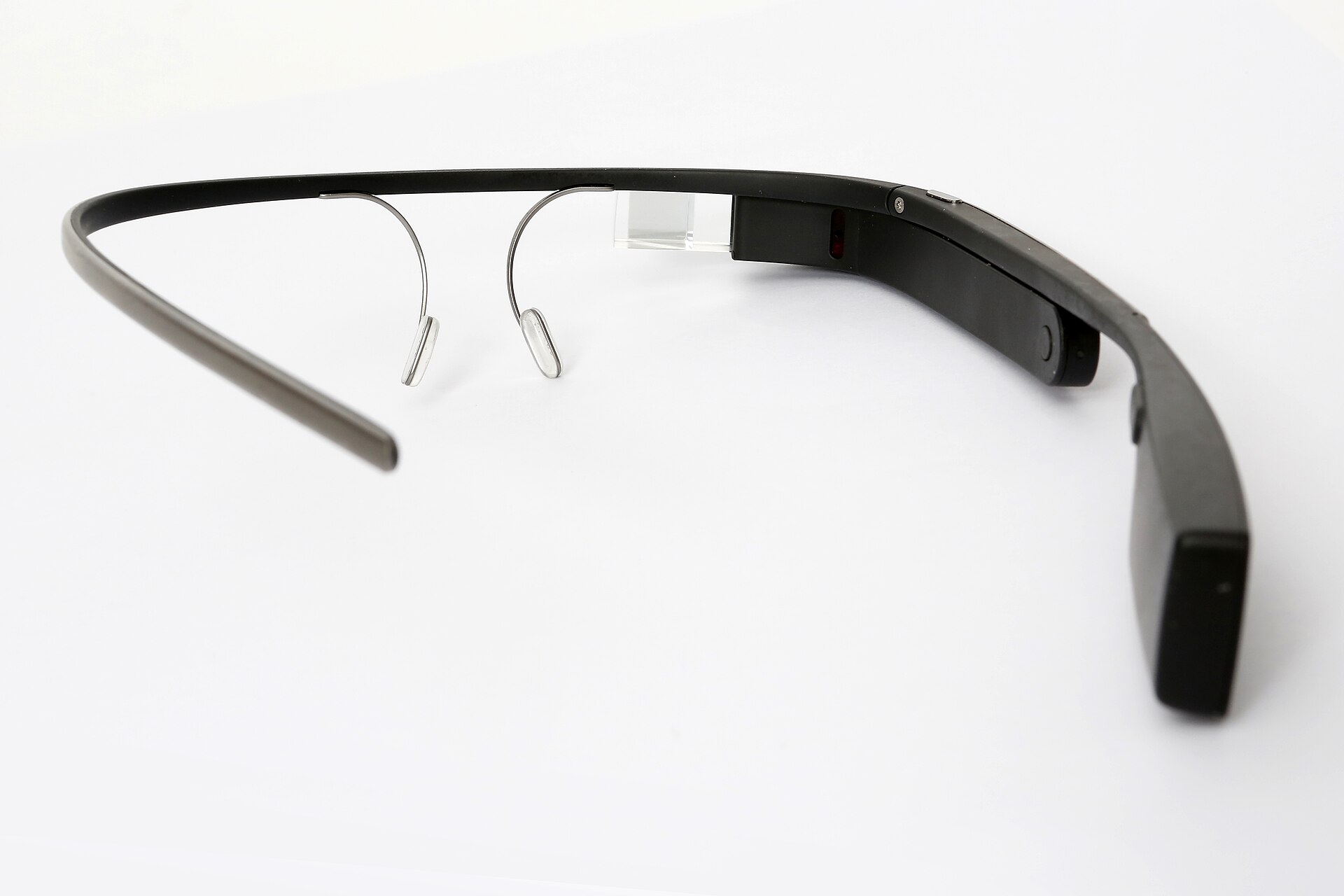
Editor’s note: This article was first published in March 2013, and its predictions reflect that time; the $1,500 price was for the developer Explorer Edition. Google Glass never reached the mass market: the consumer prototype was withdrawn in 2015 and the Enterprise Edition discontinued in 2023.
The main drawback of Google Glass (Google’s glasses) will be the launch price: although they may well be worth it, not everyone will be able to pay $1,500. Of course, the prices of these products tend to settle over time. Bearing in mind that Google’s glasses are still in their early days, for now they have to sync with mobile phones over Bluetooth to access Wi-Fi and 3G or 4G, something Google will keep working on so that in the future it can become a completely independent device.
Which industries could this Google invention revolutionise?
Business Insider has put together an excellent round-up of what the before and after could look like for some industries once this invention arrives.
1. GPS
Once we have Google Glass, we probably won’t need a GPS in the car any more, because we’ll be able to see and hear directions through the device itself. This way, we’ll certainly be able to see the directions without taking our eyes off the road.
2. Film and video
Because the glasses record video, we could now film first-person footage in any situation without having to take out any device. Ideal both for Hollywood and for uploading our most daring footage and showing it exactly as we lived it.
3. Medicine
Thanks to the glasses, doctors and surgeons will be able to see a patient’s vital signs in real time, along with any additional information that can be put in front of the surgeon. Google Glass will undoubtedly be very well received in operating theatres.
4. Guides and tourism
The glasses could improve the tourist experience inside a museum, as well as act as a guide in an unfamiliar city. Imagine a museum linking its software to the glasses so that every time you stop in front of a painting, you see on the screen who painted it, the painter’s history, its age and so on, as well as real-time restaurant recommendations as you walk around a city.
5. Education
If a student is ill, they could watch the class live from home, or a classmate could record it and send them the video. In the same way, students will have all the information through the glasses, although teachers will have to decide when to ban Google’s glasses, for example during an exam.
6. Law enforcement
With the right facial recognition software, the glasses could recognise a known criminal in real time and display anyone’s criminal record. In fact, a company called Golden-i has already created a dedicated kit for the police, with real-time facial recognition and number-plate scanning. This company has clearly built a profitable business by getting ahead of the launch of Google Glass.
7. And of course… ADVERTISING
Google will find it easier than ever to put its ads right in front of your eyes. I imagine it will develop new advertising formats to make it more effective. If Google’s glasses were as successful as smartphones, the worry about generating more revenue on mobile devices would disappear.
As soon as these glasses come down in price, I’d venture to say that practically everyone will wear them, especially when Google releases a “sunglasses” version so you can watch a film while lying on the beach 🙂
Featured image: Tim.Reckmann, CC BY-SA 3.0, via Wikimedia Commons.