Editor’s note: This article was first published in July 2015, the day after the Greek bailout referendum and Yanis Varoufakis’s resignation as finance minister. Within days the Tsipras government accepted a third bailout with further austerity, so the article’s closing claims were soon overtaken by events.
To some, Varoufakis is a hero. To others he is a radical who has wrecked Greece. When we switch on the television we hear supposed economists arguing for or against Varoufakis’s position, but most of them are not economists at all but politicians disguised as economists. Any economist who thinks the solution for Greece is to pay off the debt from the bailouts with money from a new bailout is only showing that they missed the most basic economics and finance classes at university.
You do not pay off old debts with new debts, especially when the debt has kept growing under that system, which has also been draining Greece’s chances of growing its economy. That is common sense, as well as one of the most basic principles of finance.
If we set political ideologies aside…
Syriza was elected by the Greek people. We have already explained in simple terms where the Greek crisis comes from. And I don’t think it needs explaining that, after two bailouts before Syriza came to power, this party has not yet had time to break Greece, because it is hard to break what was already broken.
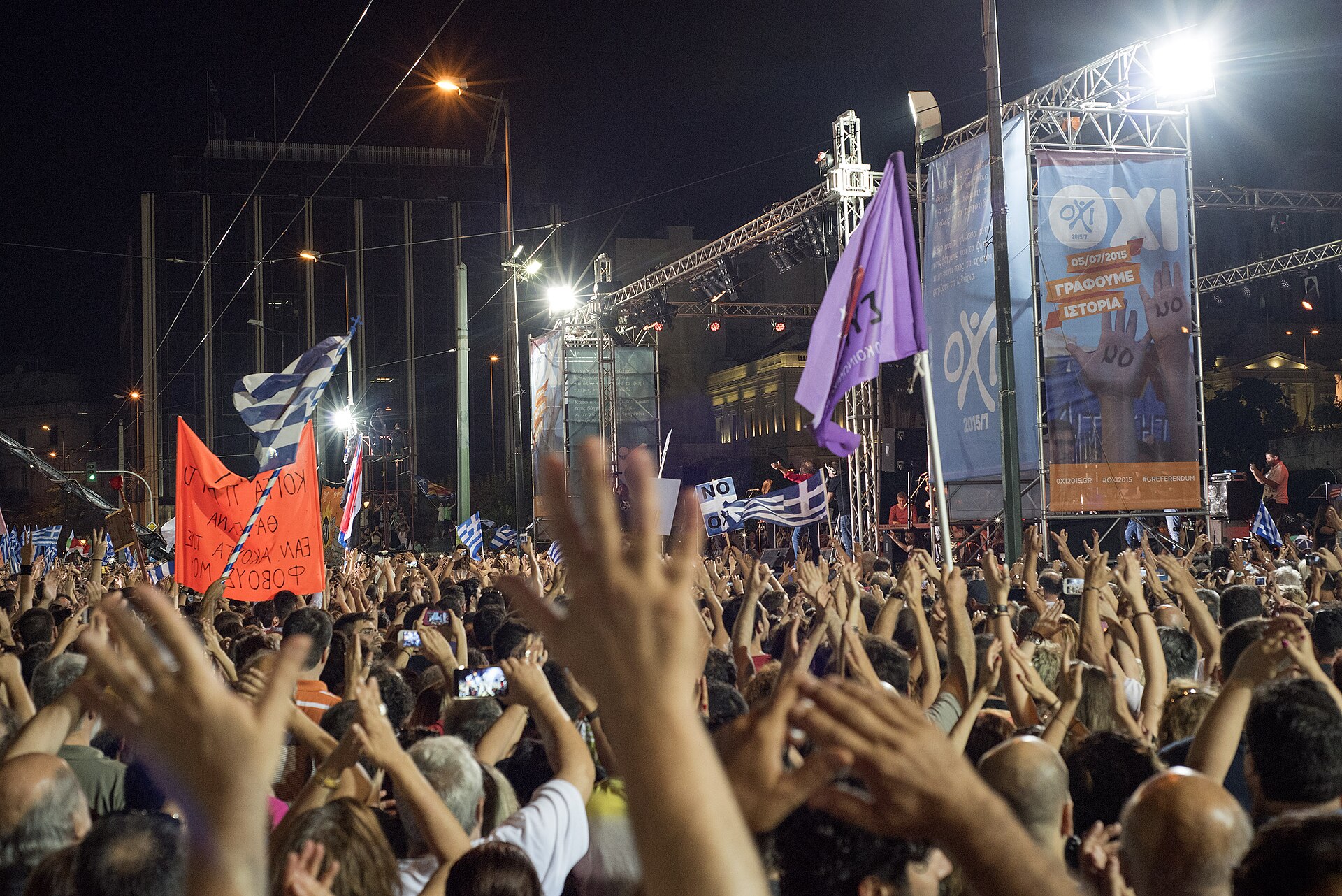
Varoufakis has given the Greeks the chance, through a referendum, to decide for themselves what they want to do. And the people have spoken. That is democracy. Full stop.
Don’t agree with what Varoufakis has done? Then you are probably not very democratic, or you have the concept of democracy confused.
Varoufakis has won, and he has resigned so as not to get in the way of the negotiations. Today there is already talk of a possibly necessary debt write-off that was not on the table before, and the economists have thought again, remembered those classes they slept through and realised that Greece’s economic situation is unsustainable and would not be fixed by a new bailout imposing more austerity measures.
Today Greece can negotiate from a position of strength.
Featured image: Ggia, CC BY-SA 4.0, via Wikimedia Commons.