

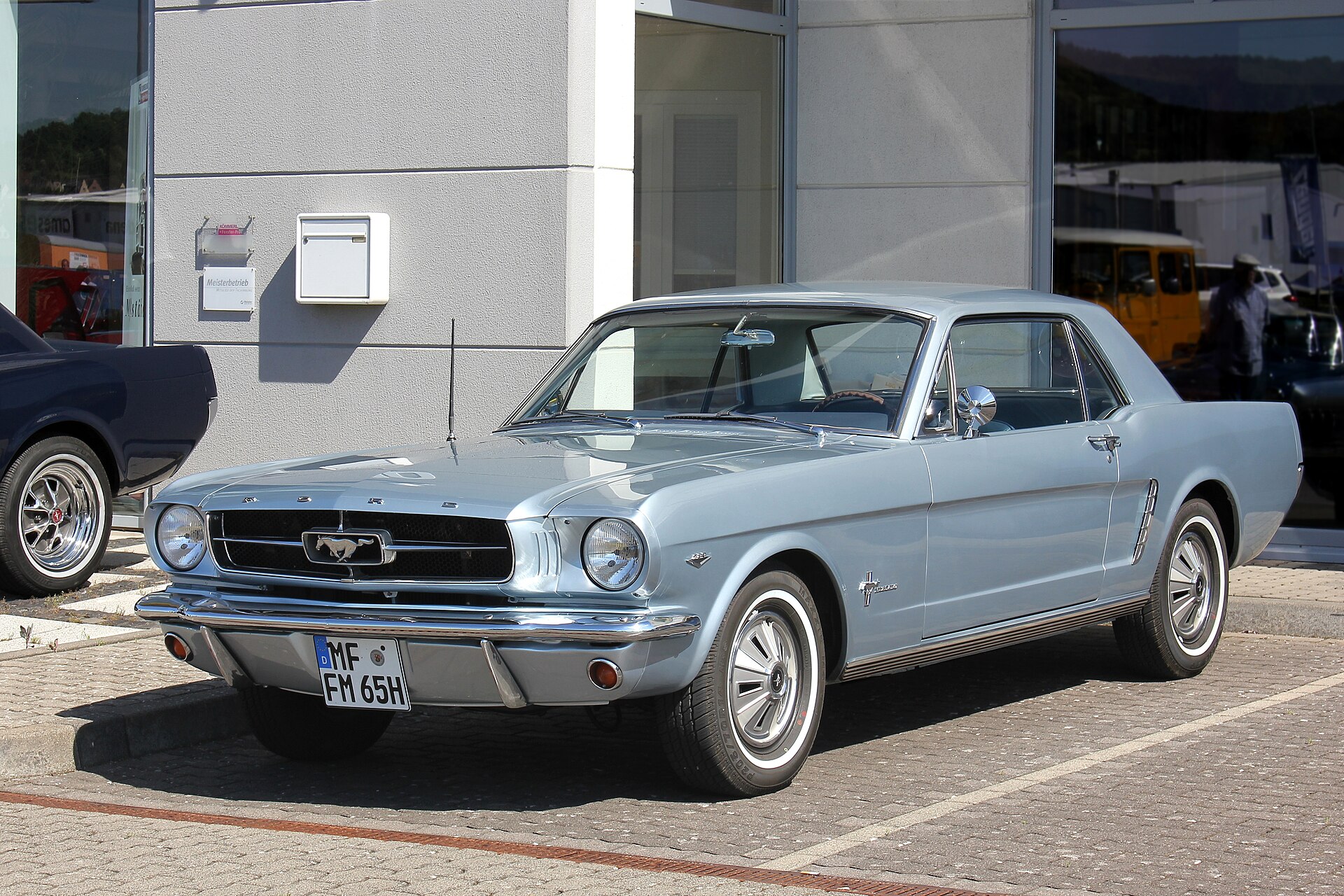
Returning to the life of Lee Iacocca, who ran Ford before leaving, humiliated, to take charge of Chrysler and make history again at that company, Iacocca tells an anecdote about how the Mustang got its name. This was the car that in the first quarter of 1964 would reach the highest sales in the entire history of the automobile.
Why choosing the right name for what we sell matters
Today we know how important it is to give a product a name that the potential buyer clearly identifies with. In fact, numerous studies have even shown that some shares rise more than others in their early days just because of their name.
Then come other factors, such as choosing the right logo or the design, but on this point Iacocca is clear: “With a car, getting the name right will bring you more sales than improving some of the vehicle’s details.”
Ford was in a delicate situation after the failure of the Edsel, a failure that came about for two reasons.
First, the name. It said nothing. Edsel was the name of Henry Ford’s son. And second, experts say the Ford Edsel’s failure was foretold by its lack of style. It was the butt of jokes because people said the front of the car was shaped like a vagina. Others said simply that “the car was ugly. Period.”
How Ford arrived at the Mustang name
Once the mock-up had been built, for an elegant, classy car, sporty yet affordable, to the point that for the first time a vehicle targeted two-thirds of the population as potential customers, they could not afford to get the name wrong. So they set to work on different names.
In the early stages the car was going to be called the Special Falcon, but the idea was rejected in favour of the name Cougar. Henry Ford II wanted to drop Cougar and call it the “T-Bird II (Thunderbird II)”, but fortunately everyone stood up to him to make him forget an idea that pleased nobody. Later, experts acknowledged that if the car had come out under that name it would not have been a resounding failure, but it would not have had the success it did.
With so many options they reached a dead end, and in one meeting they decided to narrow down the list, leaving only these names on the table:
- Montecarlo
- Monaco
- Torino
- Cougar
Montecarlo and Monaco had already been registered with the Automobile Manufacturers Association by other companies in the sector, so the choice came down to Torino or Cougar.
Torino (Italian for Turin) won the vote
It was a name that gave the vehicle a certain foreign air, which is what they were after at a time when foreign cars were gaining ground in the US market.
Once it was settled that the car would be the Ford Torino, a stylised cougar was designed as its emblem.
Everything was ready and preparations for the Torino advertising campaign were about to begin, but that was when Iacocca got a call from Charlie Moore, head of the public relations department, who told him, in so many words: “You need to find another name for the car.”
Henry Ford II was divorcing his wife, and it had come out that the reason was an affair with Cristina Vettore, a divorcee from the Italian upper class. Giving the new model an Italian name would set off all kinds of gossip about Ford’s private life, and attention would be diverted from what mattered most: the car.
See also: Lee Iacocca: the secret of a successful company or team
The search for another name for the Torino
At a dead end once again, they decided to turn to John Conley, who worked at an advertising agency and had named the Ford Falcon and the T-Bird.
Conley took the dictionary, went through every animal name from A to Z, and came back with the ones he liked best, a list narrowed down to these six names:
- Bronco
- Puma
- Cheetah
- Colt
- Mustang
- Cougar
Mustang was the favourite as soon as they saw it
Once they got to work preparing the advertising campaign for the Mustang, Iacocca received a message: “Please don’t do anything foolish. The car’s name must be Cougar.” But Iacocca decided to stick with Mustang. And he got it right. The Cougar name would, however, later be used for another line of vehicles.
The Mustang went on sale at a price of 2,368 dollars, a price consumers could not believe, given that it looked like a luxury sports car of the day. In fact, according to Iacocca, some people who came to see the car were so taken with it that they said: “If I park this car outside my house, my neighbours will think I’m involved in shady business to be able to afford a car like this.”
Press coverage came practically free, as the Mustang was on the cover of several of the industry’s specialist magazines, which helped send interest and sales soaring.
Iacocca and his team came up with a car that generated unprecedented interest among consumers, to the point that some dealerships ran into problems because their car parks were overwhelmed by customers who wanted to see the Mustang. Other dealerships even witnessed fights between customers when they had only one Mustang left to sell.
See also: 9 marketing strategies for small businesses with hardly any money
It was without doubt a great success, and a way of building anticipation that the legendary Steve Jobs would later apply to his products, although, it must be said, Jobs improved on the technique. Then again, to be fair, the tools Jobs had at his disposal did not exist in Iacocca’s day.
See also: How Apple’s products got their “i”
Featured image: Lothar Spurzem, CC BY-SA 2.0, via Wikimedia Commons.



