

Editor’s note: This article was first published in July 2018. All fees are 2018 figures for the Spanish Patent and Trademark Office (OEPM), such as about €800-1,200 for a patent and around €100 for a utility model. Grant times and the fee-deferral plan are also 2018 claims; check current OEPM fee tables.
Imagine you’re a passionate entrepreneur with an innovative business idea that needs funding. You go looking for money and get turned down, but at the same time the investor who decided not to back you, for whatever reason, copies your business idea or invention. They have capital and contacts, and they liked your idea, so by the time you’re ready to launch your product, another company may already be selling it.
The truth is that this happens less often than we think, because investors generally value a brilliant mind and prefer to let the inventor shape the idea.
Still, to avoid certain worries with other companies, since it has happened throughout business history, it’s advisable to patent your invention or idea. Here are the steps and requirements you need to follow. Every country has an office where you can register a patent.
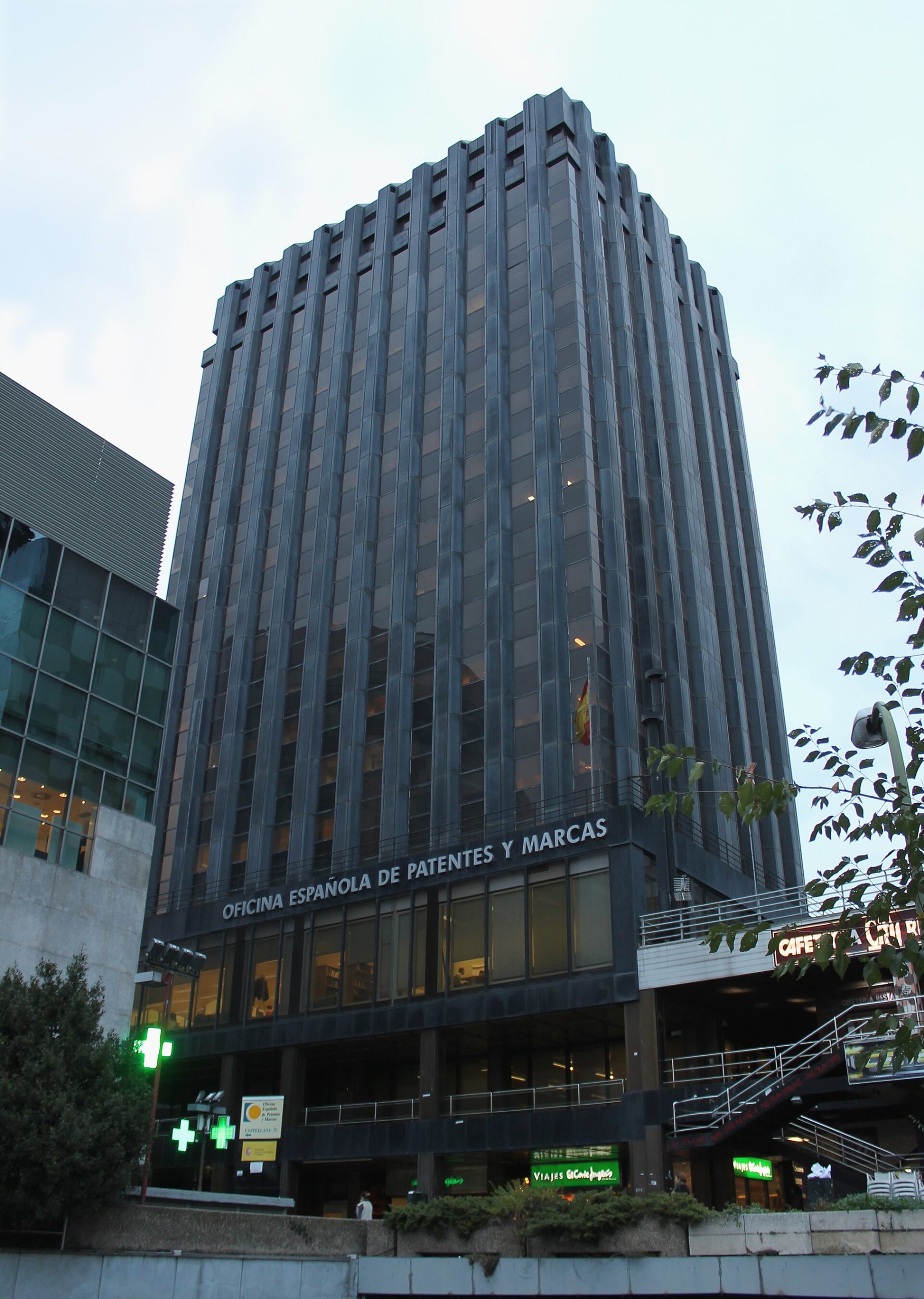
In Spain, you need to go to the Spanish Patent and Trademark Office (OEPM).
Requirements for registering a patent
Registering a patent is not very different from putting together a business plan, because you have to show that your product:
- Is new worldwide.
- Has business potential.
- Has an industrial application.
The first point, being new worldwide, usually comes into play because if a product like yours is already patented in another country, you won’t be able to patent it.
Once your product or invention meets these three requirements, you can move on to the next step.
How much does it cost to register a patent?
In Spain at least, registering a patent with the OEPM costs between €800 if it is granted under the general procedure and €1,200 if it is granted with prior examination.
See also: 10 reasons small businesses fail early on
If, instead of a patent, you want to register a utility model, the fees are around €100.
Filing the application electronically gets you a 15% discount on the filing fee. On top of that, the applicant has to cover the cost of preparing the documents for the application.
To keep these rights in force you have to pay annual maintenance fees that rise progressively, from €18.48 for the third year to €490 for the twentieth. The amounts are updated on the OEPM website.
The office will then run a search to check that there is no identical or similar patent already registered. Once the invention has been shown to be unique in the world, around 18 months will pass before your patent appears in a database that anyone can access.
After that, a group of examiners will check that the invention meets the requirements of the European Patent Convention.
Three judges will decide whether to grant patent protection. If they do, your patent will be recorded in the European Patent Bulletin.
Even once it is granted, that’s not the end of it: you’ll have to validate the patent in each of the designated states, and anyone has 9 months to file a notice of opposition to the patent.
The difference between a patent and a utility model
They are similar, but the difference is that a utility model is considered a minor invention. In other words, utility models are usually improvements to existing products, patented or not, and only the improvement can be protected, not the whole product.
How long does it take to be granted a patent?
The average time to grant a patent ranges from 26 to 36 months. In other words, it can take more than two years on average.
In some cases the process can last up to five years and end in endless legal battles over a patent. During that legal battle you can start manufacturing your product, and a judge would rule on whether another company can make it at the same time while your patent application is in progress. As has happened on occasion, until the ruling is handed down the competing company can also manufacture it and make money from it.
Of course, to avoid all this you can now choose the accelerated patent-granting procedure, which can take as little as 12 months.
How do you speed up a patent registration?
Go to the OEPM website and expressly apply for its accelerated grant programme.
Can you protect your patent abroad?
A very common worry is inventing and patenting a product, starting to manufacture it, and then seeing Chinese factories selling it too. Can a patent be protected all over the world?
The answer is yes and no.
To protect a patent worldwide, you first have to patent your product in every country and every state where you want protection. In this respect China goes its own way, and it’s very hard to get a patent respected there. In fact, its capitalist strength lies in copying products. Sometimes, even when big brands send their products to be manufactured in Chinese factories, the copy comes out before the original.
And as we said earlier, plenty of companies make a business of infringing patents: they exploit them quickly, rake in large profits and disappear before the law can catch up with them.
What can and can’t be patented?
If we go by the explanation from the Patent and Trademark Office itself, we find the following.
What can be patented
New inventions that involve an inventive step and are capable of industrial application. They must be technical in character or nature, meaning they must be the solution to a technical problem. A person skilled in the field must be able to carry the invention out in practice, so it has to be described clearly and completely enough in the application.
An invention can be a product (a substance or composition), an apparatus (a device or system), a process (a method) or a use (an application), as long as it meets the patentability requirements.
What can’t be patented
Living things or parts of them as they occur in nature, mathematical methods, scientific theories, computer programs or software (protected by copyright), rules and methods for mental activities, literary or artistic works (also protected by copyright), diagnostic, therapeutic or surgical methods, discoveries of natural substances, the rules of a game, and so on.
As we said, for a product to be patentable there must above all be an “inventive step”.
Just bear in mind that registering a patent is often difficult and complicated, and it can be expensive for someone without enough income, although schemes are being introduced to help low-income inventors with a grace period on certain fees that can be as long as three years.
Featured image: Luis García, CC BY-SA 3.0, via Wikimedia Commons.



