Going against the tide, being the one responsible for the rules, saying no to holidays and pay rises: these are some of the burdens of an HR manager, probably the employee their colleagues like least. Their job is to look out for the company, even against their own interests and those of their co-workers.
They have the rewarding task of hiring people and giving them new opportunities. The negative side is dismissals and disciplinary sanctions. This is the person who manages a company’s most important asset: its workers. The job is as attractive as it is despised, because it deals with the personal and professional interests of colleagues, who don’t see the HR manager as one of them but as “the bad guy in the film”.
The good
They are the model of a good leader. Their rules and duties must always aim to motivate people and prevent demotivation over professional goals.
Their goal must be to build a workforce that is well suited and competitive in its roles. To do that, they need to manage job descriptions properly, the fit between role and employee, and pay policies based on the tasks each employee carries out.
They should look for recognition policies, creating systems or internal competitions that let employees grow professionally in their roles. This builds employee loyalty and motivates staff to keep improving. Combined with employee benefits in proportion to the company’s size, employees will feel they belong to an organisation, and their professional behaviour will be geared towards achieving the best results.
They should create a satisfying working climate for everyone, avoiding unfairness and bad practices; success here leads to better productivity and better relations among colleagues. Good internal communication is one of the measures that helps create a satisfying working climate.
The bad
Matching the workload to the people on the payroll and keeping business costs from rising by freezing pay rises are some of the responsibilities that create enmity and conflict: on the one hand, because we all want a pay rise, and on the other, because departments want more staff to make their working life easier.
Setting clear criteria for labour disputes or disciplinary sanctions, being transparent with the employees affected and laying down guidelines for each situation that arises.
Pairing negative measures with others that can soften the pessimism that measures against employees’ interests create among the workforce.
Finding the best solutions when the company has to carry out a workforce restructuring, favouring the least traumatic measures possible.
They must be the first to set an example of any negative measures they want to introduce in the company.
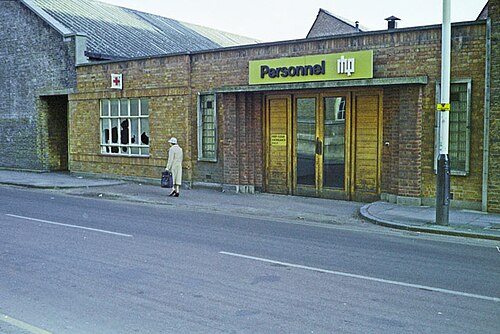
Featured image: Personnel Department, RHP bearing works, 1990 by Robin Webster, CC BY-SA 2.0, via Wikimedia Commons.