Editor’s note: This article was first published in May 2012 and describes the market on 2 May 2012; the IBEX 35 close of 6,831 points, its lowest since 2003, the 6,812 and 7,200 support and resistance levels and the risk-premium worries were current then.
We have always said that the stock market is the most profitable investment, since in the long run it tends to go up. Of course, with the figures we are seeing today on the IBEX 35, we could say it is an index for “very brave investors”, because it is hard to take so many consecutive falls. Today the figures already show that our index is the least profitable in the world.
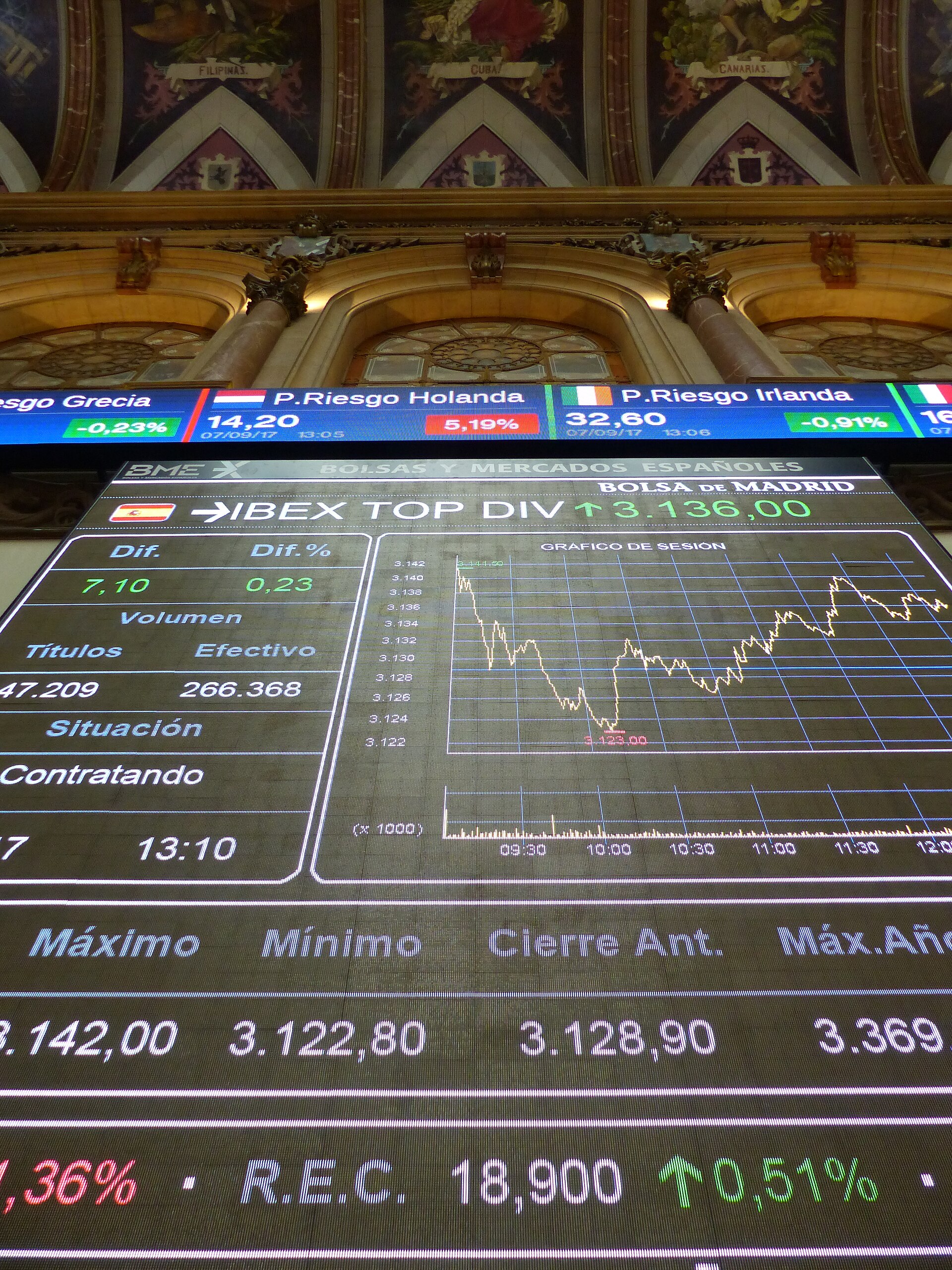
Today’s session has closed with another day of losses: the IBEX ended at 6,831 points, the lowest level it has reached since 2003. Apparently dragged down by the fall in financial stocks, the situation reflects the lack of confidence that exists in our country today. Even so, in an upcoming session we could be talking about a grim situation, or we could get some breathing space (for a while, at least).
Analysts are pointing to two figures. If the IBEX closes below 6,812 points in the next session, we could enter a new and very dangerous downtrend, as these are levels that would raise the alarm, especially if the much-talked-about risk premium (the spread on Spanish government bonds) rises again.
On the other hand, if the IBEX manages to close above 7,200 points, we could talk about a change in the index’s trend.
If we compare our index with the rest of the world, a single figure gives an idea of the difference. Steve Jobs’s company, Apple, which is listed on the Nasdaq, is worth more than the entire IBEX, not to mention that it has more cash than the US and Spanish governments.
Even so, we insist that on the day the storm over Spain ends (let’s hope it doesn’t rain forever), the IBEX, just as it is today the least profitable index, could become a source of returns for investors who buy shares in companies at the prices they are trading at today. Will it take 2 years, 3 years, 5 years…? That is the problem: nobody can predict when this free fall we are in will end.
Featured image: Benjamín Núñez González, CC BY-SA 4.0, via Wikimedia Commons.