

Editor’s note: This article was first published in July 2013. The claim that IBM shares have risen more than 1,100% since the experiment described is a 2013 figure, as is the description of IBM as the futuristic, technologically advanced company ‘we know today’.
At the big business schools there are always hundreds of examples of how the most important companies came up with a clever maneuver or strategy to get through a crisis, because the truth is that every company goes through hard times at some point, whether because it falls behind on innovation or because strong competition appears.
A recent Quora thread asked which were the most brilliant of all that could be applied to a business. There was no shortage of mentions of Microsoft and the legendary Steve Jobs (Apple), but here are the two smartest moves by two great companies and business leaders.
1. IBM: the Bear Hug
In the 1990s, IBM was in deep crisis. For the first time in its corporate history it was forced into mass layoffs while revenue collapsed and its shares took a severe beating that lasted for years. Many people had written the company off, but Lou Gerstner, then its CEO, came up with a rather unusual strategy that at first seemed to make no sense.
Fifty senior executives were sent around the world to meet in person with at least five customers each. Their goal was not to sell more products or make offers. The aim of the strategy was for the executives themselves to listen to their customers’ concerns and see how IBM could help them. That way, decisions would be made not by the company but by the customer. The customers themselves would tell them what they really wanted.
Through its big customers, IBM discovered that for years it had been making products its customers didn’t want, or with features that had a lot of room for improvement. It also realized that its customers already had questions about, and interest in, the internet.
This large-scale empathy project between company and customer set off double-digit growth year after year, something unprecedented for the company, and it was that maneuver that ultimately turned IBM into the futuristic, technologically advanced company we know today. Since that experiment, its shares have risen more than 1,100%. The strategy went down in history as the “Bear Hug”.
2. Henry Ford: improve your workers’ wellbeing and the company will improve
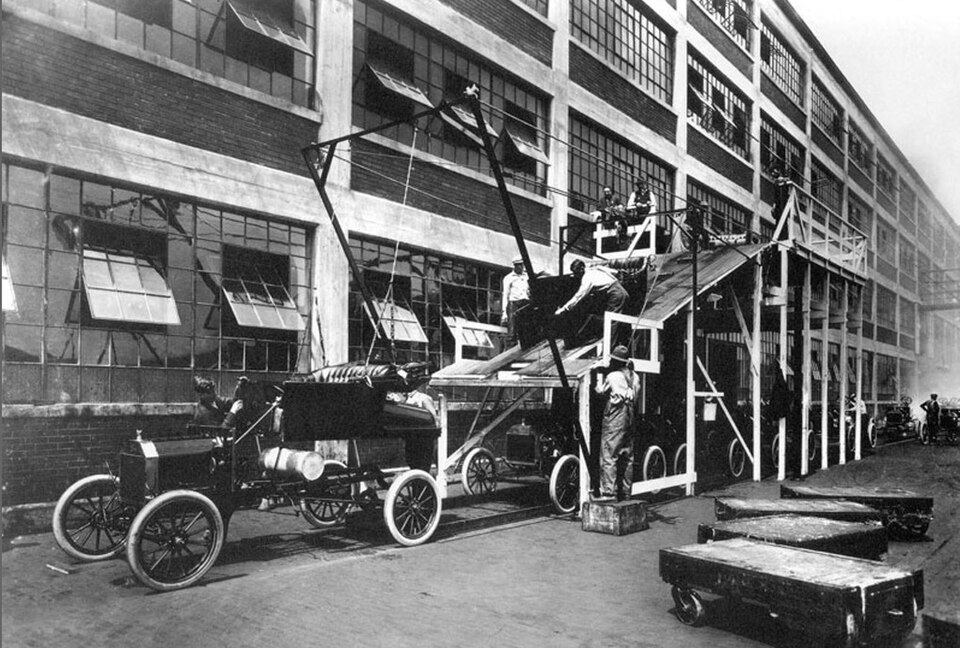
At the end of 1914, 13,000 Ford workers made 260,000 cars, while the rest of the industry, with 66,000 workers, made only 280,000. That means Henry Ford’s workers were 5 times more productive than the rest of the industry. Henry Ford increased his profits by 200%.
How did Henry Ford do it?
To begin with, Henry was criticized by fellow capitalists for bringing in one of the biggest pay rises in corporate history, instead of squeezing his workers to the limit and throwing them out on the street once they were worn out or fell ill, as was the practice at the time.
The 8-hour working day had probably already been invented (or maybe not), but Henry Ford made it mandatory: working more than 8 hours was forbidden at his company.
Staff rotation: so that workers wouldn’t get bored doing the same thing every day, they were rotated through different jobs, and the most productive workers were motivated with incentives and promotions.
See also: 7 psychological traps that can hold back your success in business or your career
Absenteeism dropped sharply: better pay than at other companies in the industry, a working day that was a real bargain for the time and motivated workers meant everyone was happy, and so they were less likely to fall ill from exhaustion.
These are without doubt two business lessons from which many business owners should draw some conclusions.
Further reading
Featured image: Ford company, Public domain, via Wikimedia Commons.



