Editor’s note: This article was first published in July 2017. The comparison with Bill Gates, Warren Buffett, Carlos Slim and Amancio Ortega reflects their 2017 fortunes, and the “$400 billion” equivalent is Steinmetz’s estimate.
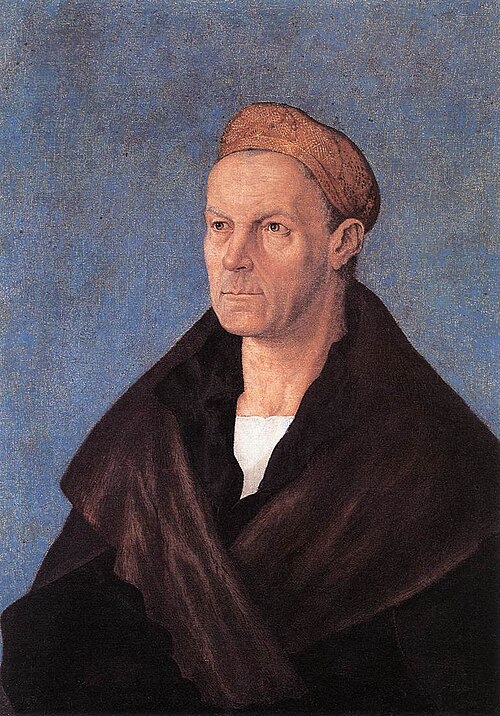
Born in 1459 and quite possibly the founder of capitalism, the German Jakob Fugger died in 1525 as perhaps the most influential businessman and banker of all time.
Given the macroeconomic changes since then and the adoption of the gold standard in the monetary system, many agree that we can’t really convert the money of that era into today’s terms. Even so, according to Greg Steinmetz, who wrote a biography of Jakob Fugger, his fortune would be worth around $400 billion today.
That means Jakob Fugger was probably richer than Bill Gates, Warren Buffett, Carlos Slim and Amancio Ortega combined. And he would certainly take Andrew Carnegie‘s place as the richest man in history.
(See: Andrew Carnegie’s 10 rules of success for getting rich)
How powerful Jakob Fugger became
To get an idea of the power Fugger came to wield: according to his biographer, the world at the time was controlled by two figures, the Holy Roman Emperor and the Pope. And Jakob Fugger financed both of them.
Not only that. At the time the Church prohibited charging interest on a loan, considering it usury, and yet Fugger charged interest to the Empire and to the Pope. In fact, he got the Pope to change that law, making it legal to charge interest when lending money.
He came from a very humble family that nonetheless had a knack for trade (what today we might call a family of hustlers), and Fugger had no business experience and considered himself ignorant of how business worked.
It didn’t take him long to start making use of the resources around him to create one of his first businesses, in mining, which became one of the family’s most profitable companies and went on to monopolise the copper and silver market in Europe.
Next, he began investing in property and land, until he found the business that would give him power: lending.
His banking clients included the royal houses of Europe, the Catholic Church and the high nobility. He financed wars and the election of kings, which, given his influence on politics, made him one of the most powerful men in history.
He is said to have been the founder of capitalism because at the time there was very little economic activity, and the rich made their fortunes from their land and the labour of peasants. Fugger began trading mining rights in exchange for loans. He also started a spice-trading company, giving rise to what was probably the first multinational in history.
It’s also said that Fugger probably created the first news service in history, because he knew the value of getting information before his competitors. He paid messengers to bring him news of political and commercial activity in different countries and cities.
The “Fugger newsletters” would be considered the first newspapers in history.
But Jakob Fugger didn’t forget ordinary people: he created a social housing project in southern Germany where, it’s said, residents today pay just $1 a year in rent.

He created savings accounts as we know them today
Many other families already had banks, but the Church allowed neither paying nor charging interest. Fugger, however, used his commercial skills to convince Pope Leo X to lift that ban, and for the first time in history he began offering 5% annual interest to customers who deposited their money in his bank.
We don’t know whether he financed Columbus’s voyage to America, but we do know that he financed Ferdinand Magellan’s circumnavigation of the globe.
He became a major backer of expeditions, which he saw as a long-term investment.
Finally, on a personal level, Fugger married but had no children. It’s thought that his wife hardly had a husband at all, since he was always away on business trips. In fact, a few weeks after Fugger’s death, his widow remarried.
Sources for this article: Wikipedia, BBC, The Richest Man Who Ever Lived: The Life and Times of Jacob Fugger.
See also: 10 thoughts from Napoleon Hill, author of Think and Grow Rich
Featured image: Albrecht Dürer, Public domain, via Wikimedia Commons.