
“Getting rich is easy. There was a time when I was making more than 50 million a year, but I paid the price of throwing my ethics in the trash.”
That is how the article that Jordan Belfort himself (better known as the Wolf of Wall Street) wrote on his personal blog begins. In it he expresses regret for crossing over to the darker side of success and tries to explain how it all started.
“I wish I could go back in time and tell the Jordan Belfort of the early 1990s that giving in to greed and corruption is not the way to make money. Tell him he can be the Wolf, but not like that.”
Before I became that ruthless wolf, I was a good man. I was raised with high ethical standards by loving parents, and my moral compass was pointing firmly in the right direction.
I was a young man, even better-looking than Leonardo DiCaprio, and I knew I was going to be successful. When I started working for one of the biggest firms on Wall Street, I thought my future was settled.
But my first day on the job was, literally, the day the stock market crashed, and instead of working in the imposing skyscrapers of Wall Street, I found myself working at a small brokerage firm on Long Island.
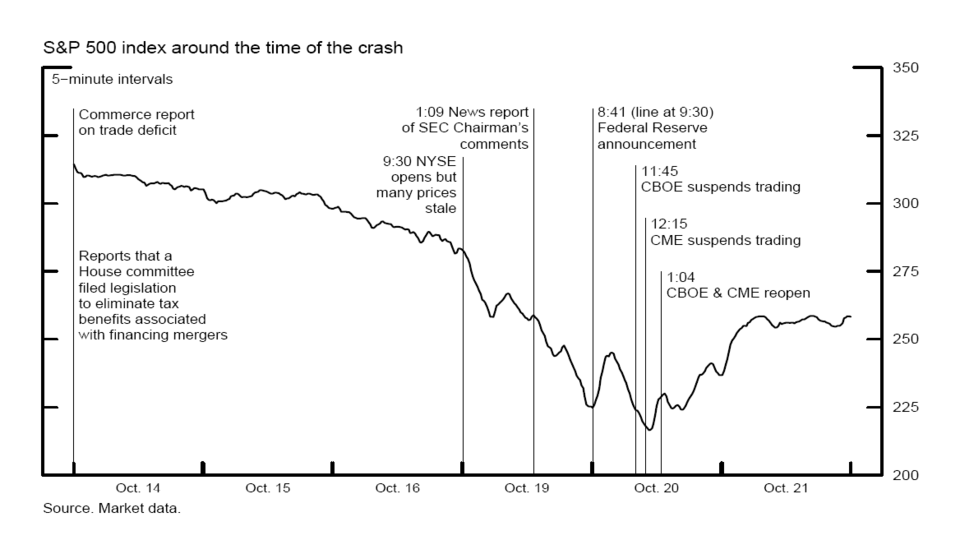
This kind of setback, coinciding with the biggest stock market fall in history and coming at a time when Wall Street was laying people off rather than hiring, would have ended most young people’s careers. But it was not the immediate end for Jordan Belfort.
At least at this point, Belfort did not give up.
I had the chance to take the business ideas of the major firms and blend them with the sensibility of a smaller firm to create the largest independently owned investment firm in the country. The money was pouring in.
The rise and fall of the wolf
Money isn’t evil. Money doesn’t change you. I gave in to greed and my moral compass started spinning off its axis. I was 24 and making 50 million, but something had changed. I was taking people with little or no sales skills and turning them into stars, but I started doing whatever it took to make more money.
Even though we were making a great deal of money legally, I started manipulating stocks. You can’t take advantage of people and break all the rules without paying a price. The wolf was caught in a trap and sent to prison for almost two years for securities fraud and money laundering.
The cars, the boats and many of the friends I had made over the years were suddenly gone, and I was left with nothing but a mobile phone and my own thoughts. A man has a lot of time to reflect on his past in prison.
I wrote the book The Wolf of Wall Street when I got out of prison, not just as a cautionary tale, but to show that you can hit rock bottom and still come back stronger than ever.
People ask me whether I can really change. Can a leopard change its spots? … I was once a good man, but I was transformed. And now, many years later, I have been able to find the good in me again. The wolf is gone, but that doesn’t mean I don’t like being rich, and there’s no reason why you shouldn’t be rich too.
When did Jordan Belfort change?
When we talked about the famous Lewin equation, we saw how our environment can affect us. And looking at Belfort’s path, we could well conclude that there was no sudden change from man to wolf.
Belfort was not the starting point but a continuation, an improved version, of the firms he had worked at before. A mentor plays a very important part in anyone’s career. In the film, the character played by Matthew McConaughey only makes a brief, passing appearance, but he was probably what set the wolf off: a senior figure at a major investment firm, with low moral and ethical standards and a cocaine habit, yet successful, who sent him the message that on Wall Street anything goes as long as you make money. “If the client doesn’t make money, that’s their problem.”
His second firm was no better. It was a shabby brokerage that specialised in selling penny stocks, so in a way it was already misleading people in order to place those shares. Belfort was simply a better salesman when it came to placing them.
And as so often happens in life, once you cross a line, suffer no consequences and make a profit too, you go ahead and cross a second line. And a third. And a fourth. Nobody punishes you for it. Little by little you start to feel untouchable. You raise your standard of living, and the money just keeps coming. But you always want more, and your lifestyle keeps getting more expensive. Now you feel invincible.
There comes a point when you realise you have changed. You have completely lost your way and stopped being the person you once were. But there is no going back.
Whatever kind of person Belfort was, has been or is, he is without doubt someone who has a lot to offer and from whom we can, and should, learn.
Further reading
Featured image: Ralph Zuranski, CC BY 2.0, via Wikimedia Commons.