

Editor’s note: This article was first published in February 2016; Google Plus, which closed in 2019, is listed among current social networks, and the edition numbers given for the two books date from that year.
This time we have a contribution from Francisco Alcaide, author of the bestsellers Aprendiendo de los mejores (Learning from the best, 9th edition) and Tu futuro es HOY (Your future is TODAY, 2nd edition).
There is one variable that sets apart the people who make (a lot of) money, and that variable has a name: leverage.
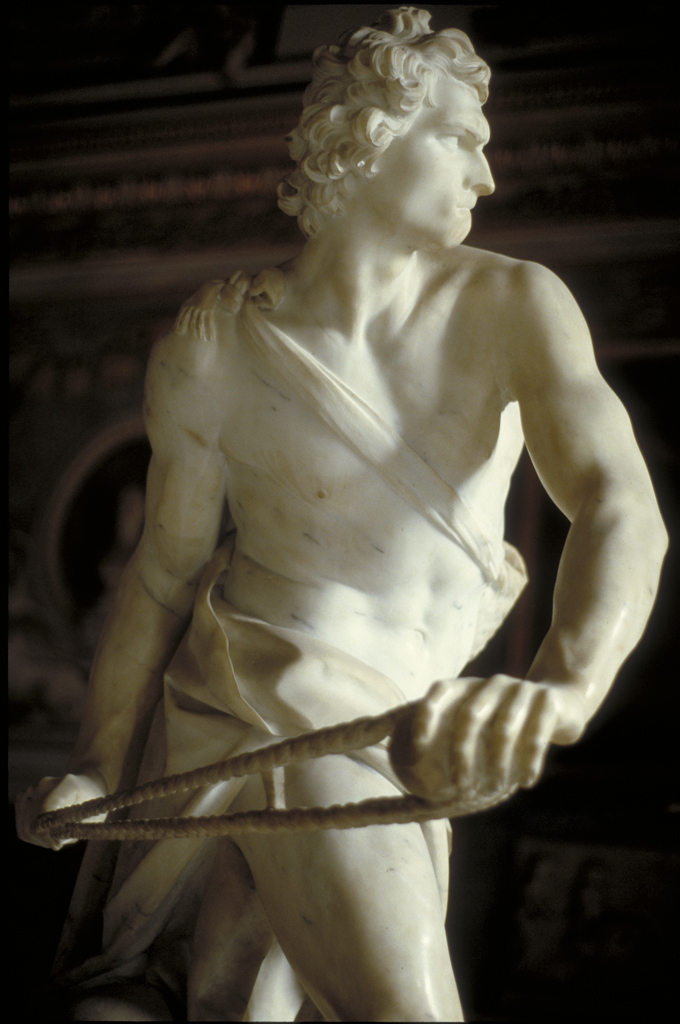
Leverage means using other people’s networks, tools or resources to generate profits, but always from a win/win perspective. Leverage is very powerful because it lets you earn “a lot” with “a little”. Leverage means seeing beyond yourself, which lets you go further than would otherwise be possible. David (the boy) managed to defeat Goliath (the all-powerful giant) because he knew how to use leverage (the sling).
Here are 4 examples of leverage:
- UBER, the world’s largest taxi company, doesn’t own a single taxi.
- AIRBNB, the world’s largest accommodation company, doesn’t own a single property.
- FACEBOOK, the world’s most popular content company, doesn’t create any content of its own.
- ALIBABA, the world’s most valuable retailer, has no inventory.
These are four well-known cases of four companies that generate billions by “leveraging” other people’s resources. All they provide is a platform that brings the business together.
Leverage can take many forms. Here are just a few:
1. Other people’s time
What a business owner often buys is time. If you work for someone else, whether as an employee or as a freelancer, then you are someone’s “lever”. Others are using your time (and your knowledge and experience) in exchange for a price (a salary) to earn the difference between the cost price and the selling price. They are leveraging you.
In your case, your income depends solely on your own effort, and that has many limits. If you look at the Forbes list of the world’s richest people, you’ll see they are always business owners, because they have other people working for their system. Robert Kiyosaki, one of the people featured in Aprendiendo de los mejores (Alienta, 9th edition), puts it like this: “If you’re working, you don’t have time to make money. If you’re working hard physically and not getting ahead financially, it’s because you are someone else’s leverage.”
2. Other people’s networks
Affiliate marketing (selling products through third parties: websites and blogs) is so successful because it uses other people’s platforms to sell. Many firms do it, such as Amazon, Casa del Libro (a Spanish bookshop chain), FNAC, Lastminute, Rumbo (a Spanish travel site) and Decathlon, among others. It’s also ideal because it’s every business owner’s dream: paying on a one hundred per cent variable basis, with no fixed costs. If you sell, you get a commission; if you don’t sell, you get nothing. Imagine that 100,000 people sell products through their websites or blogs, and each of them sells just 1 product a day. The result isn’t bad at all: 100,000 products sold without investing any time, energy or structure to achieve it.
3. Social media
This is another kind of network, and the great advantage of social media is that it has allowed a lot of people to leverage themselves in an extraordinary way (wildly, we might say). Today, social networks give visibility to many people who would never otherwise have had it and, most importantly, with a high potential to go viral.
Years ago, when someone published a book, visibility came from appearing in the press, on radio or on television. Nowadays you can make your work known through Twitter, Facebook, Google Plus, YouTube or LinkedIn, and others in turn act as a “lever” (reaching many people through third parties) by sharing and spreading it. Going viral is one of social media’s great successes, because it allows enormous leverage.
4. Other people’s knowledge
Self-sufficiency always leads to ineffectiveness and inefficiency. People who want to know everything and do everything get nowhere in life. People who become a “benchmark” in their field try to devote themselves one hundred per cent to their expertise, the thing they do best, and find ways to delegate the rest, outsource it or have others do it. To be a benchmark in something you have to be an expert in something, and to be an expert in something you need FOCUS. Excellence demands Focus.
If you lose Focus, you’re lost. Success demands one hundred per cent focus. And it’s worth it, because the difference between being a benchmark or not is the same as the difference between billing a lot and simply billing.
5. Other people’s money
To make money you don’t need money; what you need is to get hold of it. Imagine, for instance, that you get a mortgage for 80-90% of a home’s value, rent the home out and pay the monthly mortgage instalment with the rent. You’re leveraged at 80-90%. Without using your own money, you buy a property thanks to the rental. Leveraged products are another example of using other people’s money.
In the financial markets there are products designed exclusively for leverage: derivatives (options and futures). Imagine you can invest 9,000 euros but only have to put up 3,000 euros; then you’re leveraged 1:3 (for every euro, you’re investing 3). If one day you gain 5% on 9,000, that is, 450 euros, then since you’ve only put in 3,000 euros, your real return is 15%.
See also: 15 tips for succeeding in business
6. Other people’s contacts
Keith Ferrazzi, a master of networking, is clear about it: “Who you know determines the effectiveness of what you know.” Everyone knows that if life is anything, it’s relationships. Knowing or not knowing certain people gives you a direct line to many things. Always keep in mind the well-known theory of six degrees of separation: between you and anyone in the world there are at most 6 links, and now, with social media, even fewer. You can reach anyone you want.
7. Other people’s experience
Mentors are an “accelerator” in reaching our goals. Why reinvent the wheel? Being self-taught takes too much time and energy. Many people have faced problems, contradictions and crossroads like yours, and they can give you very valuable input so you keep moving forward, do it faster and don’t get stuck. Leverage them.
In my book Tu futuro es HOY (Alienta, 2nd edition) there is a whole chapter devoted to leverage. It says: “Don’t get up to work, get up to find leverage. In other words, when you get out of bed each morning, ask yourself this question: How can I do what I do, for more people, at a lower cost (in time, energy or resources) and at a better price?”
Francisco Alcaide Hernández (@falcaide)
Speaker, writer and trainer in leadership and motivation. Author of the bestsellers Aprendiendo de los mejores (9th edition) and Tu futuro es HOY (2nd edition).
Featured image: MCAD Library, CC BY 2.0, via Flickr.


